
shelf 3
Revered by Europeans as white gold, porcelain made in China was a highly prized commodity. These wares eventually met with competition in the 1700s, as European countries discovered how to create translucent porcelain ceramics. Figural pieces representing anthropomorphized versions of the earth’s continents were popular, as well as telling of the producers’ belief of their standing in the world. Made in Germany, the Black figure personifying Africa serves the commodity of sugar, while Europa rides high on a white horse, wearing a crown and holding a scepter, the globe at her feet.
Click an object to learn more
Images
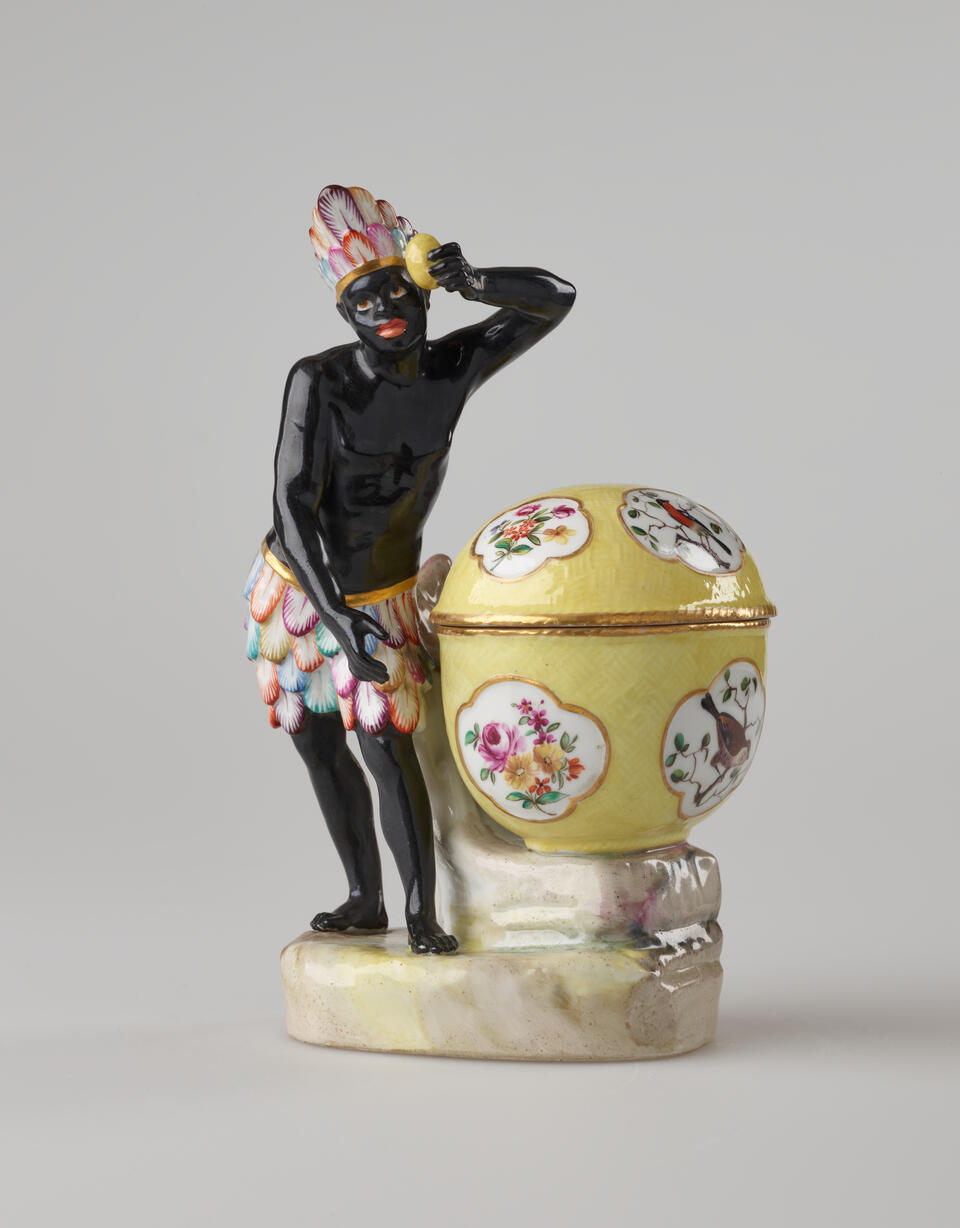
German
Sugar Basket, 1700s
Porcelain with enamels, glaze, and gilding
Bequest of Mrs. Hope Brown Russell 09.462
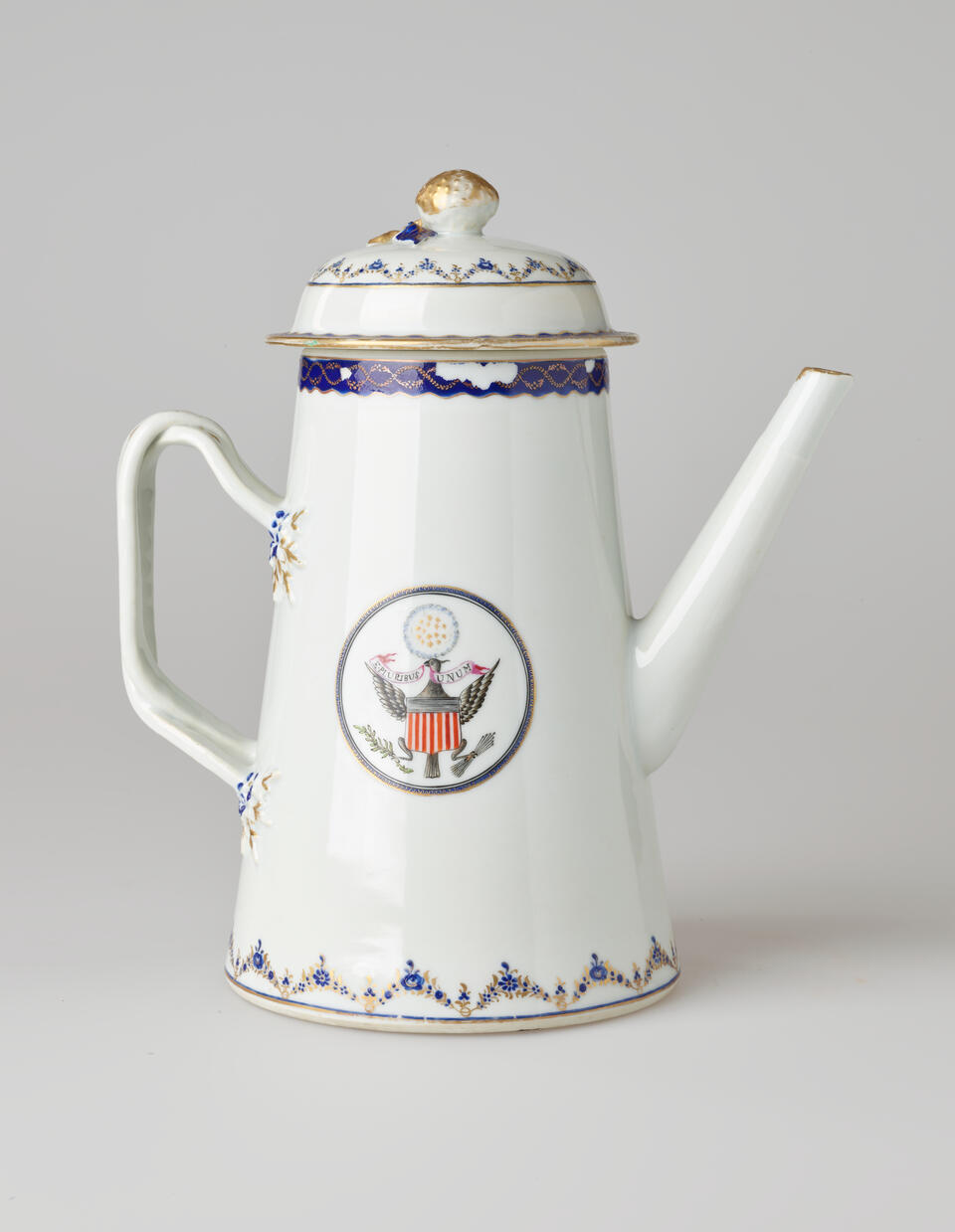
Chinese
Coffeepot, 1800
Porcelain with enamels, glaze, and gilding
Bequest of Mrs. Hope Brown Russell 09.156
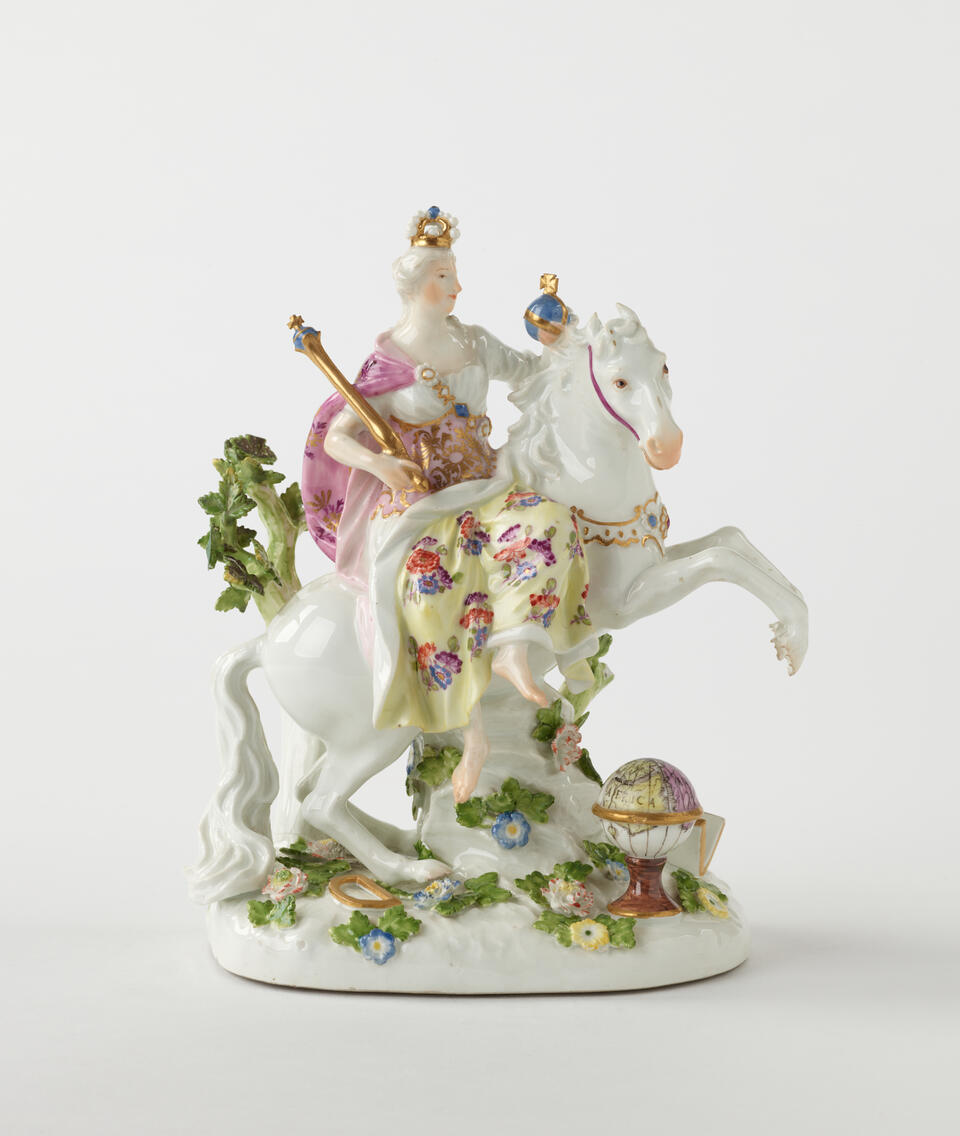
Johann Joachim Kändler, modeler, German, 1706–1775
Meissen Porcelain Manufactory, German, 1710–present
Europa on a Horse, 1745–1747
Porcelain with enamels, glaze, and gilding
Bequest of Miss Lucy T. Aldrich 55.165