On the Surface
Contemporary Ceramics
Dip, brush, pour, scratch, paint—there are countless ways to adorn ceramics. Some techniques are studied and passed down for generations, while others are proprietary. Many formulas for glazes are hard-won secrets: measured, mixed, and tested over and over again to achieve a desired color or effect. From the mid-1900s to today, artists working in ceramics have continued to revise old methods and experiment with new ones, drawing inspiration from the world around them and pushing the boundaries of their medium. These cases present seven different techniques for decorating ceramics—slip, sgraffito, unadorned, decals, texture, glaze, and painting—and the variety of approaches that artists have taken to each.
Emily Banas
Assistant Curator, Decorative Arts & Design
Case 1
Click an object for more information
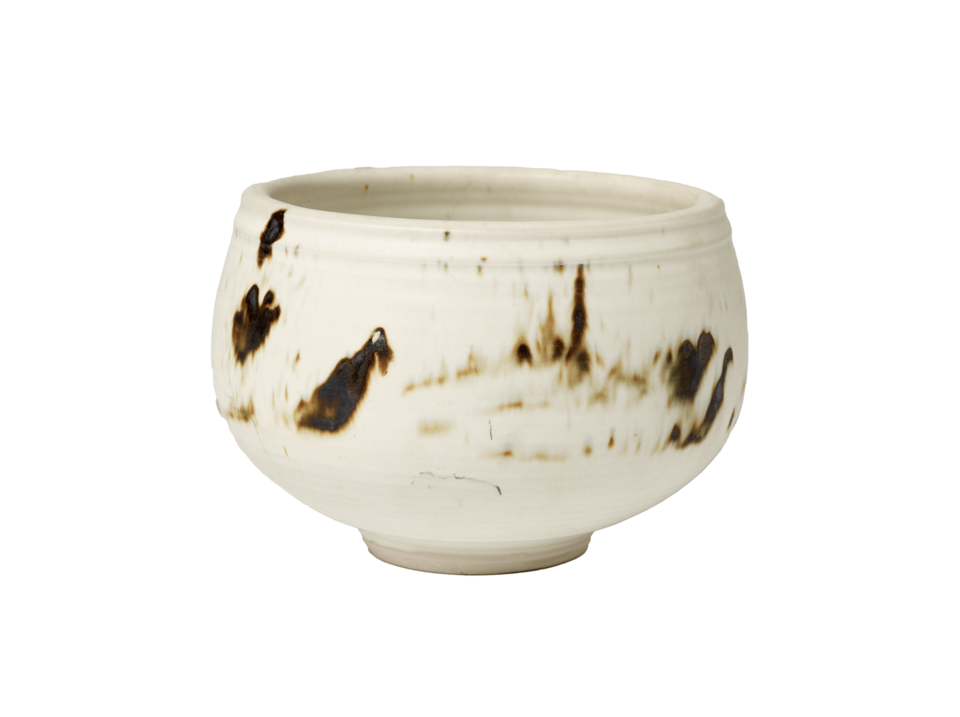
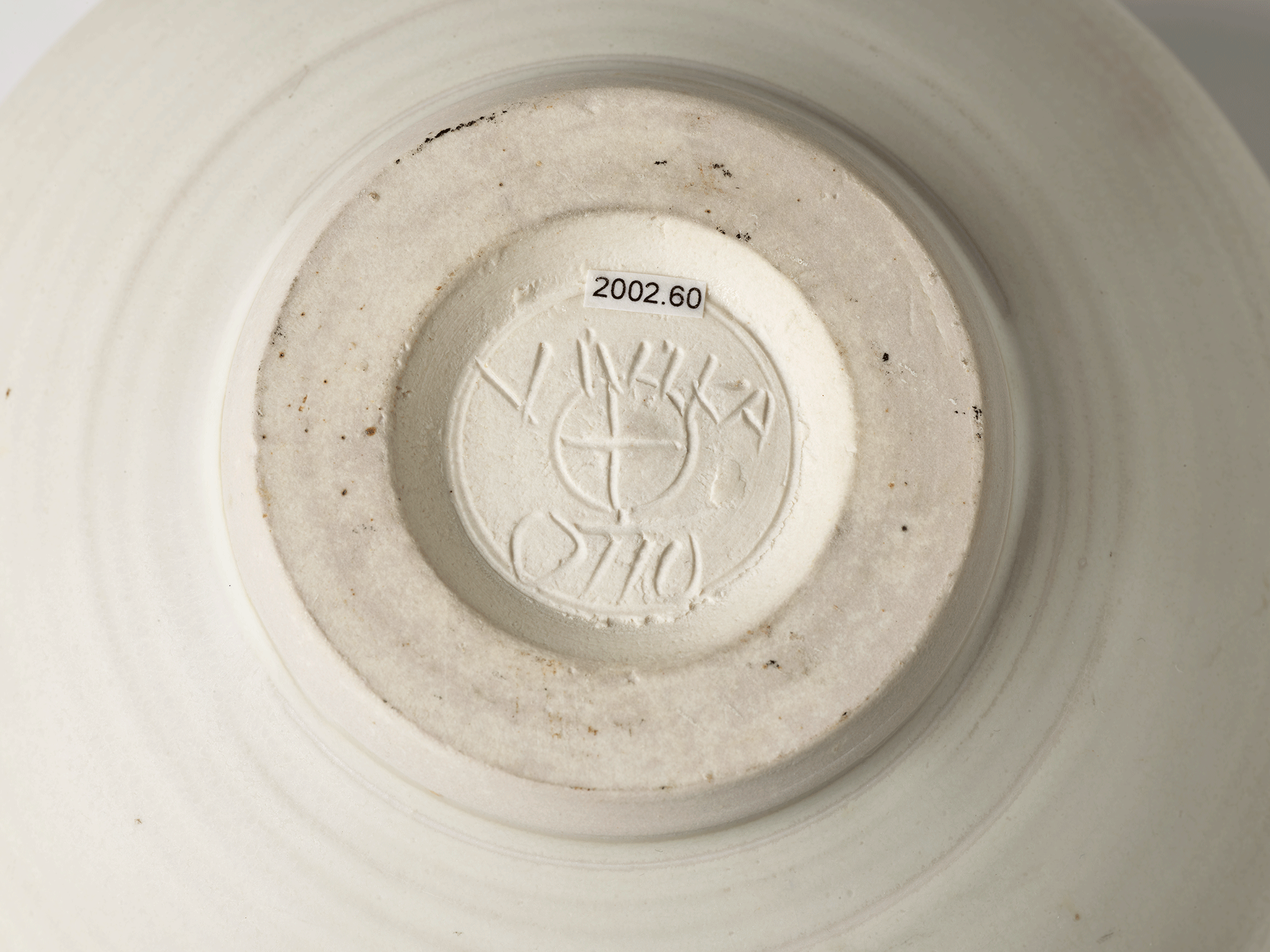
Utilized for centuries by artists across the globe, slip is made by thinning clay with water to achieve a thick yet pourable liquid. After the mixture is sieved to remove any lumps, it can be dipped or brushed on the ceramic surface. Slip can be used in conjunction with a glaze or entirely on its own, creating a matte finish, as seen in Vivika and Otto Heino’s Bowl (2002.60).
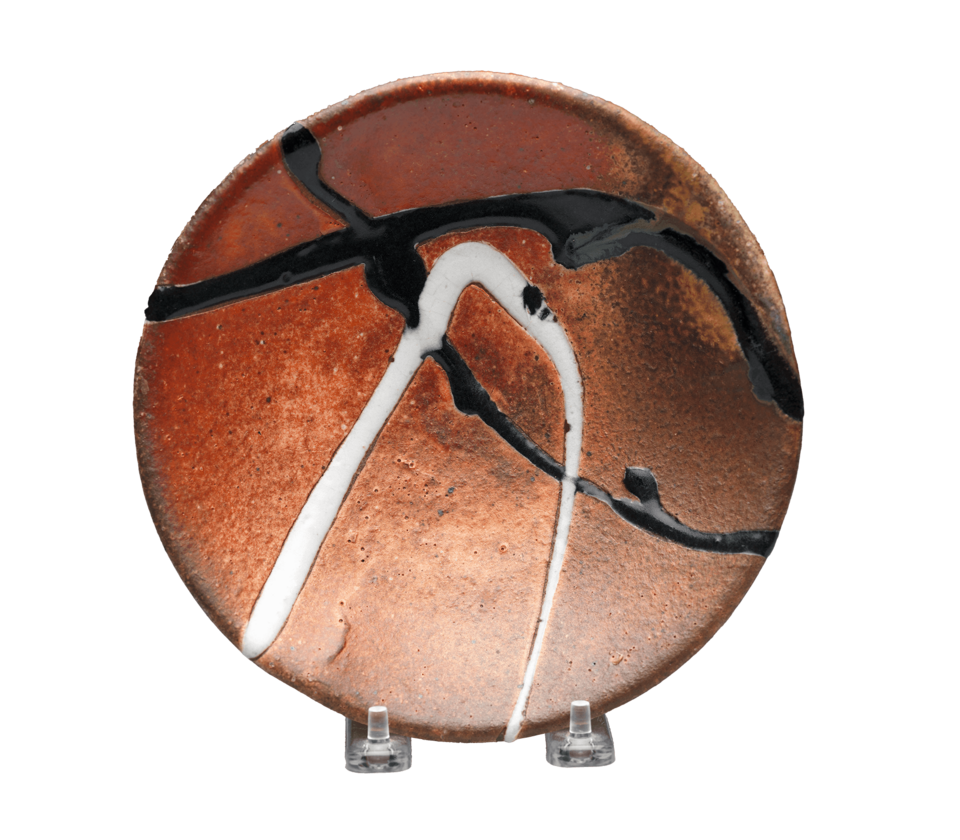
Slip can also be used to create raised decoration on top of the clay body. In this method, called slip trailing, slip is poured into a pastry bag, syringe, or other tool used to draw designs on the surface of the clay. Historically, slip was used to create highly intricate and painterly designs, but many artists today employ contrasting colored slips to achieve bold, abstract effects. Note the depth of the slip on Randy Johnson’s Plate (2015.47.6), from the thick red base coat to the white and black on top, poured across the plate using a ladle.
Image
Images
Randy Johnston
American, b. 1950
Plate, ca. 2009
Stoneware with slip
Gift of Nancy d’Estang 2015.47.6
Vivika Heino (RISD faculty, 1963–1965)
American, 1910–1995
Otto Heino (RISD faculty, 1963–1965)
American, 1915–2009
Bowl, ca. 1980
Porcelain with slip
Gift of the Stokes Family 2002.60
Warren MacKenzie
American, 1924–2018
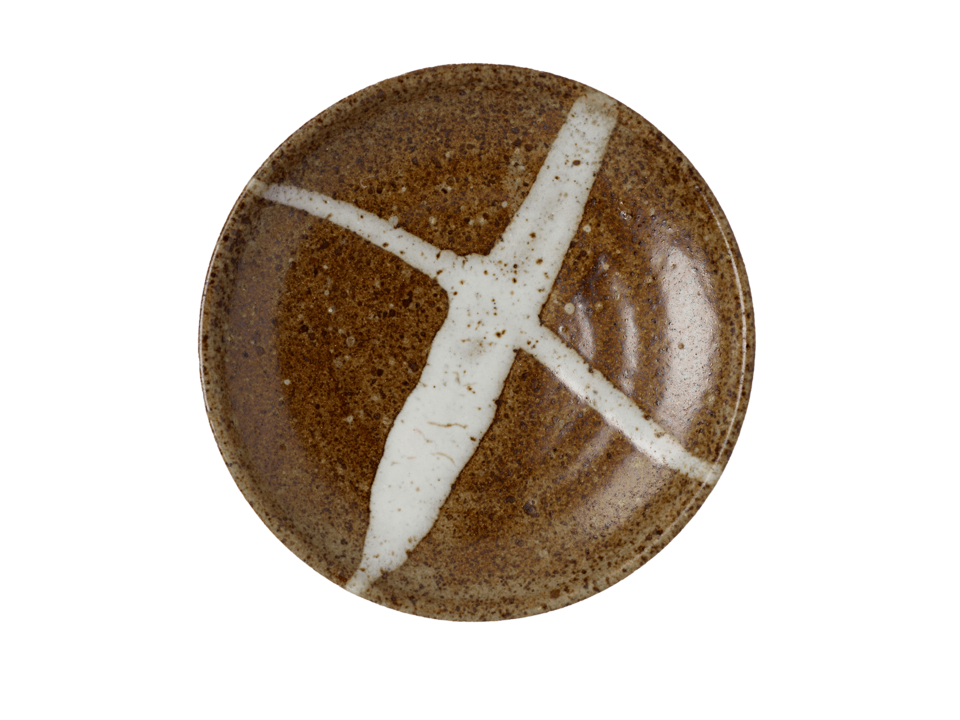
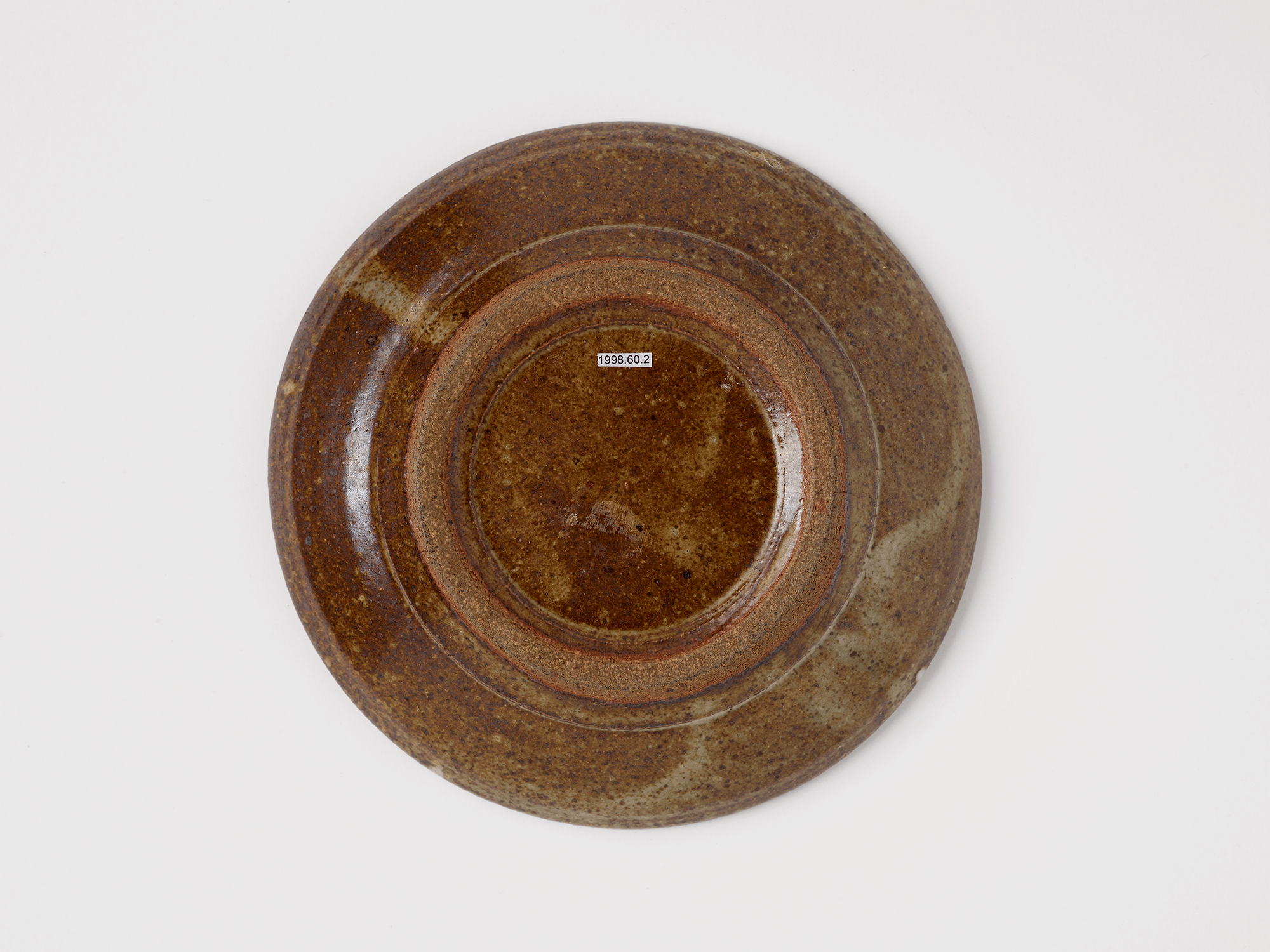
Plate, ca. 1980
Stoneware with slip and glaze
Gift of the d’Estang Collection 1998.60.2
Frans Rudolf Wildenhain
American, 1905–1980
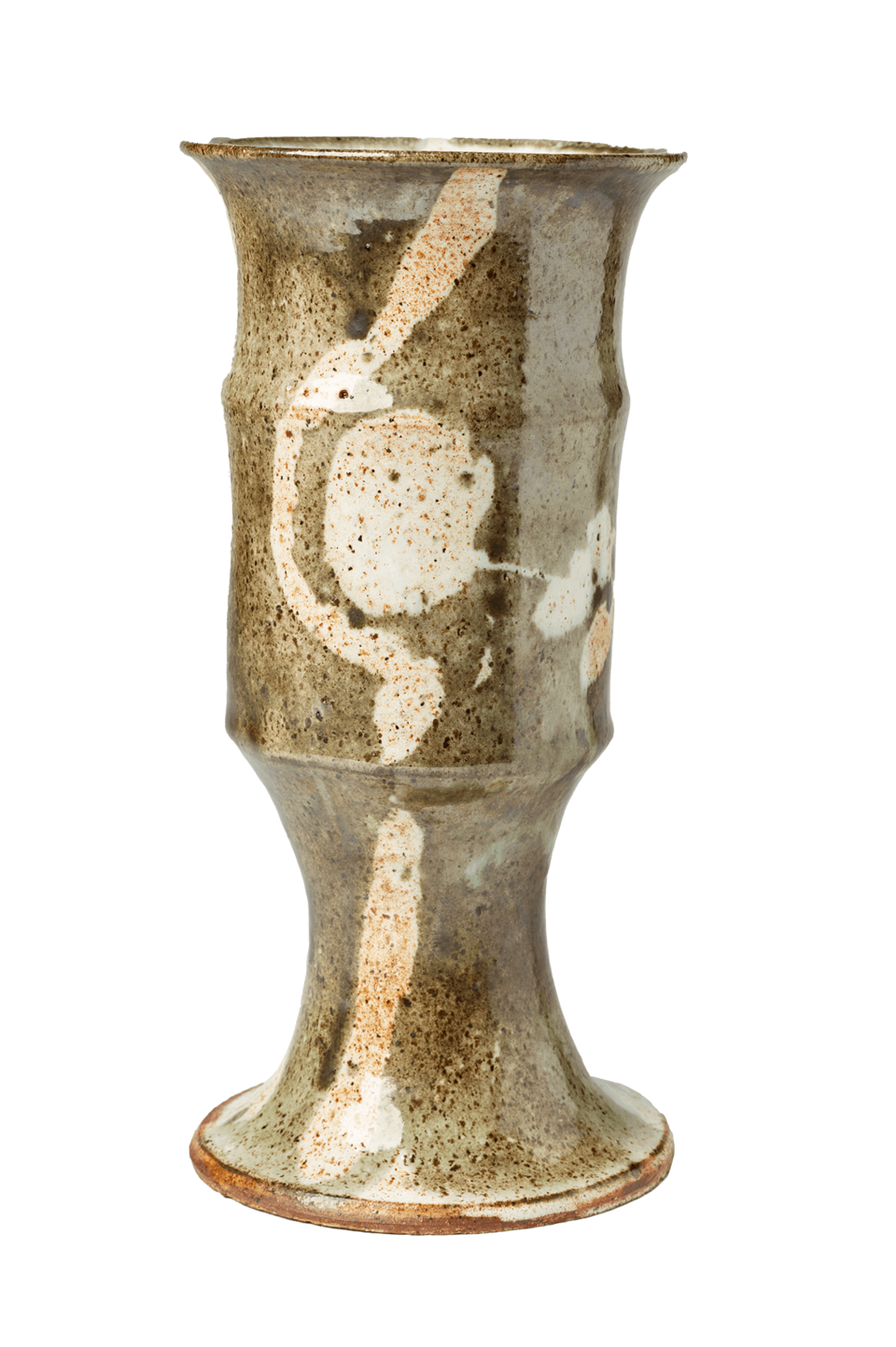
Chalice-Form Vase, ca. 1960
Stoneware with slip and glaze
Gift of John A. Prip 2004.102.2
Printmaking and ceramics share a long history, from sponge-printed ancient vessels to woodblock-printed 16th-century tiles and 19th-century engravings transfer-printed on earthenware. These two mediums continue to embrace one another in contemporary ceramics. Today, decals are a relatively simple way to transfer images onto ceramics. They can be designed and printed onto special decal paper or purchased already made, then fired to adhere the ink to the surface.
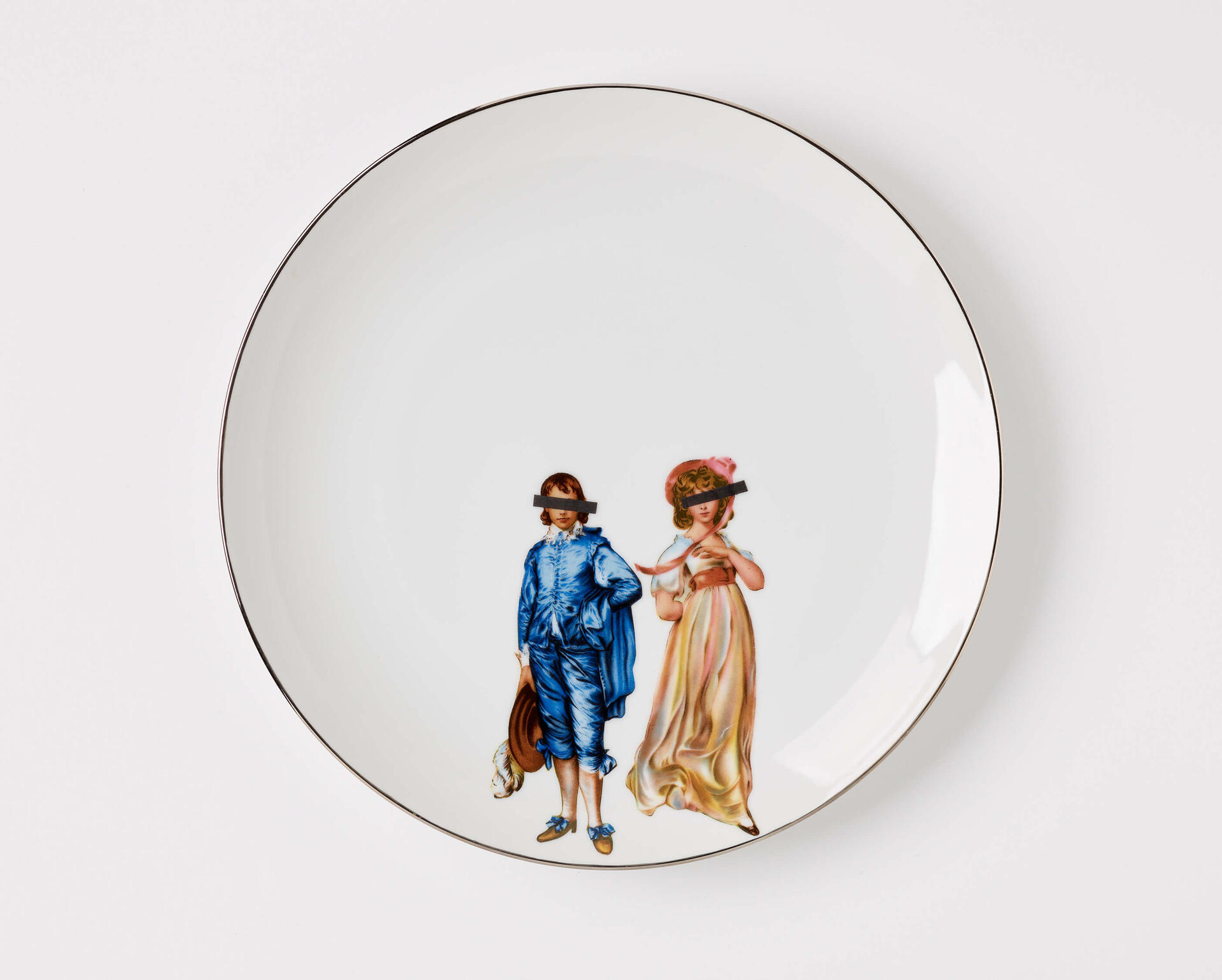
Howard Kottler used premade decals on factory-produced blank ceramics, often cutting up and distorting the images to satirize American popular culture. Kottler, who identified as gay, simultaneously addressed and dodged his sexuality in his work, using coded references to queer culture. He made several design variations in a series based on Sir Thomas Gainsborough’s painting The Blue Boy (1770) and Thomas Lawrence’s Pinkie (1794), two figures who were often paired together in historical reproductions as a couple. In Twins (2020.56.2), Kottler replaces Blue Boy’s head with Pinkie’s, playing on the performativity of gender and turning the heterosexual couple into a queer couple. In Incognito (2020.56.1), Blue Boy’s and Pinkie’s eyes are covered by black bars, a basic form of text, photography, and video censorship intended to make identity harder to recognize. The title, Incognito, refers to concealing one’s true identity, historically an all too common theme in the queer community.
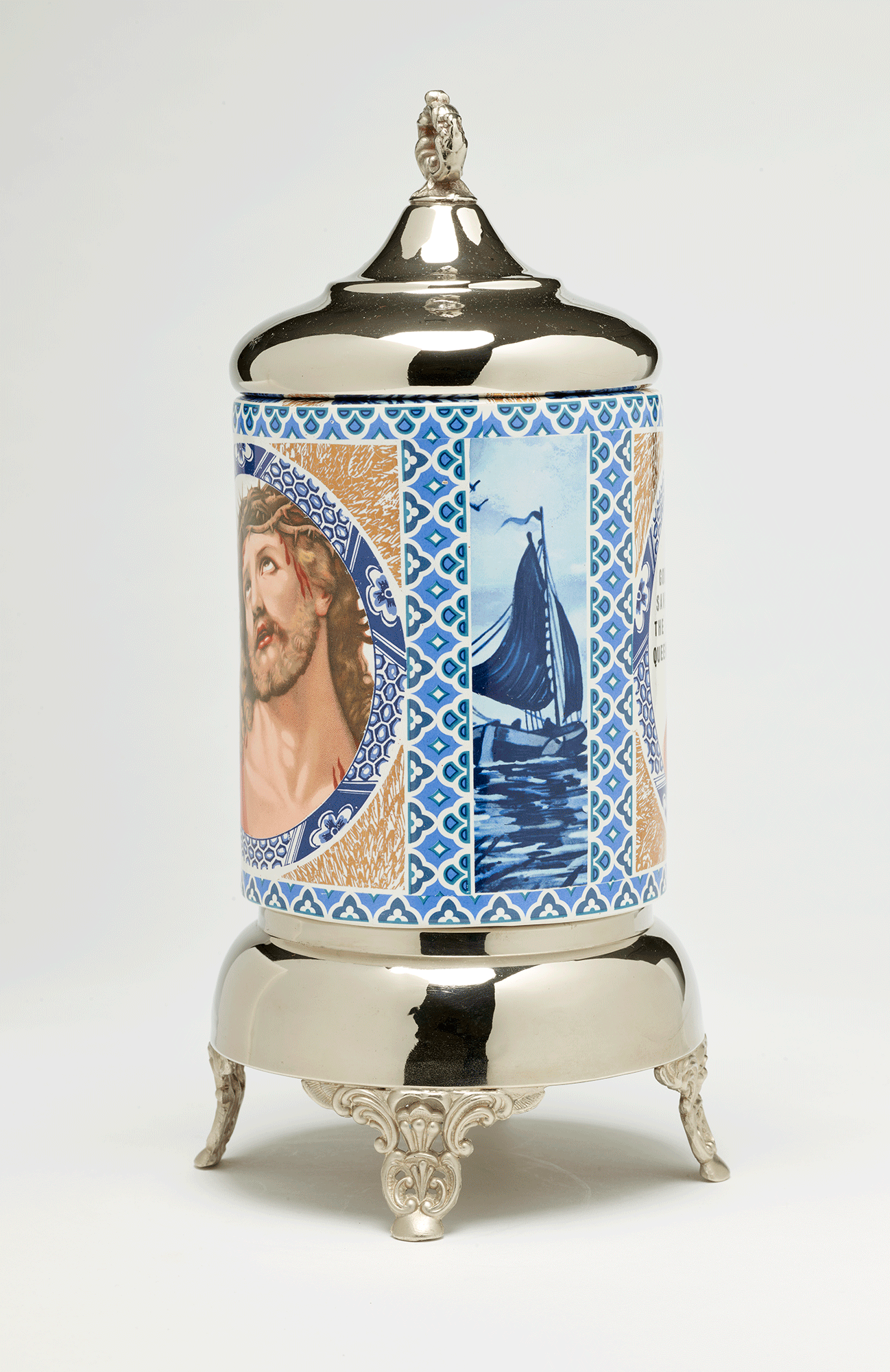
Léopold L. Foulem similarly uses cast ceramic forms as a canvas for imagery associated with camp and queerness. For God Save the Queens (2020.55), Foulem pairs a factory-made decal of Jesus with a phrase that nods to the national anthem of the United Kingdom. Here, however, Foulem deliberately uses the plural queens, a term used to describe flamboyant or effeminate gay men as well as drag queens, juxtaposing Jesus with a textual reference to homosexuality. In this departure from traditional Christian iconography a queer Jesus emerges, creating new queer spaces and narratives about salvation.
Image
Images
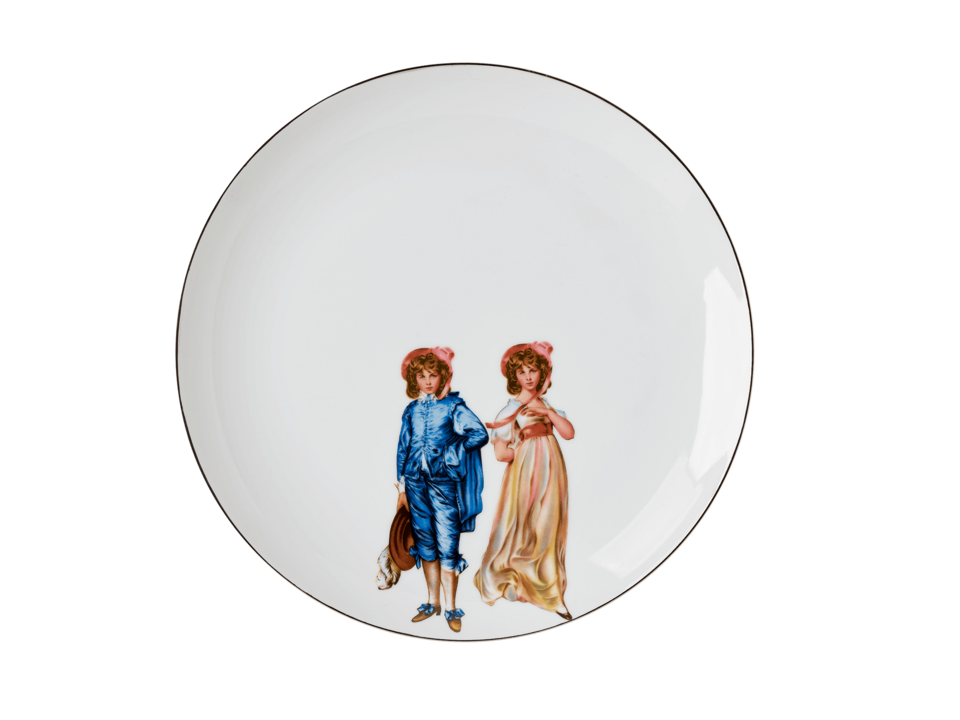
Howard Kottler
American, 1930–1989
Twins, 1969
Porcelain with decals and glaze
Georgianna Sayles Aldrich Fund 2020.56.2
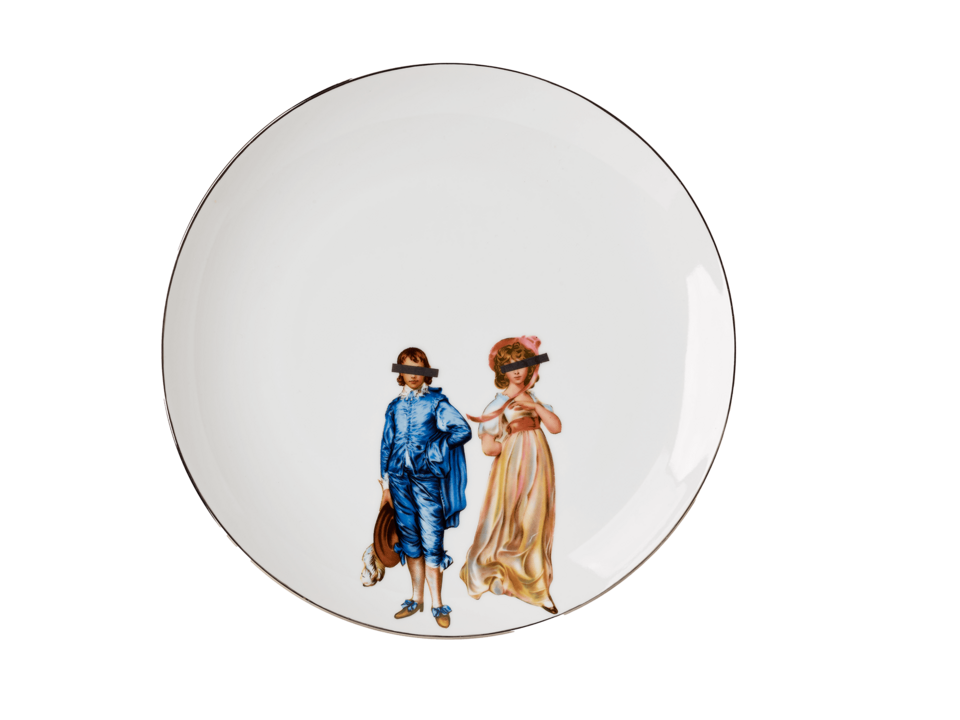
Howard Kottler
American, 1930–1989
Incognito, 1969
Porcelain with decals and glaze
Georgianna Sayles Aldrich Fund 2020.56.1
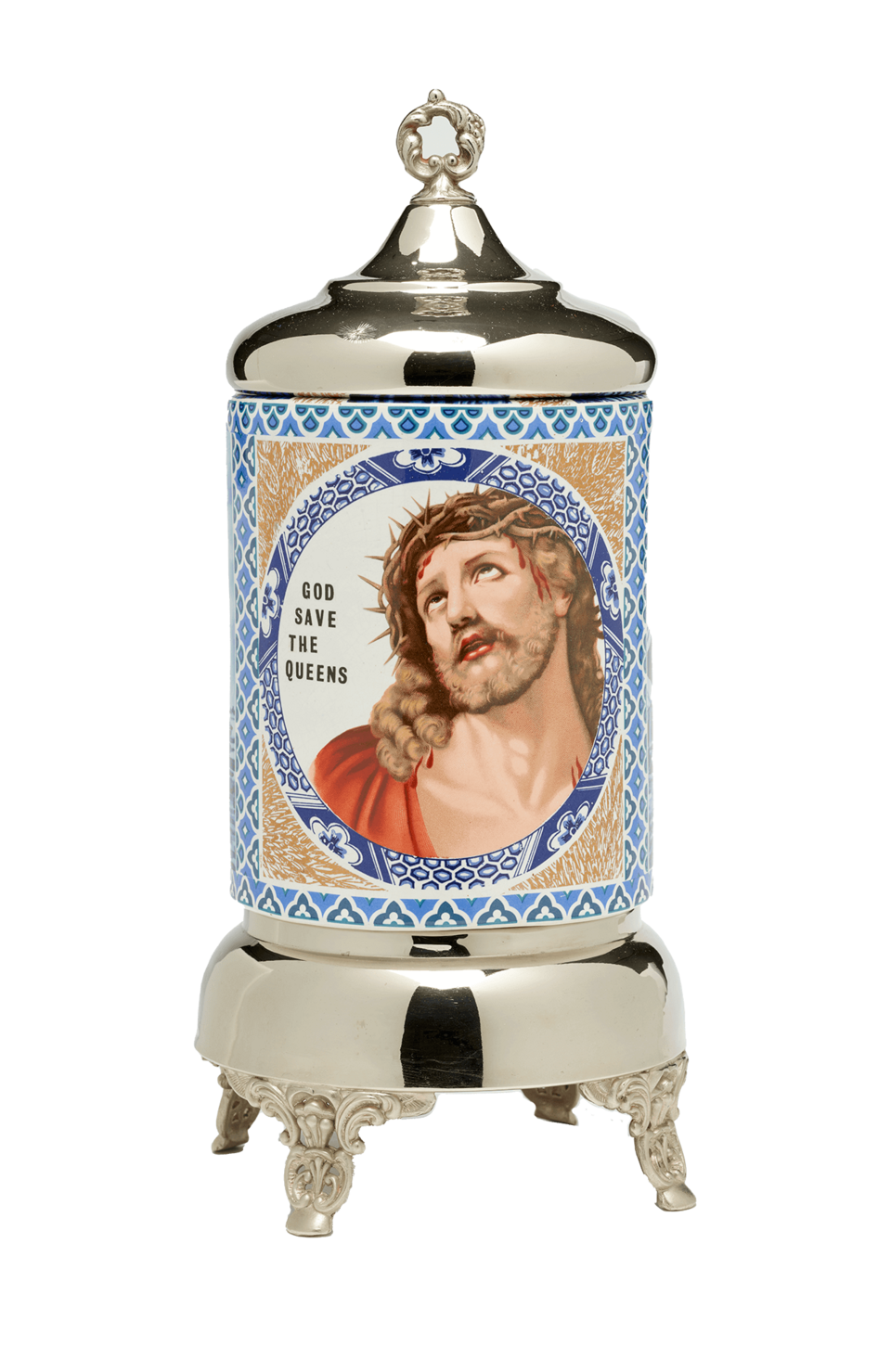
Léopold L. Foulem
Canadian, b. 1945
God Save the Queens, 1994–1997
Ceramic with decals, glaze, and metal
Georgianna Sayles Aldrich Fund 2020.55
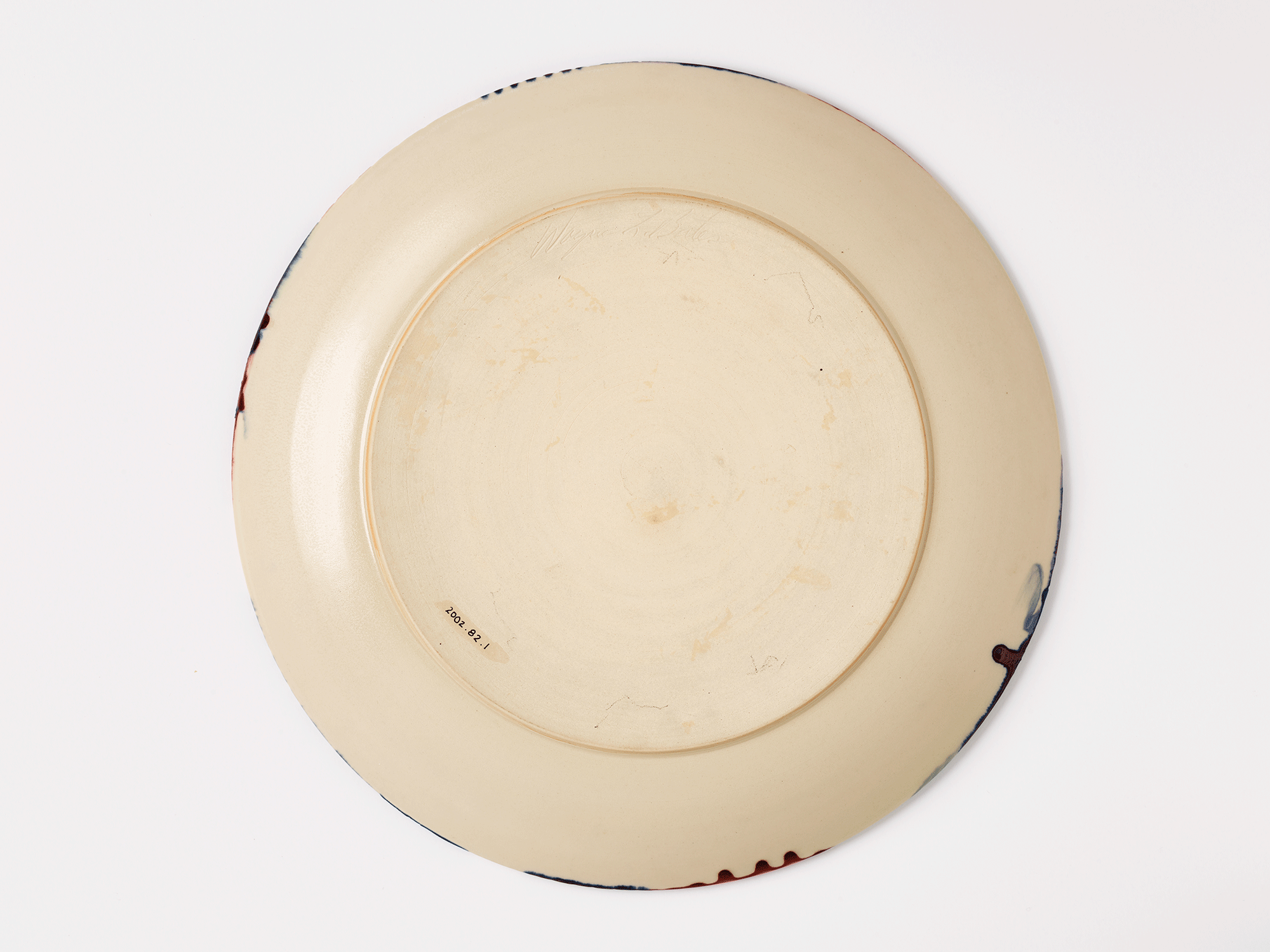
The uses for slip evolved to include sgraffito, a technique that involves cutting through one or more layers of slip, often in different colors, to expose the clay body underneath. What appears to be a simple process requires a great deal of knowledge and dexterity. If the slip is too dry, it will flake off; if it is too wet, the incision will be smudged. Of course, the right tools make all the difference. Wayne L. Bates (2002.82.1) developed his own tools specifically for sgraffito decoration using parts from a pocket watch, which he found remained sharper than commercial tools.
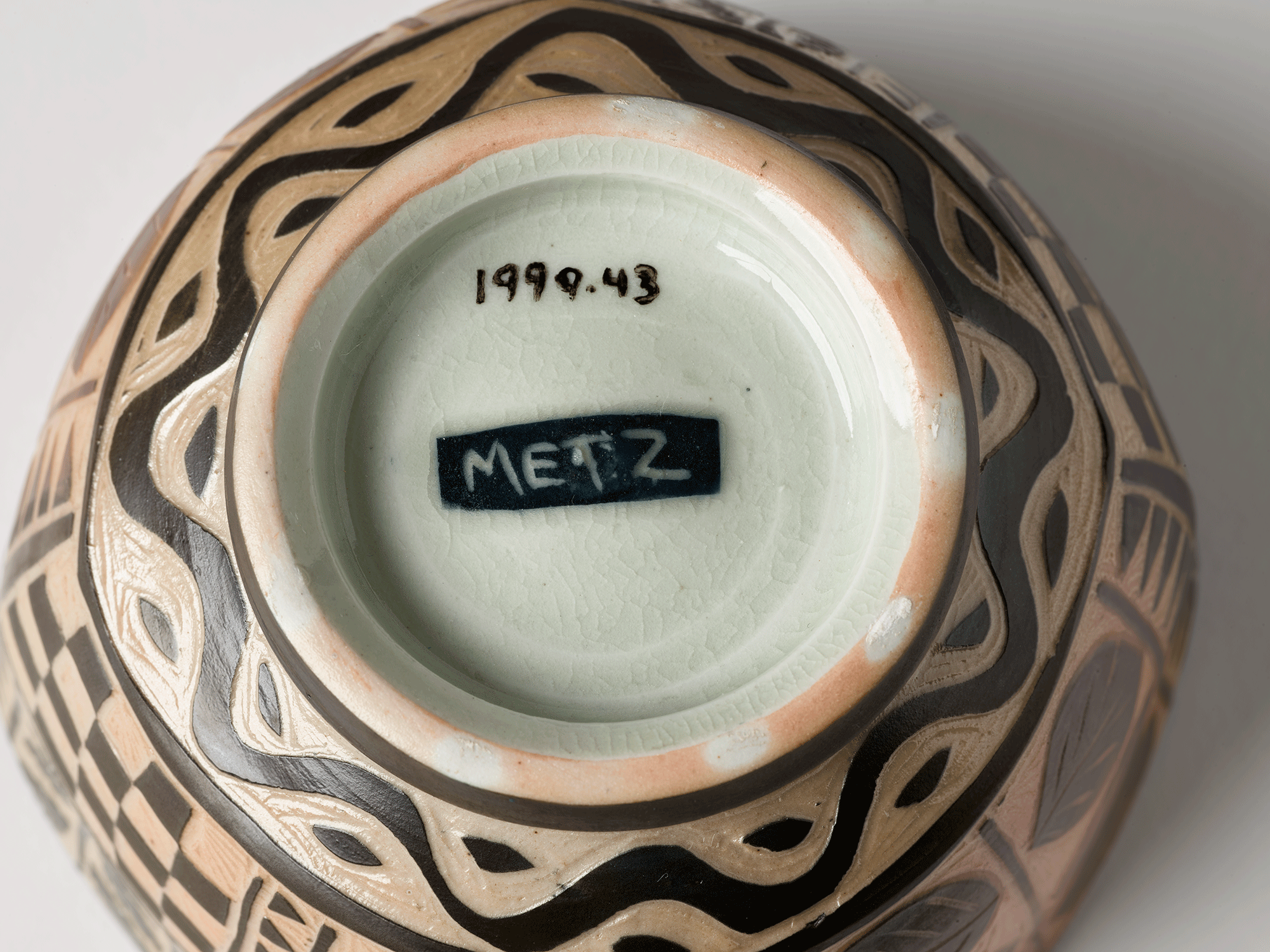
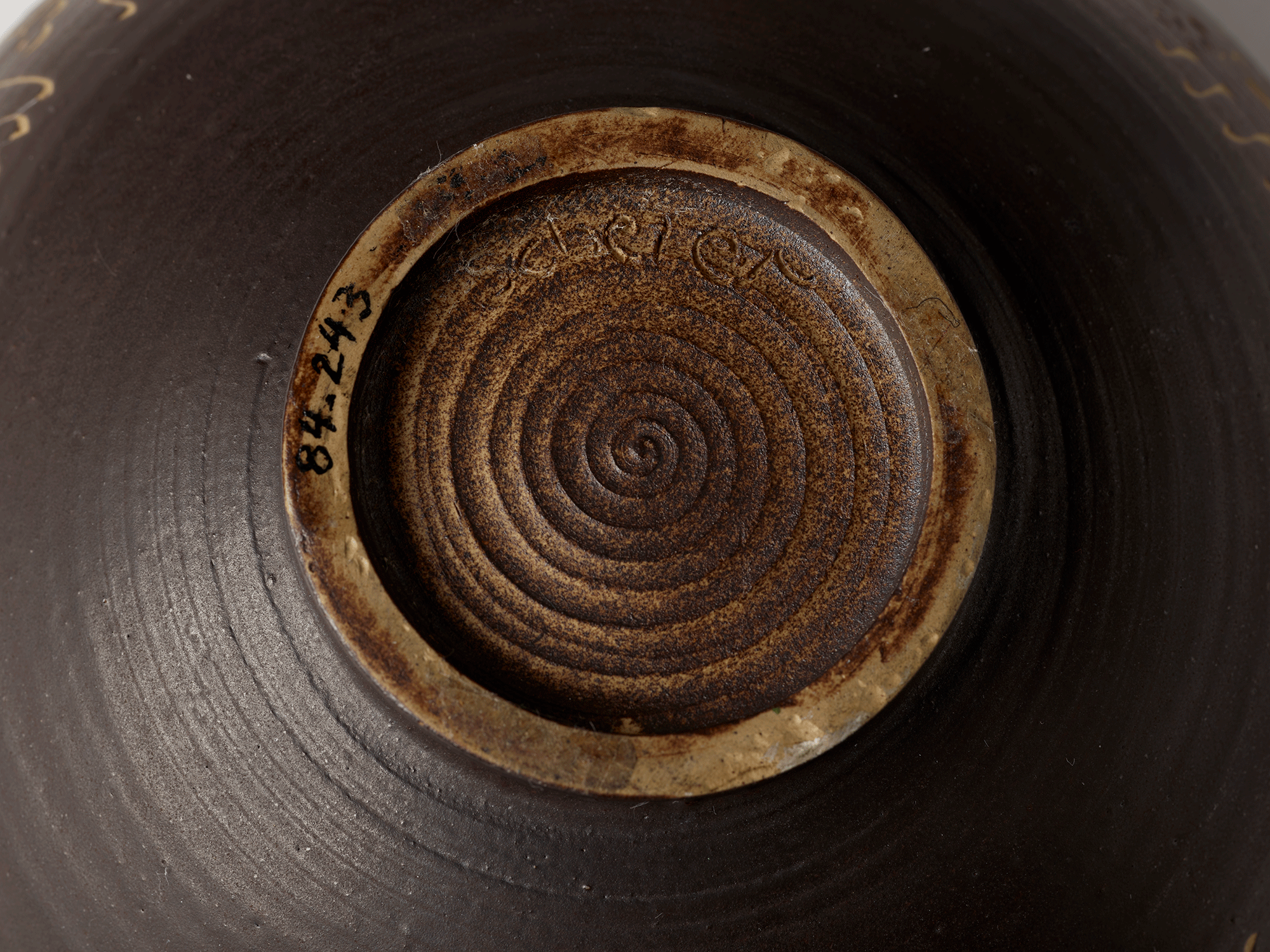
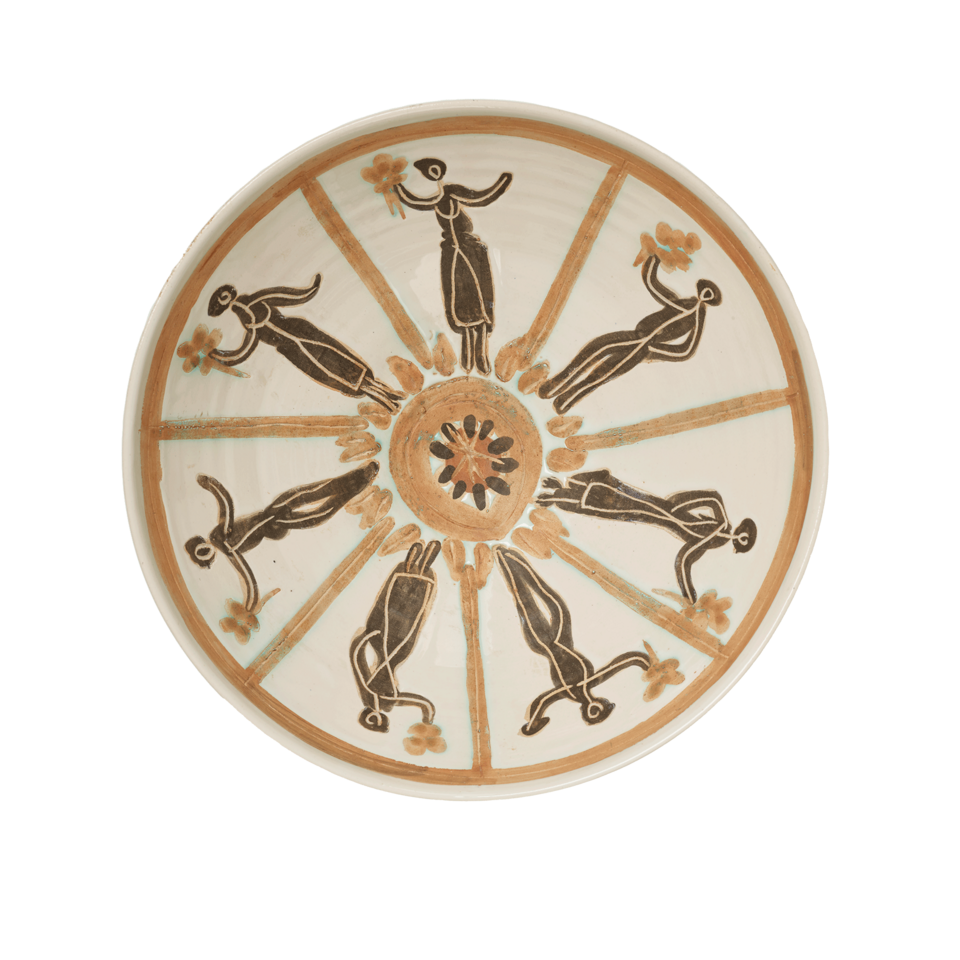
The word sgraffito derives from the Italian graffio, which means “scratch.” Whether employed to make illustrations or patterns, sgraffito turns clay into a canvas for drawing. Spanish artist Pablo Picasso spent the last few decades of his life experimenting with ceramics, and he used sgraffito to draw into the clay in his Bowl (1998.11). Matthew Metz’s Bowl (1999.43) draws on nature and folk art with leaves and geometric patterns. Inspiration for Edwin and Mary Scheier’s ceramics ranged from ancient designs to modern abstracted forms like those on Bowl (84.243).
Image
Images
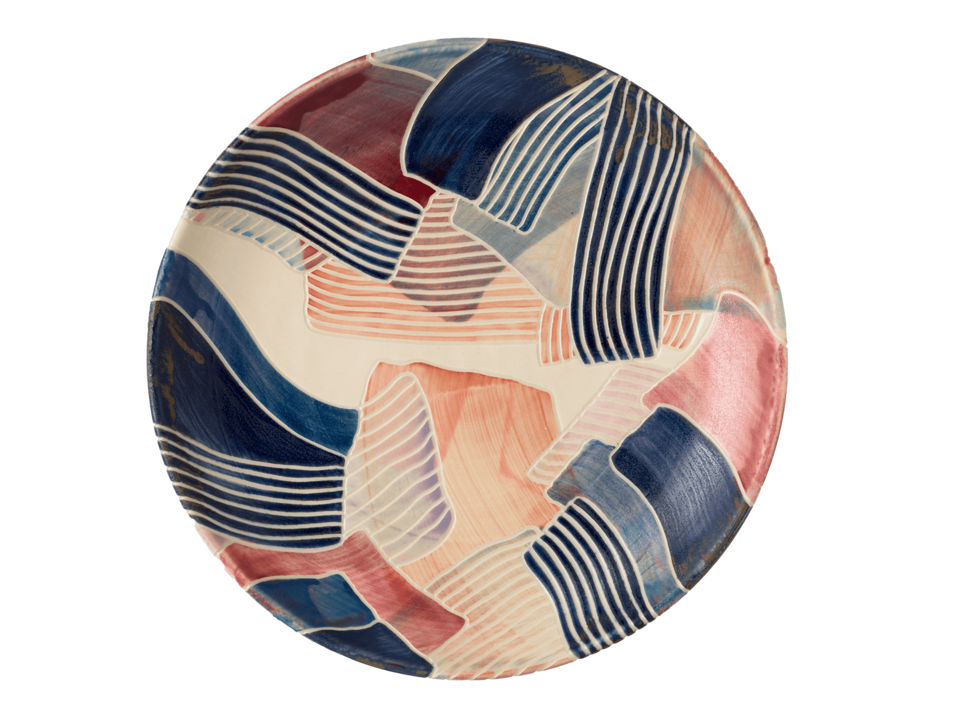
Wayne Bates
American, b. 1943
Brushstroke Platter, ca. 1985
Earthenware with slip, glaze, and sgraffito decoration
Gift of Larry Day and Ruth Fine in honor of William and Catherine Daley 2002.82.1
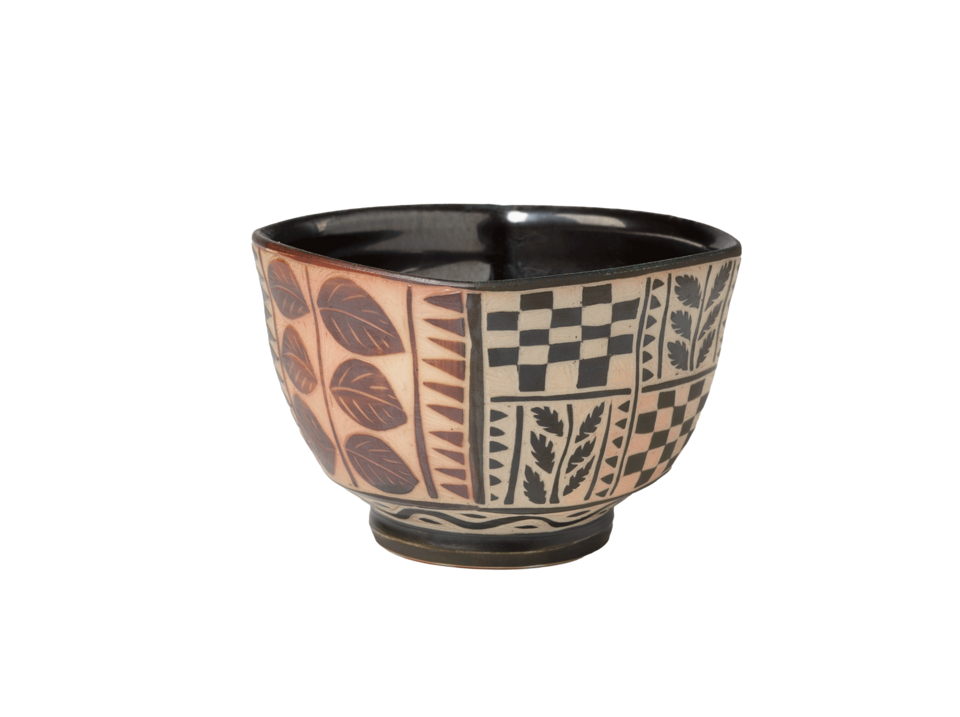
Matthew Metz
American, b. 1961
Bowl, ca. 1999
Porcelain with slip, glaze, and sgraffito decoration
Gift of Christopher Monkhouse in memory of Mary Hilliard Jackson 1999.43
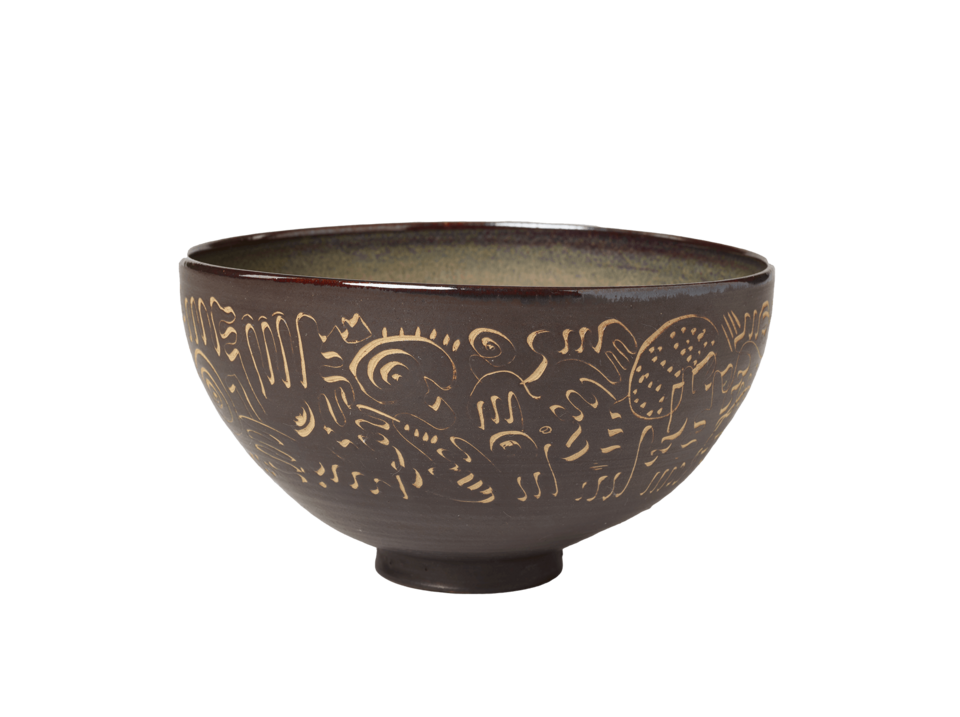
Edwin Scheier
American, 1910–2008
Mary Scheier (RISD faculty, 1944–1945)
American, 1908–2007
Bowl, ca. 1950
Earthenware with slip, glaze, and sgraffito decoration
Gift of Daphne Farago 84.243
Pablo Picasso
Spanish, 1881–1973
Madoura Pottery, manufacturer
French, 1938–2007
Bowl, ca. 1960
Earthenware with slip, glaze, and sgraffito decoration
Gift of Jean Fain in memory of her mother, Paula Segal 1998.11
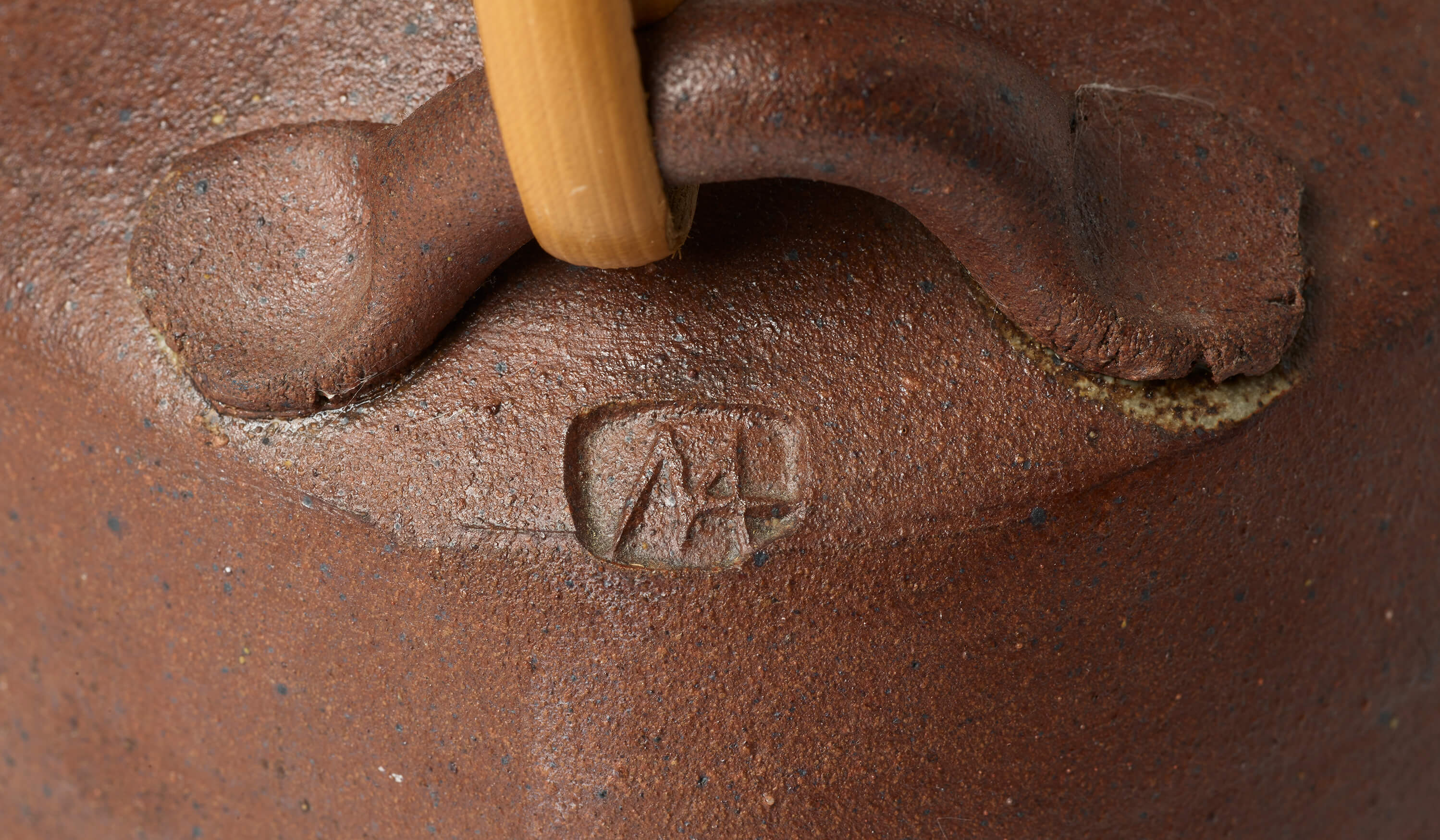
![Underside of bowl. Words stamped into clay read “Edition Picasso.” Words painted in black read “No 61/100 [,] Picasso Edition.” Accession number is visible.](/sites/default/files/2021-04/RISDM-1998-11-v_06.png)
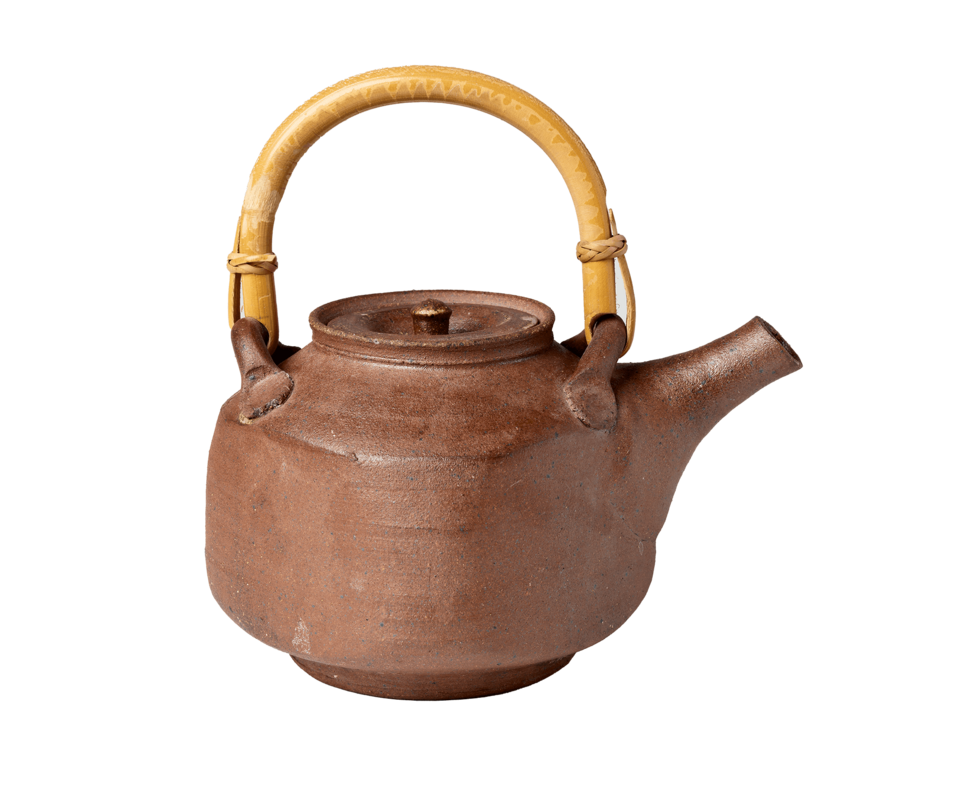
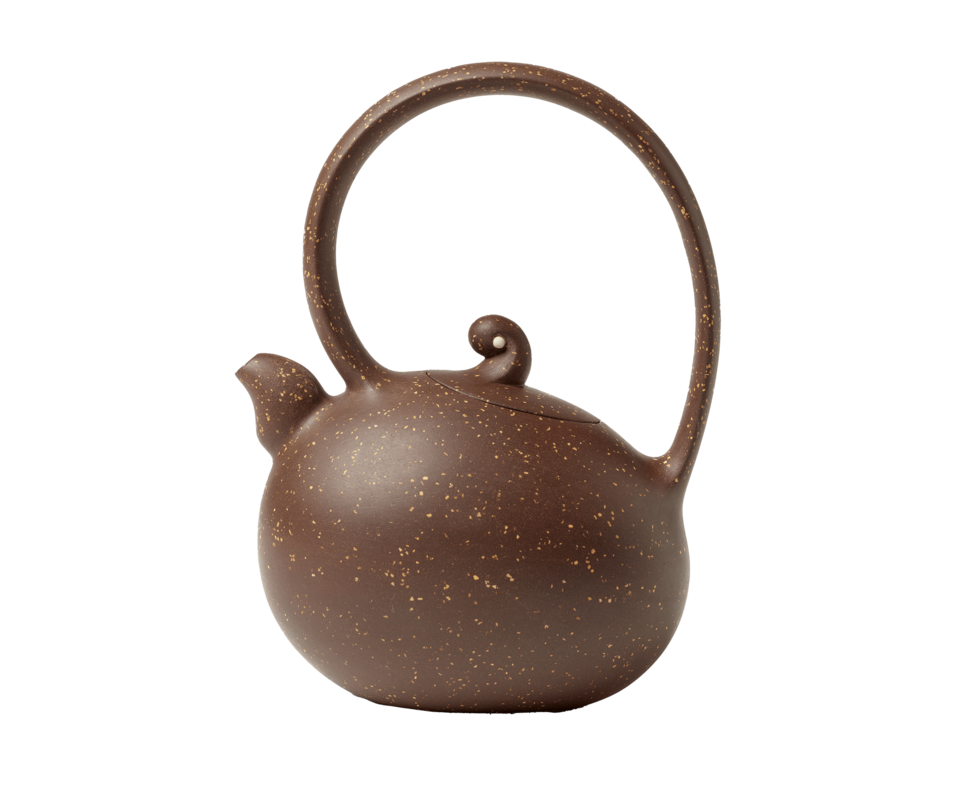
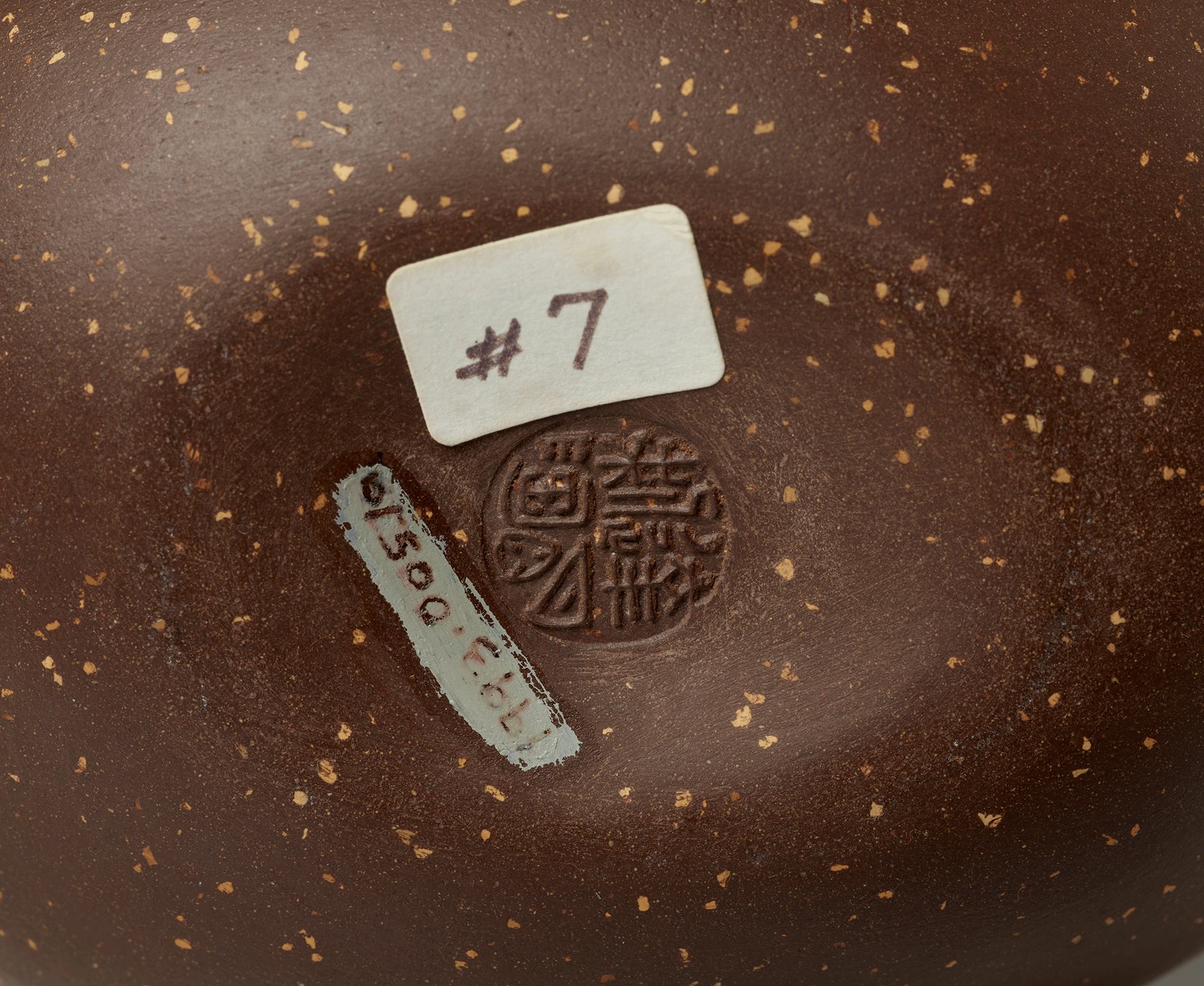
The clay body provides color and texture that is, in essence, its own form of decoration. Xu Daming’s Anticipation Teapot (1993.005) is made of yixing clay, also known as zisha, meaning “purple sand.” High in iron oxide and also containing quartz and mica, this clay fires to a richly colored, naturally patterned surface that shines without glaze.
Rudolf Staffel used unglazed porcelain as both form and decoration, pinching and applying pieces of clay to the surface to create texture and design (2002.82.16). To add color without using glaze, Staffel mixed powdered cobalt oxides into the porcelain, creating a striking blue to contrast with the naturally white ground (2002.82.21). Staffel intentionally made his vessels open, without lids, to take advantage of the natural translucency of the porcelain and allow in as much light as possible. For this reason, all of his open vessels are titled Light Gatherer.
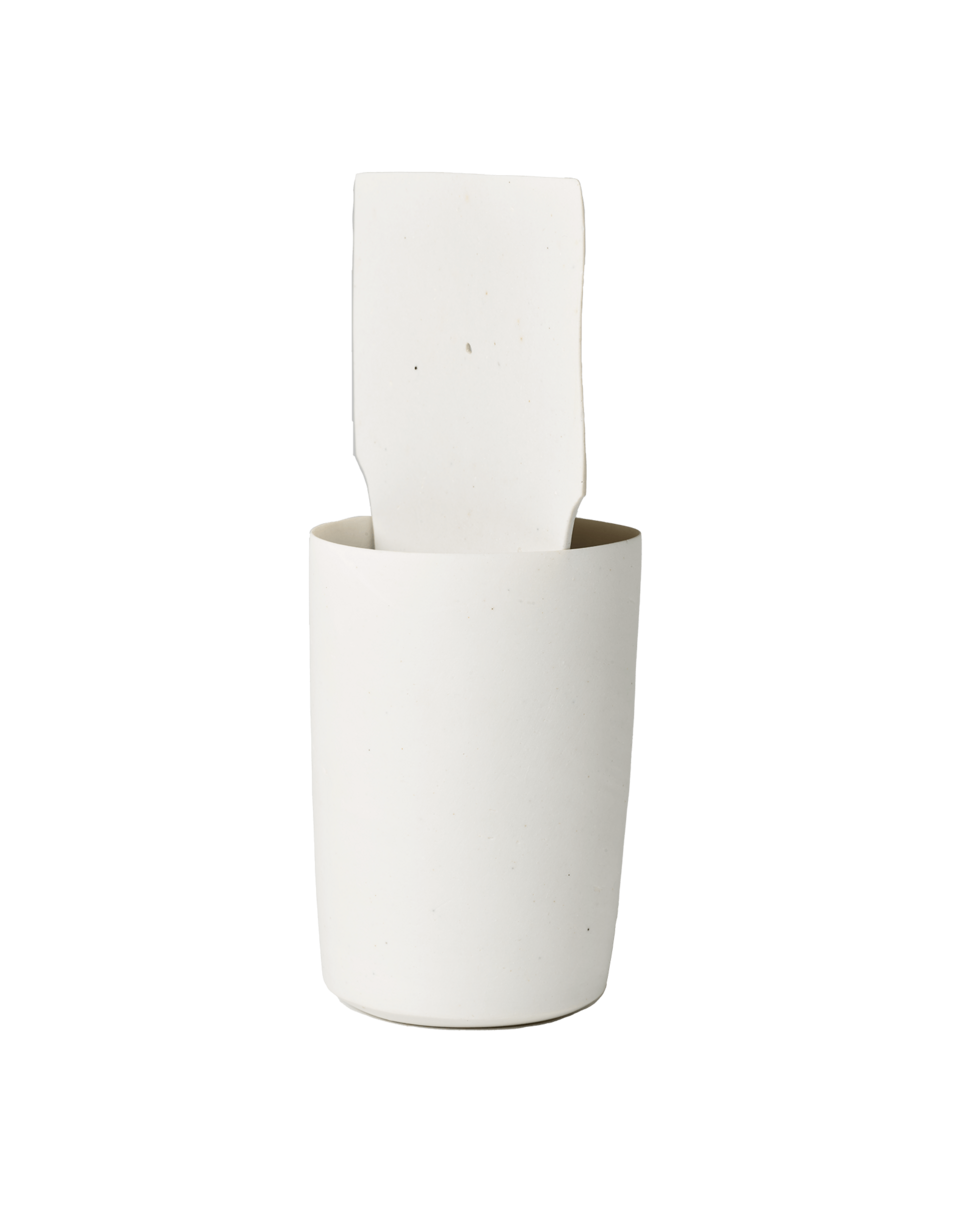
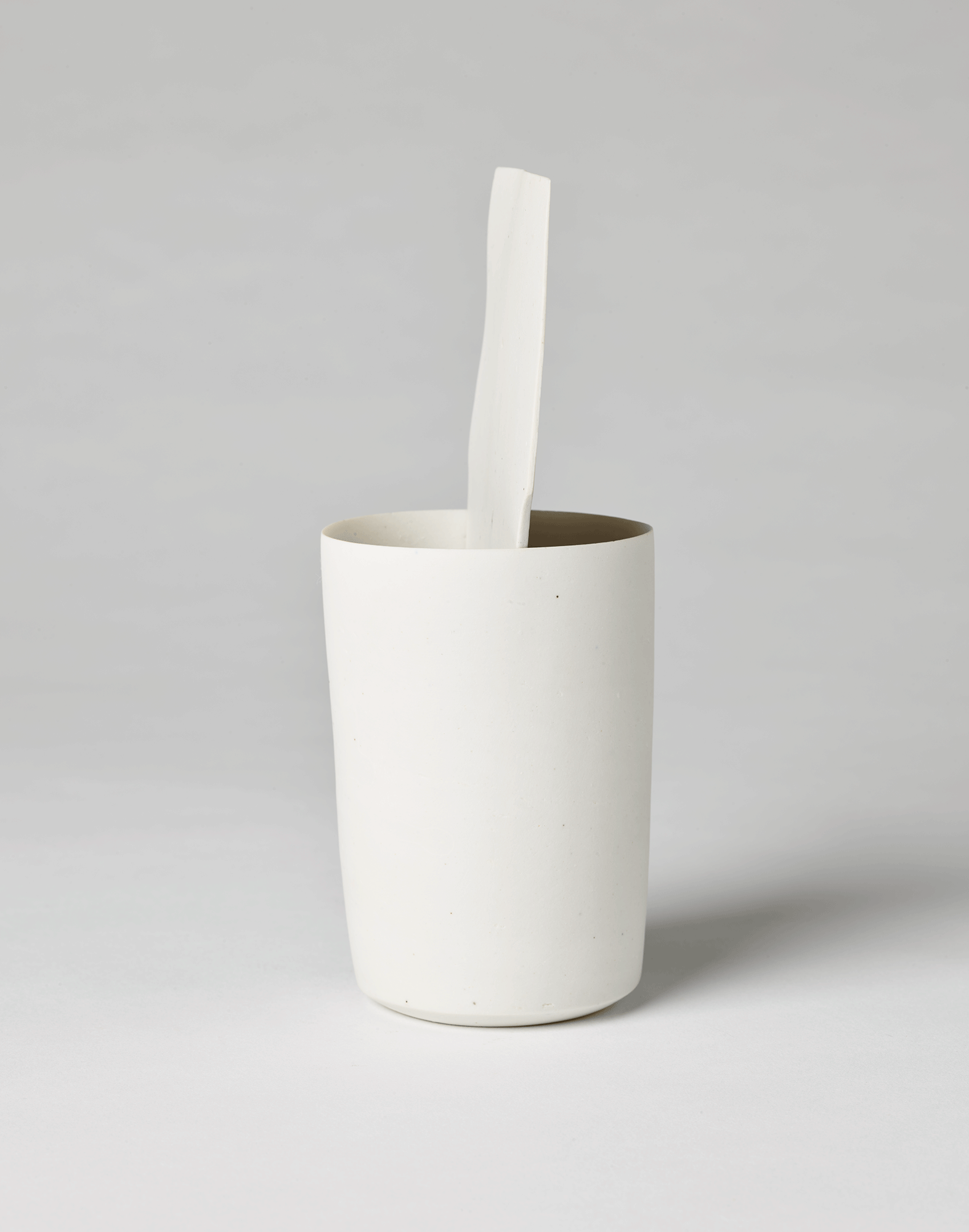
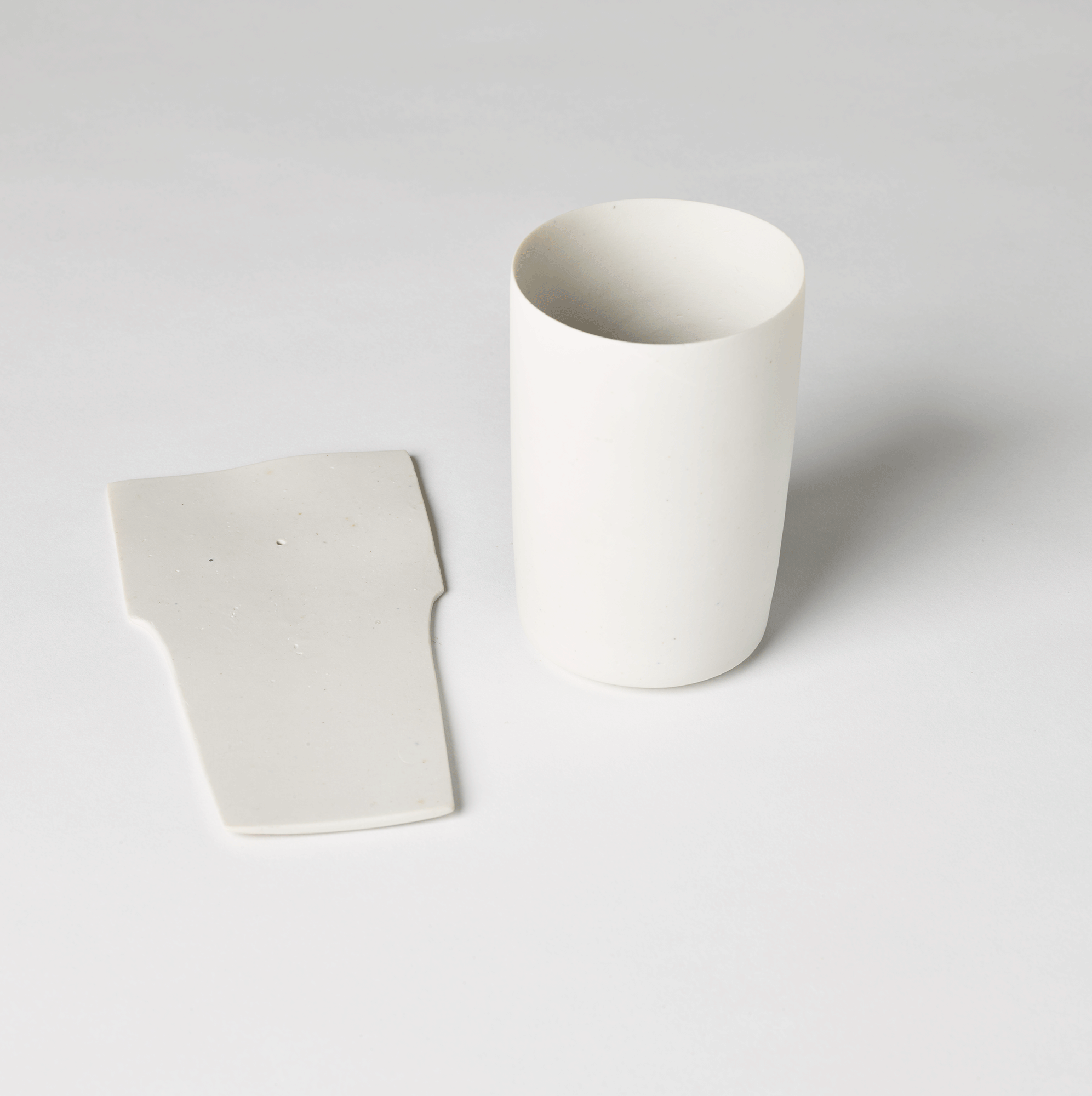
Ruth Duckworth’s Untitled (Cup and Blade) (1993.127) also takes advantage of porcelain’s translucence. The blade—a thin slice of porcelain—rests on the lip and extends down into the cup, revealing varying levels of opacity.
Partial coverage in glaze or slip can be used to highlight the raw surface texture of the clay, such as in Jody Folwell’s Pot (2001.80.35) and James Matkin’s Dinner Plate and Compote (81.06.1, .4).
Image
Images
Warren MacKenzie
American, 1924–2018
Teapot, late 1960s
Stoneware
Gift of the d’Estang Collection 1998.60.4
Xu Daming
Chinese, 1952–2016
Anticipation Teapot, 1991
Stoneware
Georgianna Sayles Aldrich Fund 1993.005
Ruth Duckworth
American, b. Germany; 1919–2009
Untitled (Cup and Blade), 1988
Porcelain
Gift of Mr. and Mrs. Barnet Fain 1993.127
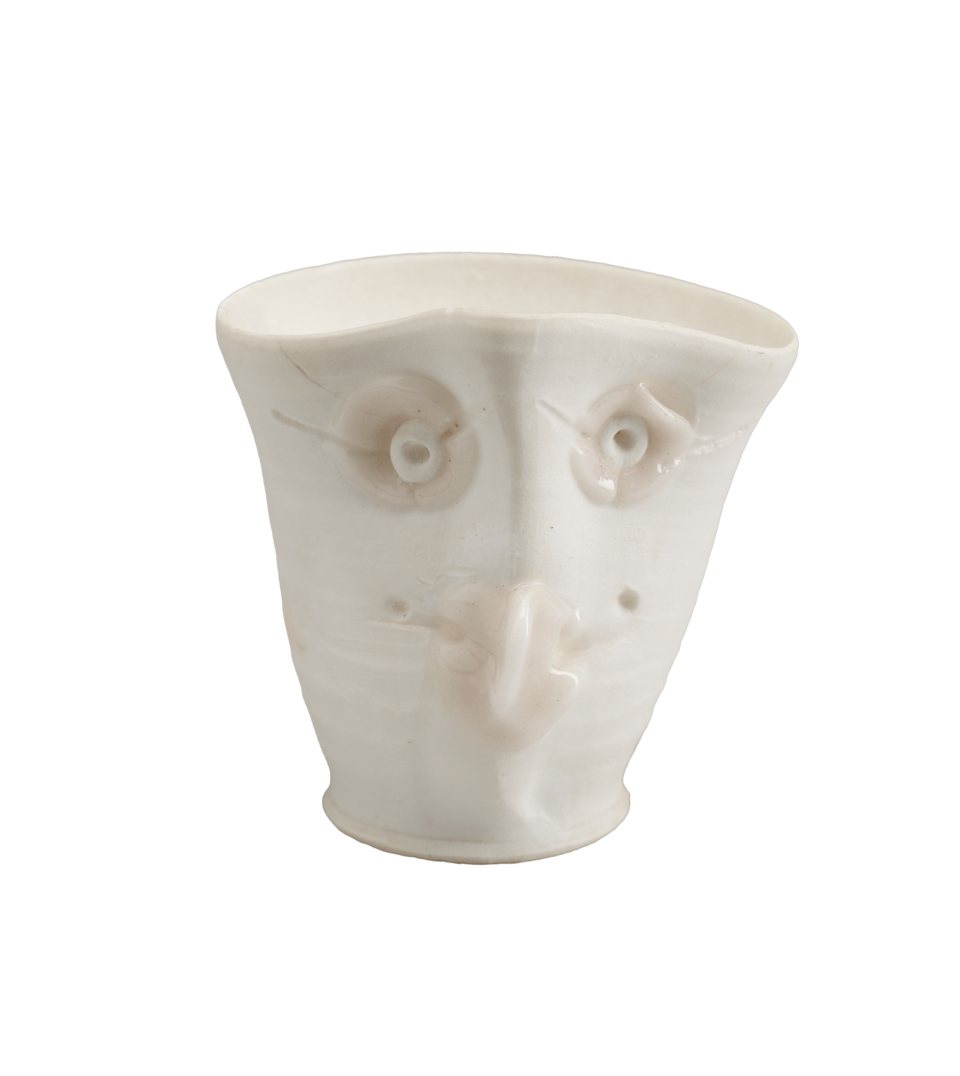
Rudolf Harry Staffel
American, 1911–2002
Light Gatherer, ca. 1970–1980
Porcelain
Gift of Larry Day and Ruth Fine in honor of William and Catherine Daley 2002.82.16
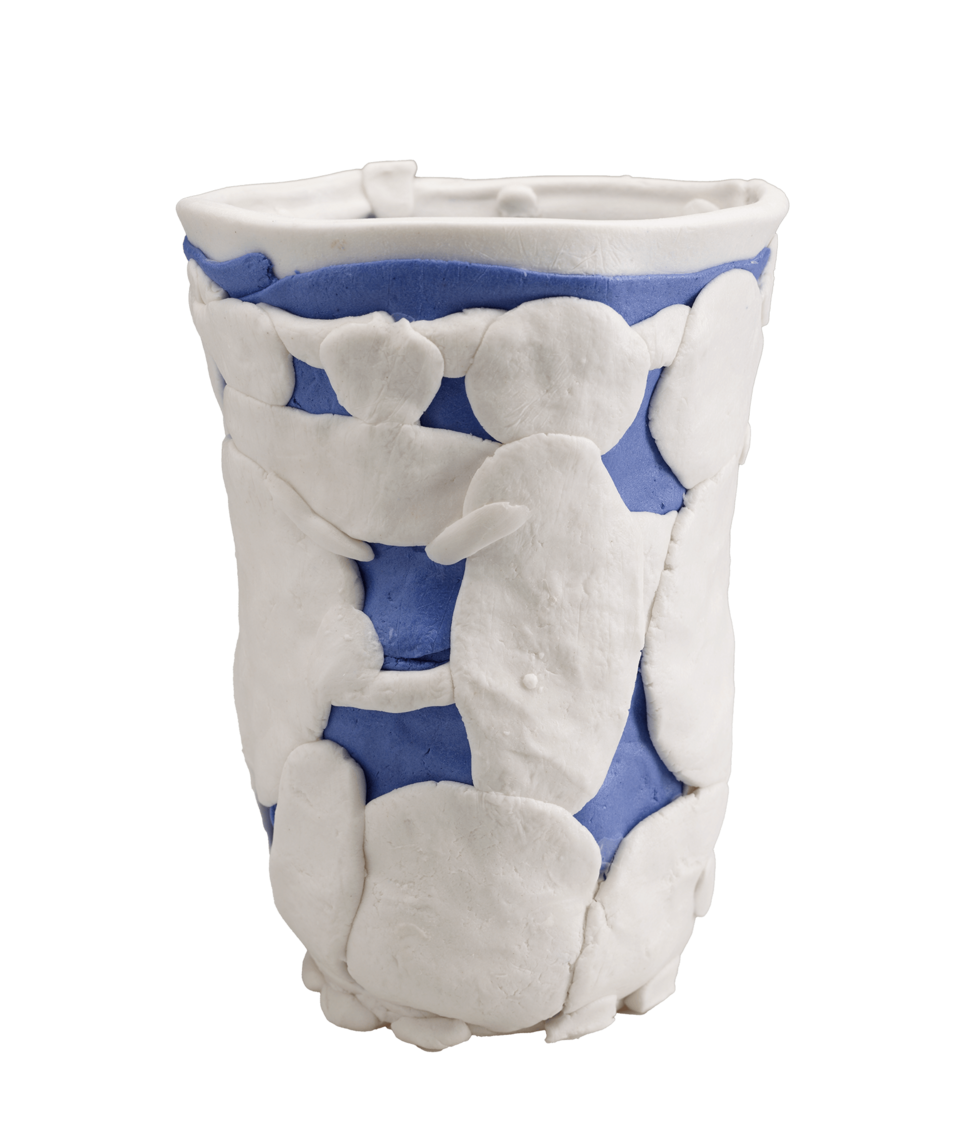
Rudolf Harry Staffel
American, 1911–2002
Light Gatherer, ca. 1970–1980
Porcelain
Gift of Larry Day and Ruth Fine in honor of William and Catherine Daley 2002.82.21
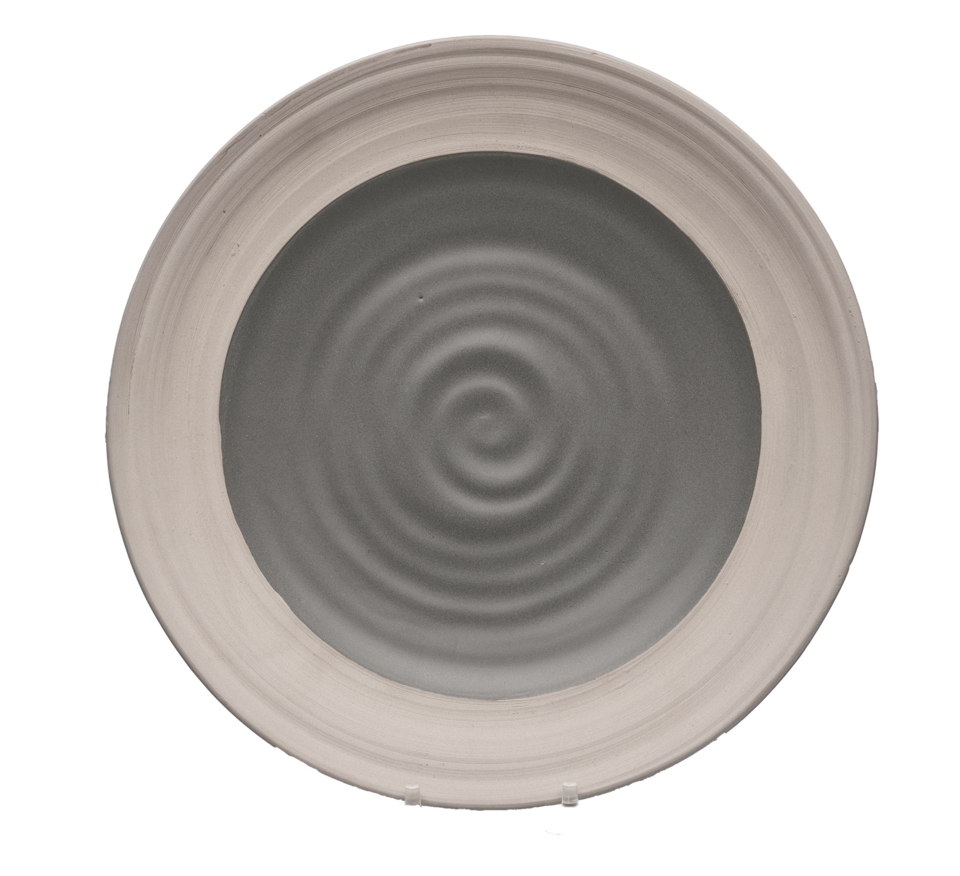
James Makins
American, b. 1946
Dinner Plate, 1981
Porcelain with slip
Edgar J. Lownes Fund 81.061.1
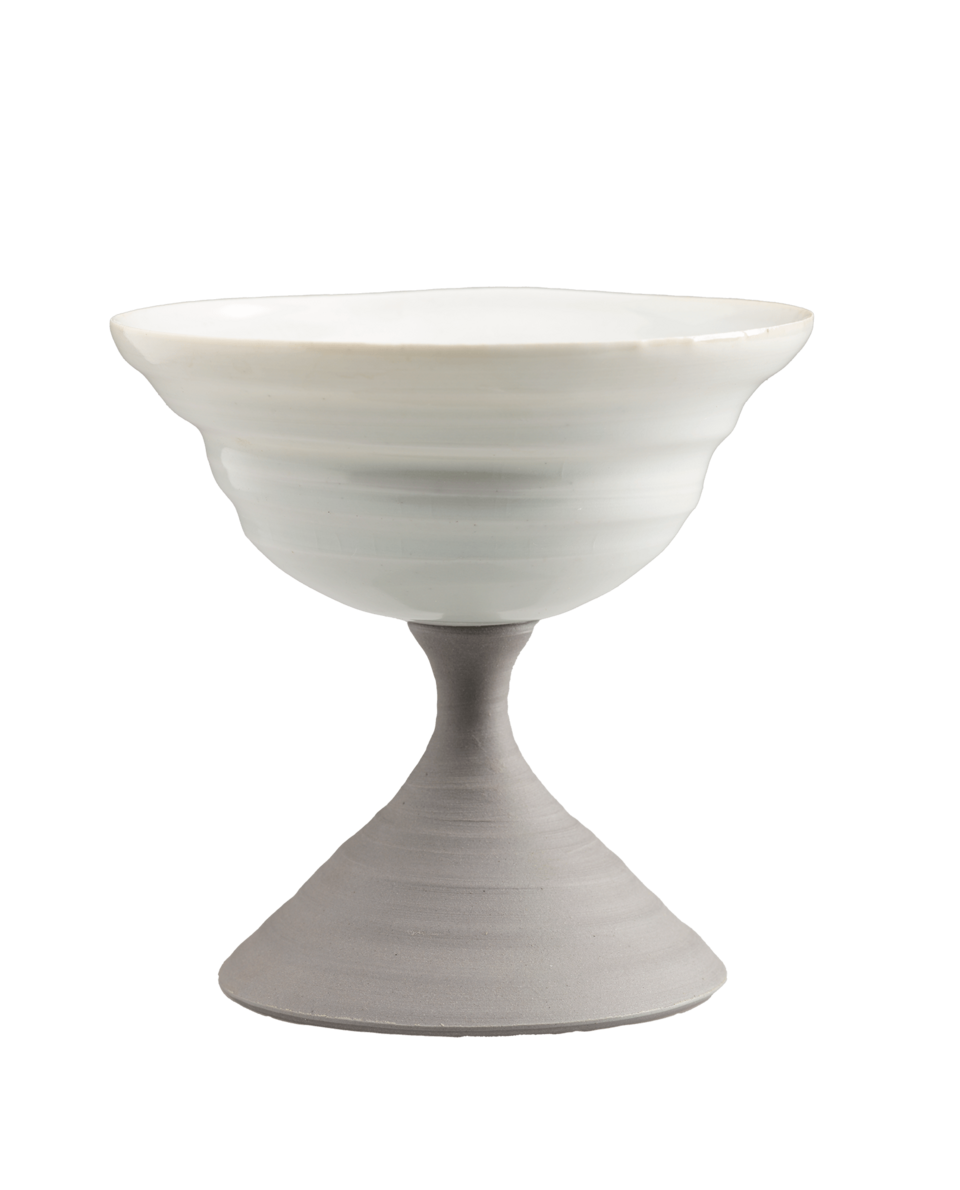
James Makins
American, b. 1946
Compote, 1981
Porcelain with slip and glaze
Edgar J. Lownes Fund 81.061.4
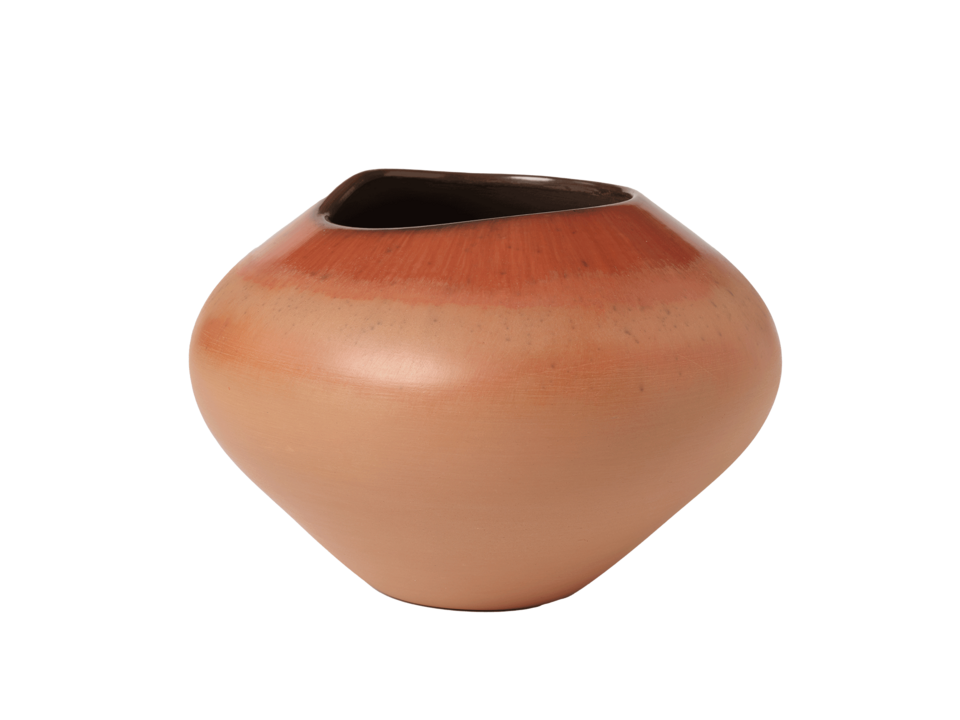
Jody Folwell
Kha’p’oo Owinge (Santa Clara Pueblo), b. 1942
Pot, 1989
Ceramic
Gift from the Collection of Mr. and Mrs. Barnet Fain 2001.80.35
Textured ceramic surfaces invite tactile and visual exploration. One can detect subtle nuances as the glaze or slip interacts with the clay form, note the spontaneous effects of the kiln, and appreciate the presence of the artist’s hand.
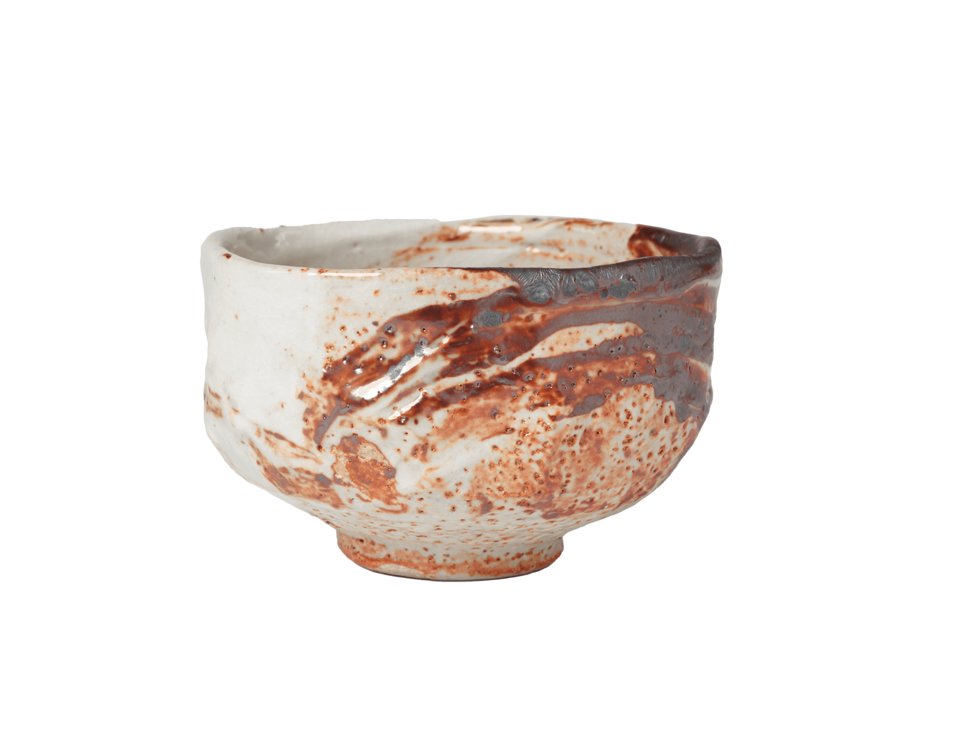
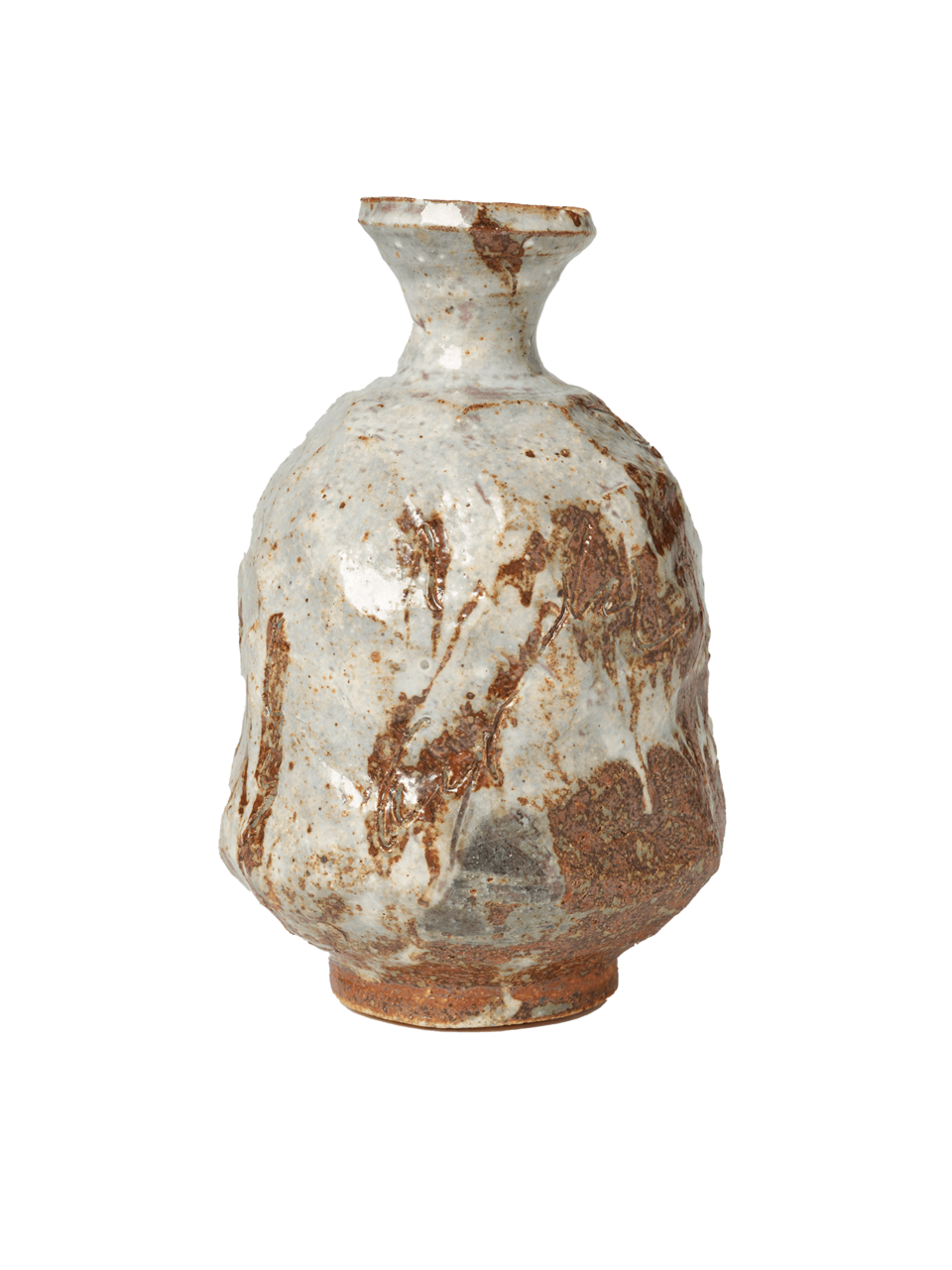
Makoto Yabe’s Vase (2004.17.2) and Tea Bowl (2004.17.1) were made using a Japanese technique called mentori, a process of faceting by cutting or carving and paddling the clay. The surface is enhanced by Yabe’s signature wood-ash glaze and white slip, which highlight the peaks and valleys of the form. Both works reflect the Japanese wabi-sabi aesthetic, which celebrates imperfection.
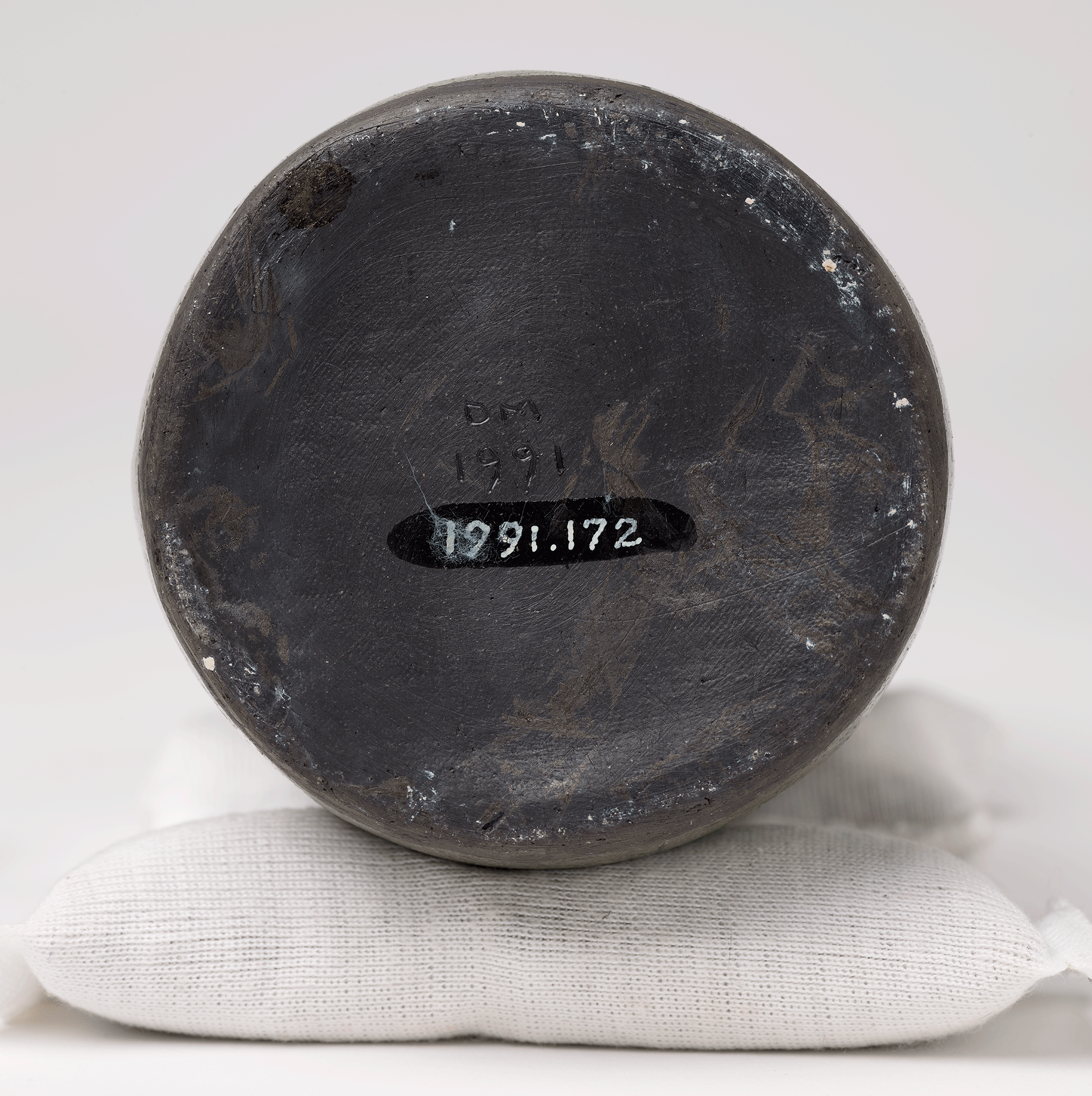
Another Japanese process that wholly embraces the wabi-sabi mentality and the spontaneity of firing is raku. In this method the hot clay is transferred, mid-firing, to a bin with combustible materials that can darken, crack, and transform the surface in unexpected ways. In keeping with raku traditions, Diane Mayo hand-builds her vessels (1991.172), while her use of bright glazes brings this process into a new era. Texture is a central component of Steven Branfman’s raku-fired Vessel (2000.69), onto which he poured several different glazes before firing.
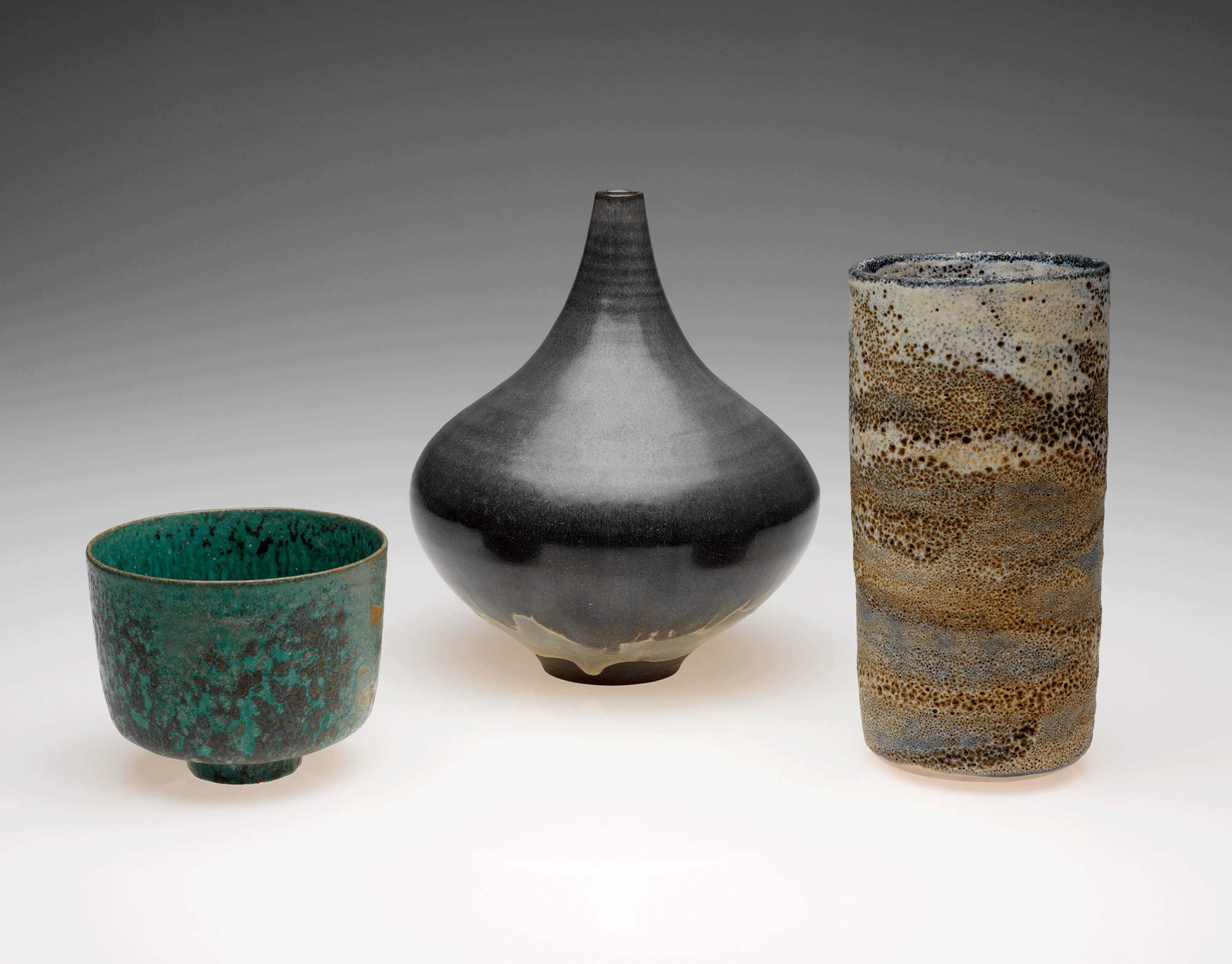
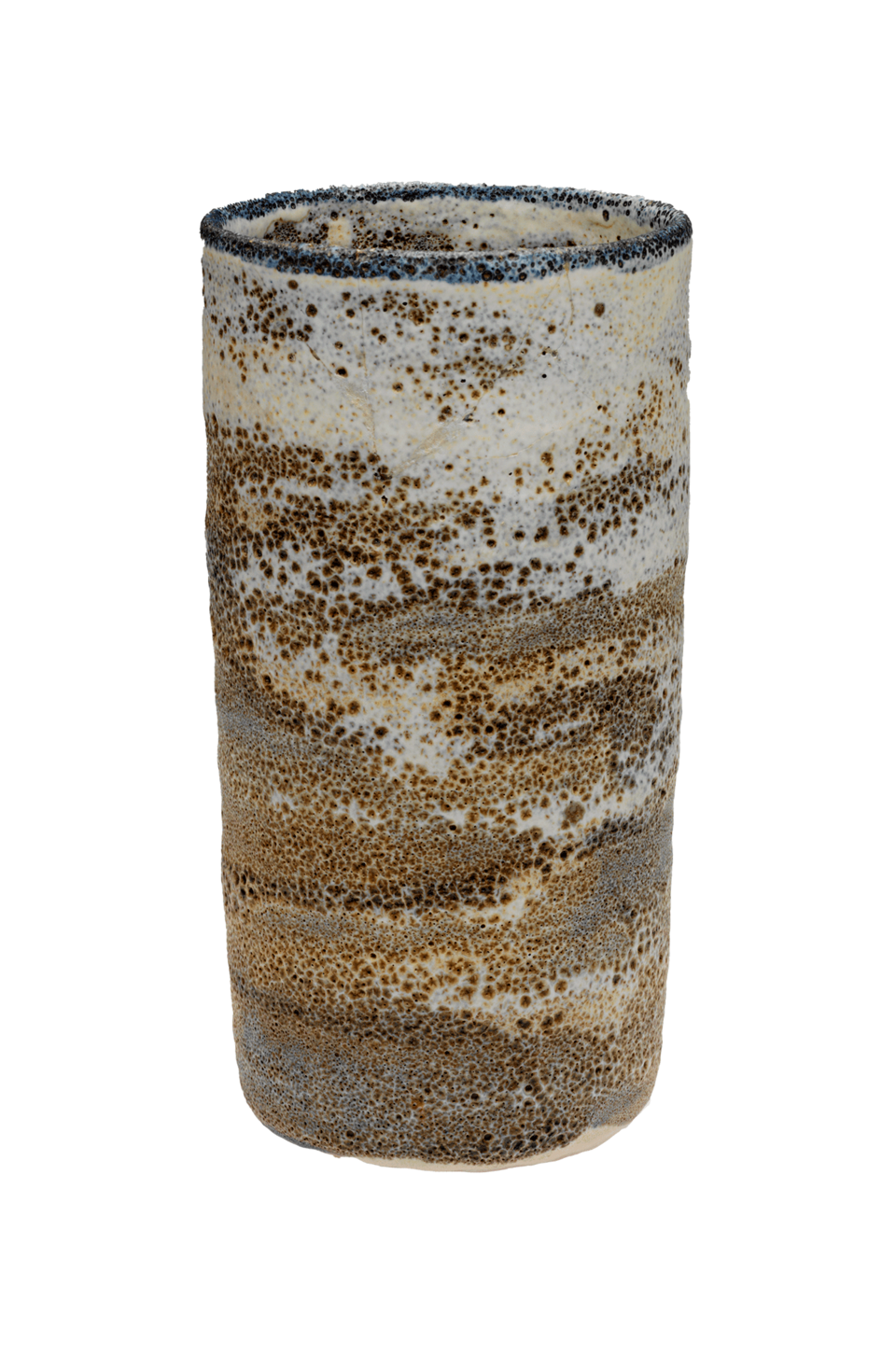
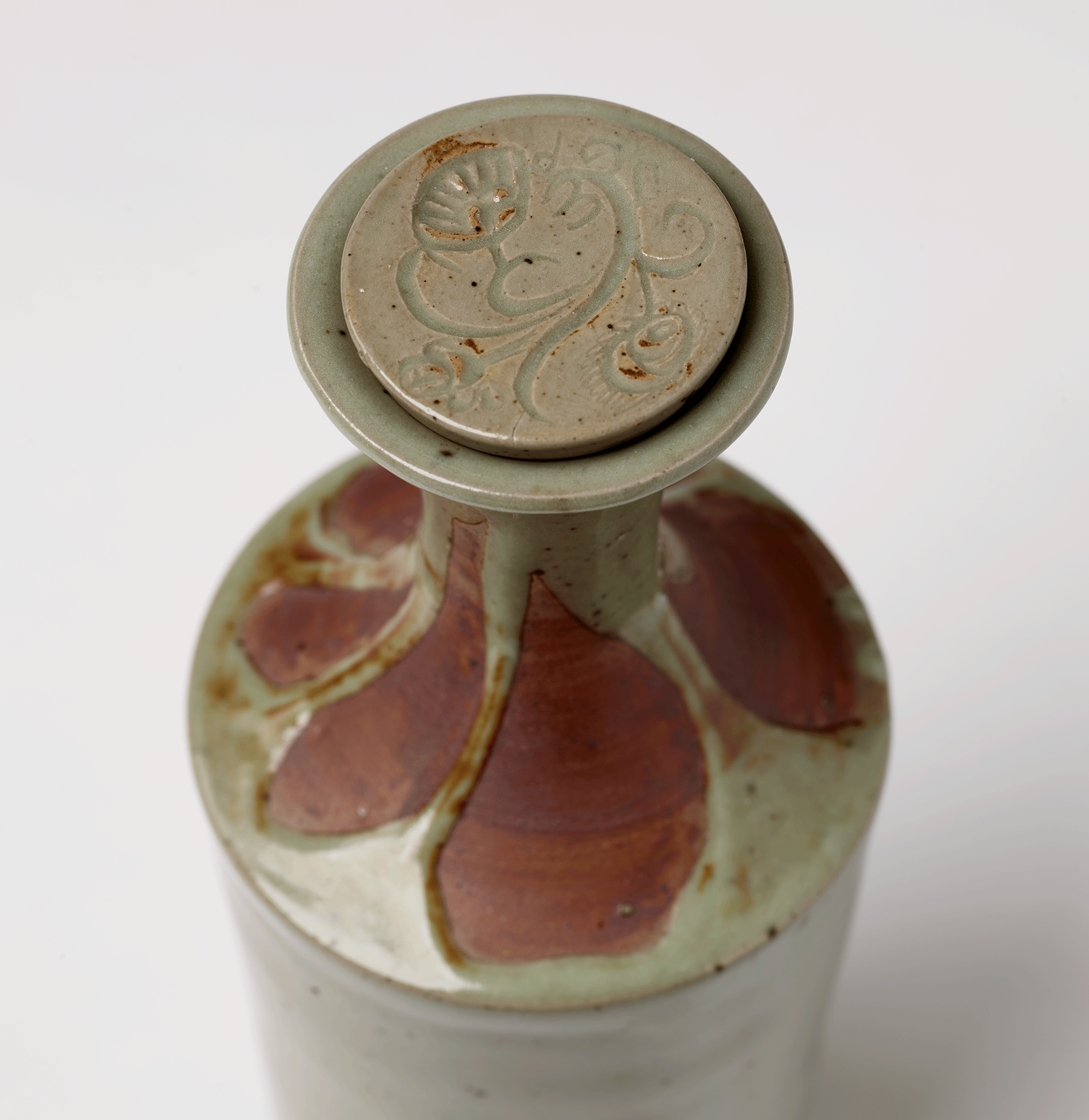
Within the Natzler’s design partnership, Gertrud threw the clay forms, some of which have a subtle textured surface like their Bottle (1999.71.3). Otto Natzler was in charge of glazes and kept meticulous records of his experiments. Fascinated by crater-like textures, he actively developed glazes that took on pitted surfaces during firing, as in this Vase (1999.71.1). Alternatively, other materials can interact with a glaze during firing to produce surprising effects, like in Randy Johnson’s Plate (2015.47.4). Three shells were placed on the surface to separate the plate from other works stacked on it in the kiln. During firing, the calcium shells burned into the glaze, leaving their impression.
Image
Images
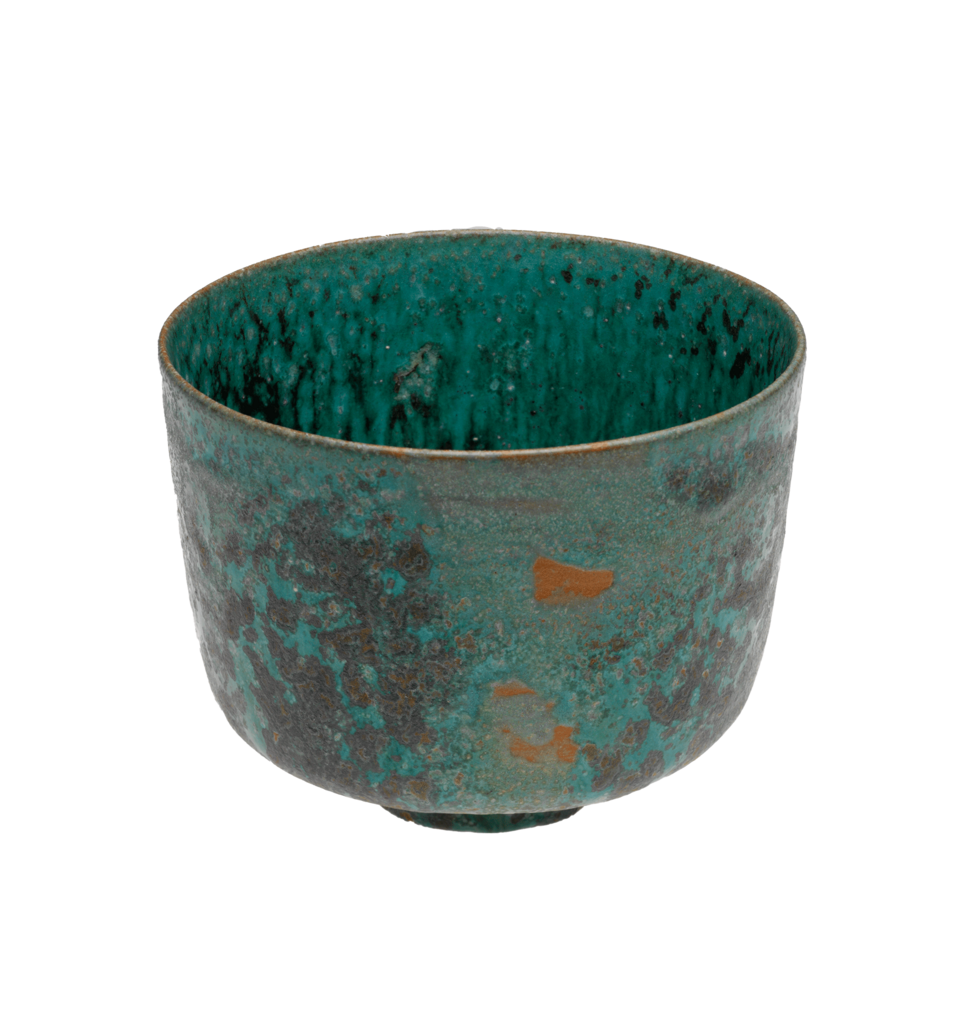
Gertrud Natzler
American, b. Austria; 1908–1971
Otto Natzler
American, b. Austria; 1908–2007
Bowl, 1965
Stoneware with glaze
Gift of Mr. and Mrs. William A. Small, Jr. 1999.71.2
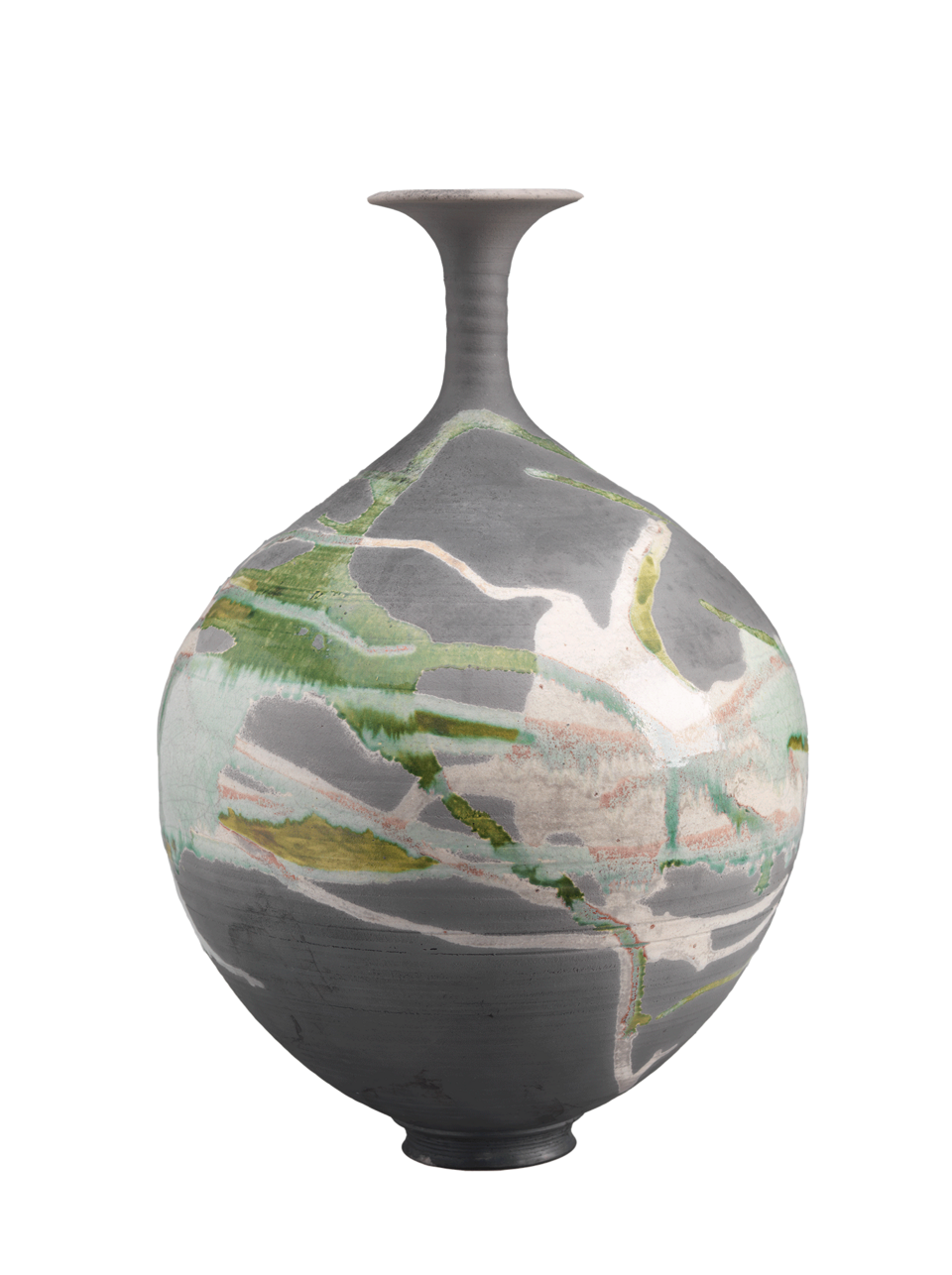
Steven Branfman (RISD MAT 1975, Ceramics Education)
American, b. 1953
Vessel, 1994
Raku-fired earthenware with glaze
Gift of Dr. and Mrs. Joseph A. Chazan 2000.69
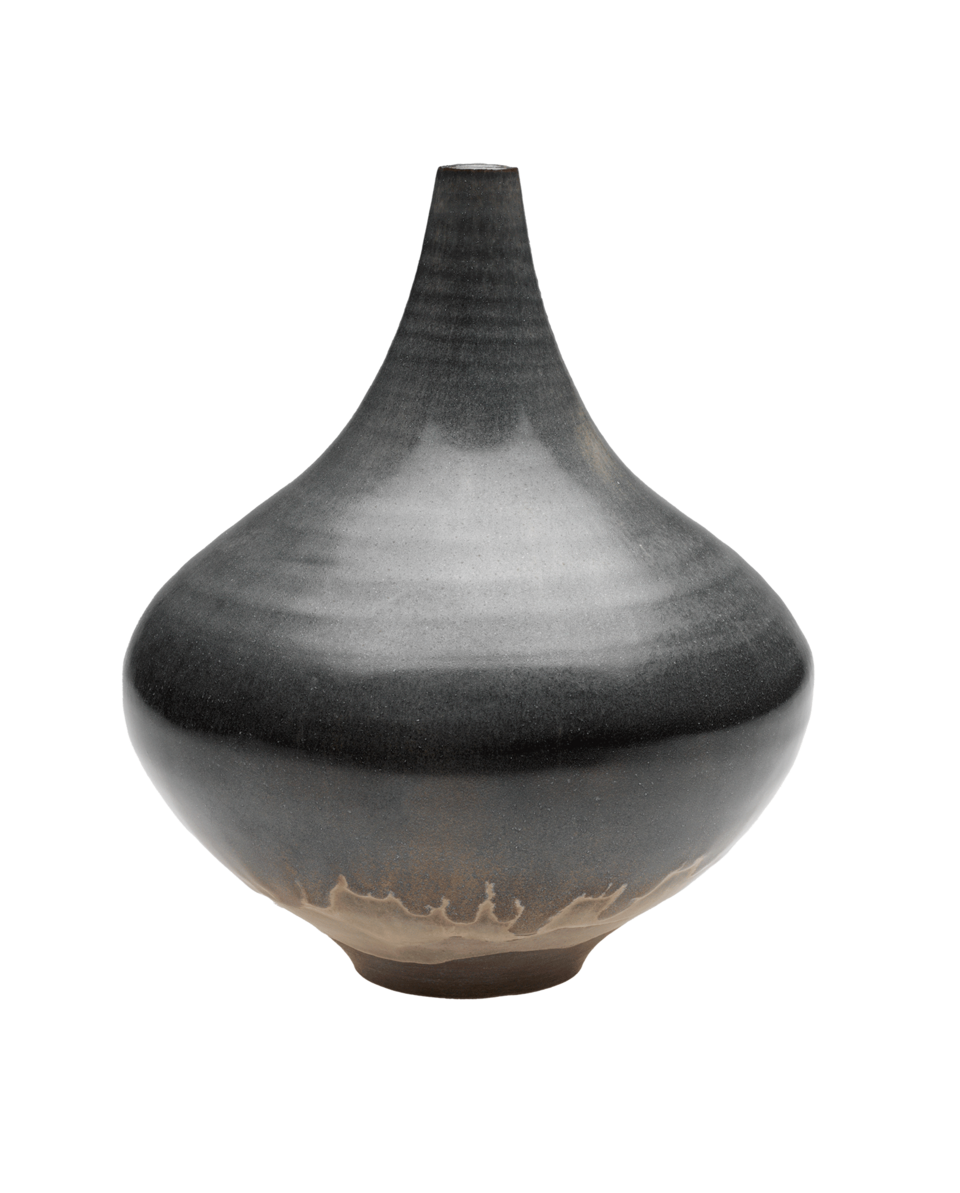
Gertrud Natzler
American, b. Austria; 1908–1971
Otto Natzler
American, b. Austria; 1908–2007
Bottle, 1968
Stoneware with glaze
Gift of Mr. and Mrs. William A. Small, Jr. 1999.71.3
Gertrud Natzler
American, b. Austria; 1908–1971
Otto Natzler
American, b. Austria; 1908–2007
Vase, 1957
Stoneware with glaze
Gift of Mr. and Mrs. William A. Small, Jr. 1999.71.1
Makoto Yabe
Japanese, 1947–2005
Tea Bowl, 2003
Stoneware with slip and glaze
Gift of Bernie and Sue Pucker in honor of Fred and Edith Bloom 2004.17.1
Makoto Yabe
Japanese, 1947–2005
Vase, 2003
Stoneware with slip and glaze
Gift of Bernie and Sue Pucker in honor of Mort Grossman 2004.17.2
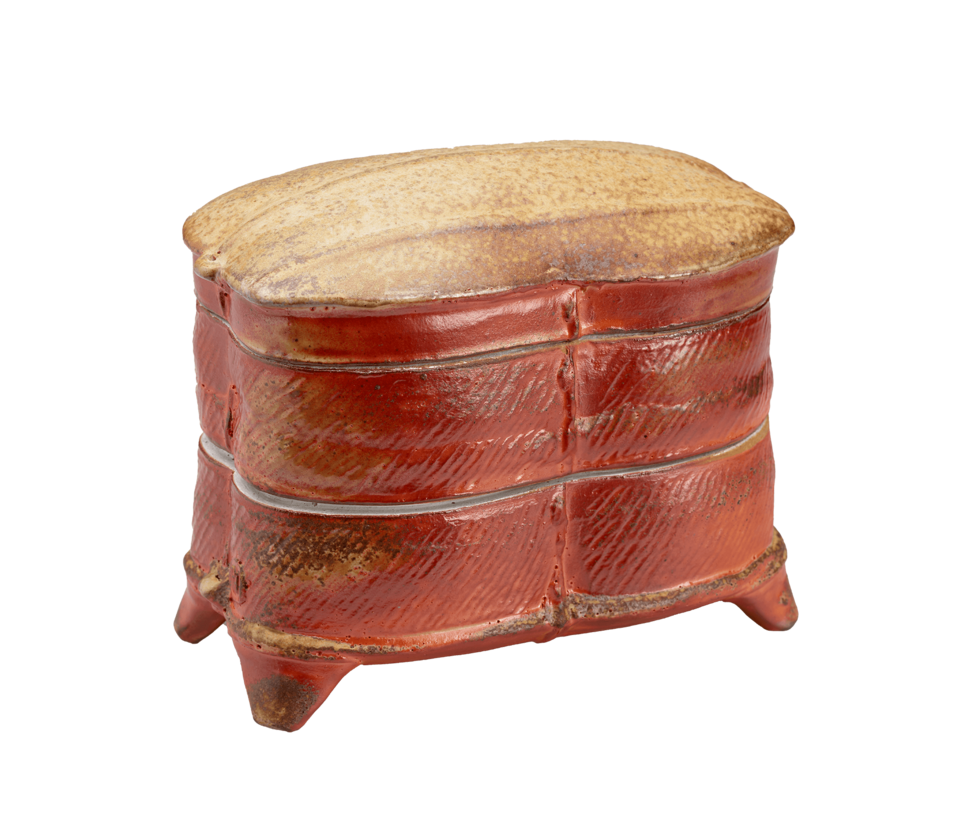
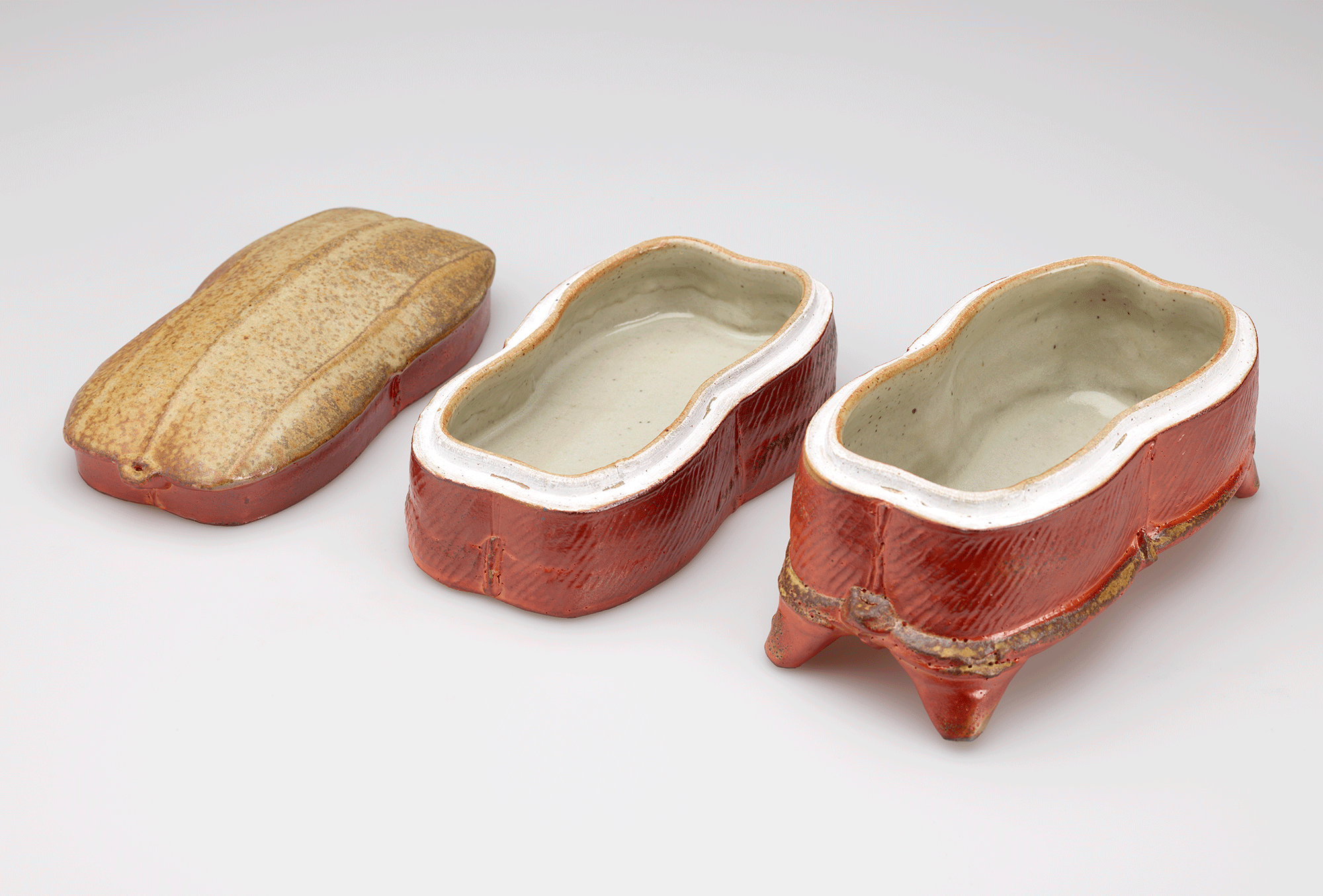
Randy Johnston
American, b. 1950
Stacked Box, 1998
Stoneware with slip
Gift of the d’Estang Collection 1998.60.13
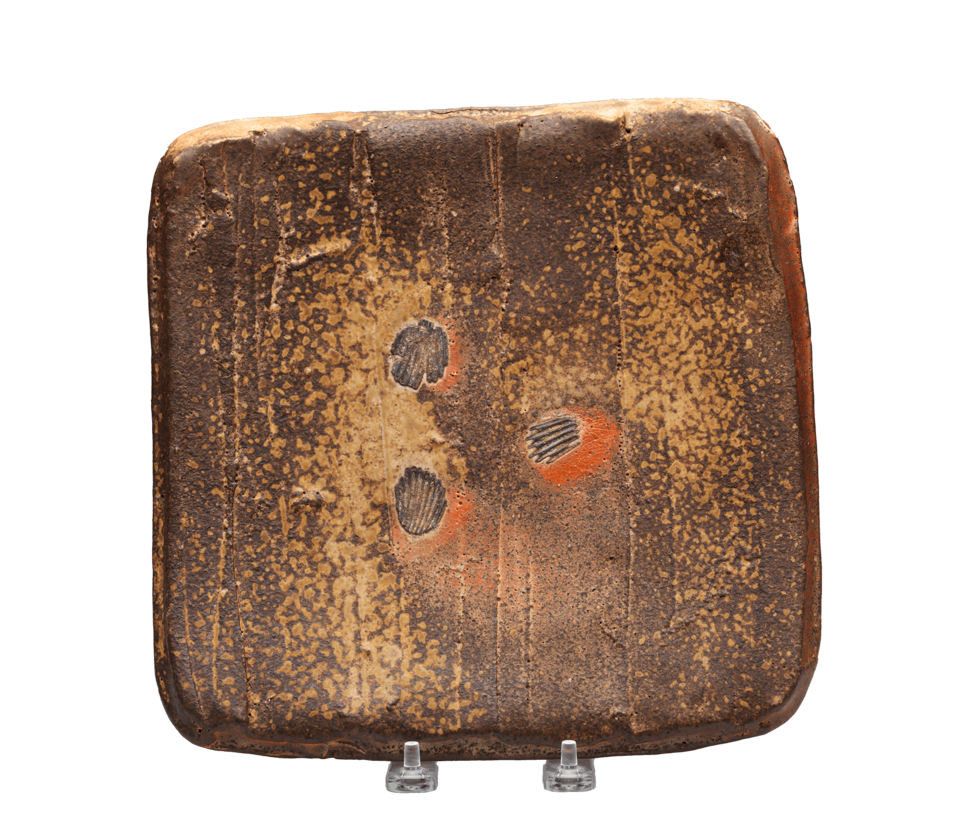
Randy Johnston
American, b. 1950
Plate, ca. 2010
Stoneware with glaze
Gift of Nancy d’Estang 2015.47.4
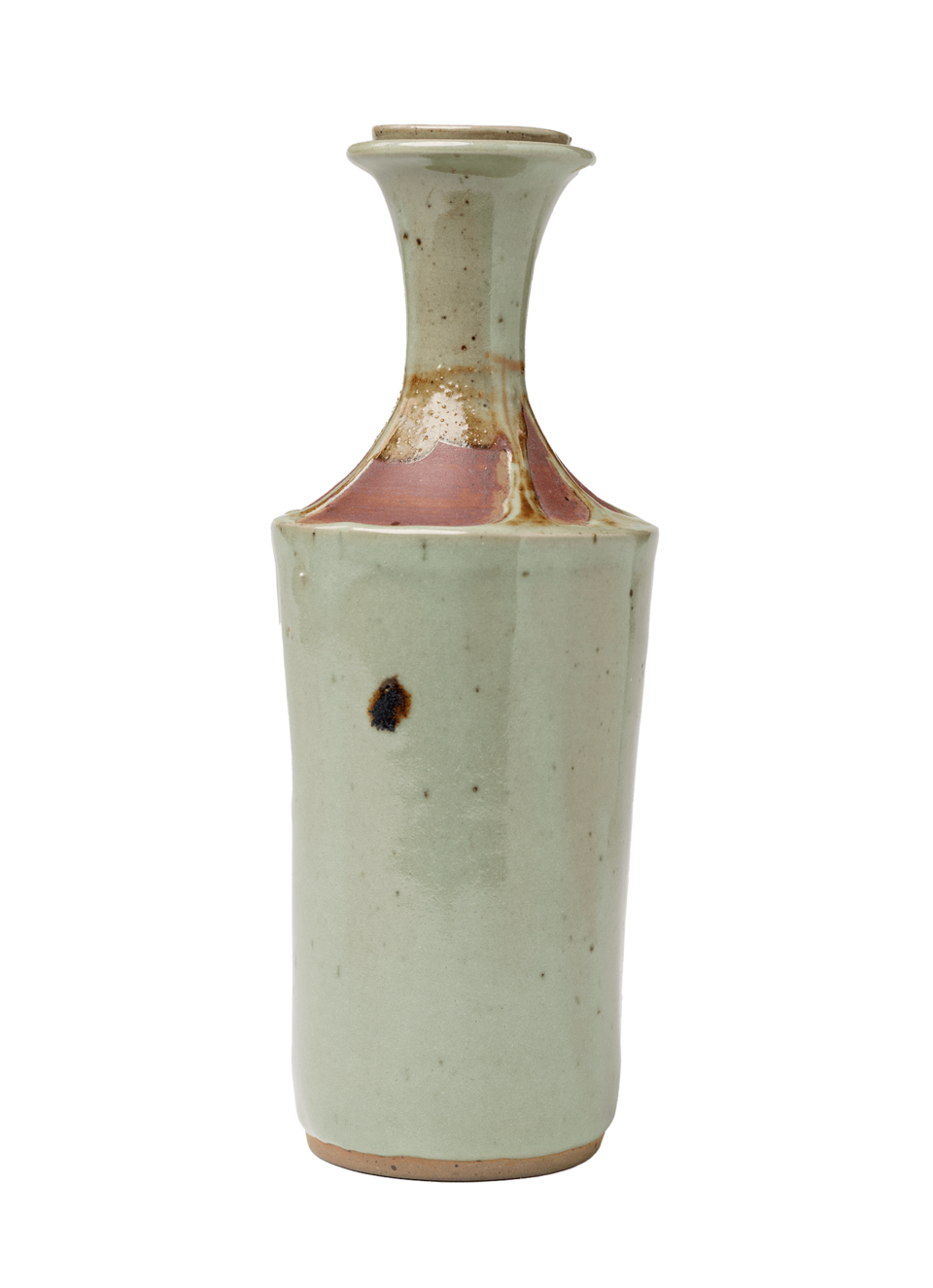
William Parry
American, 1918–2004
Decanter, ca. 1960
Stoneware with glaze
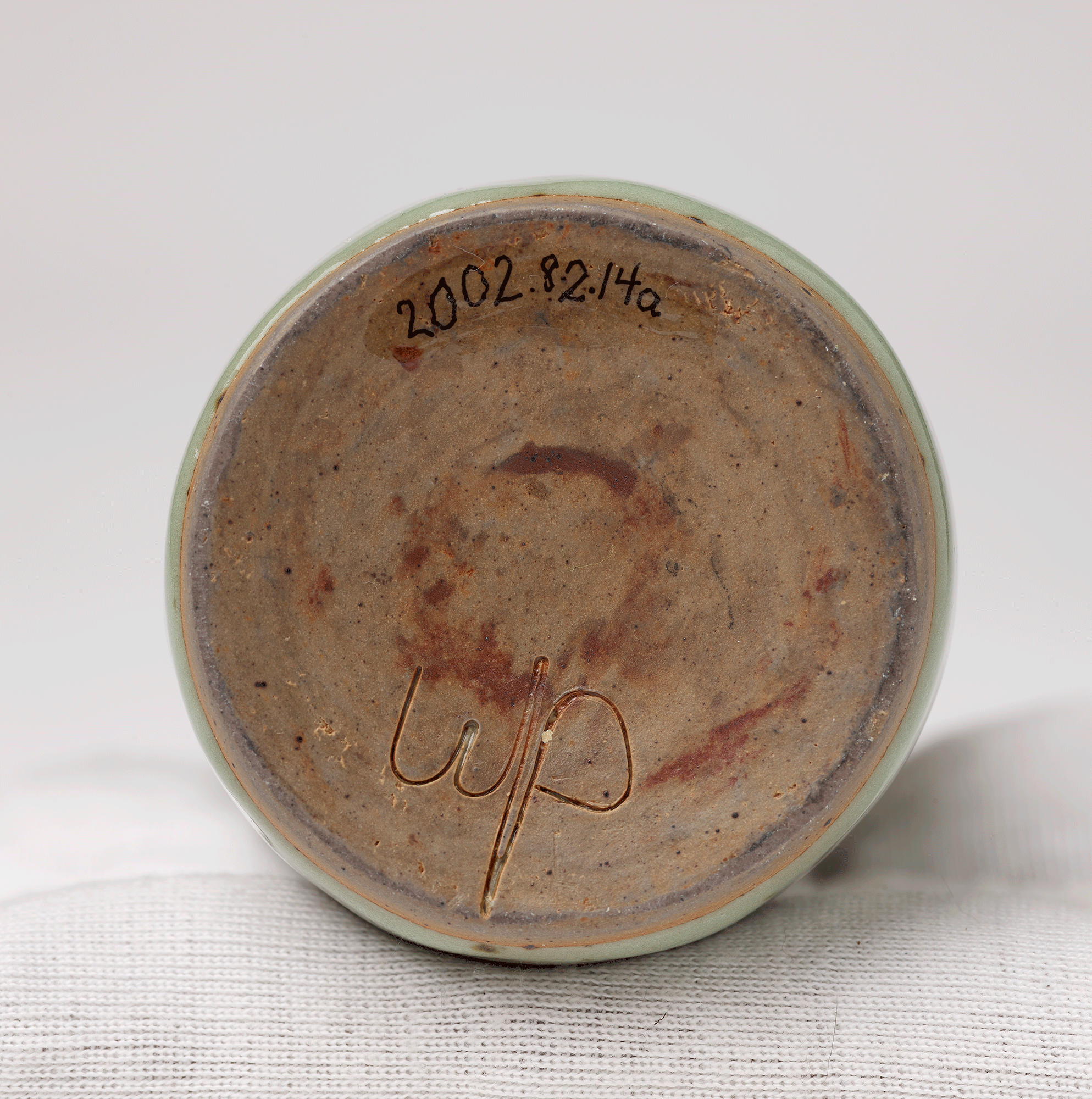
Gift of Larry Day and Ruth Fine in honor of William and Catherine Daley 2002.82.14
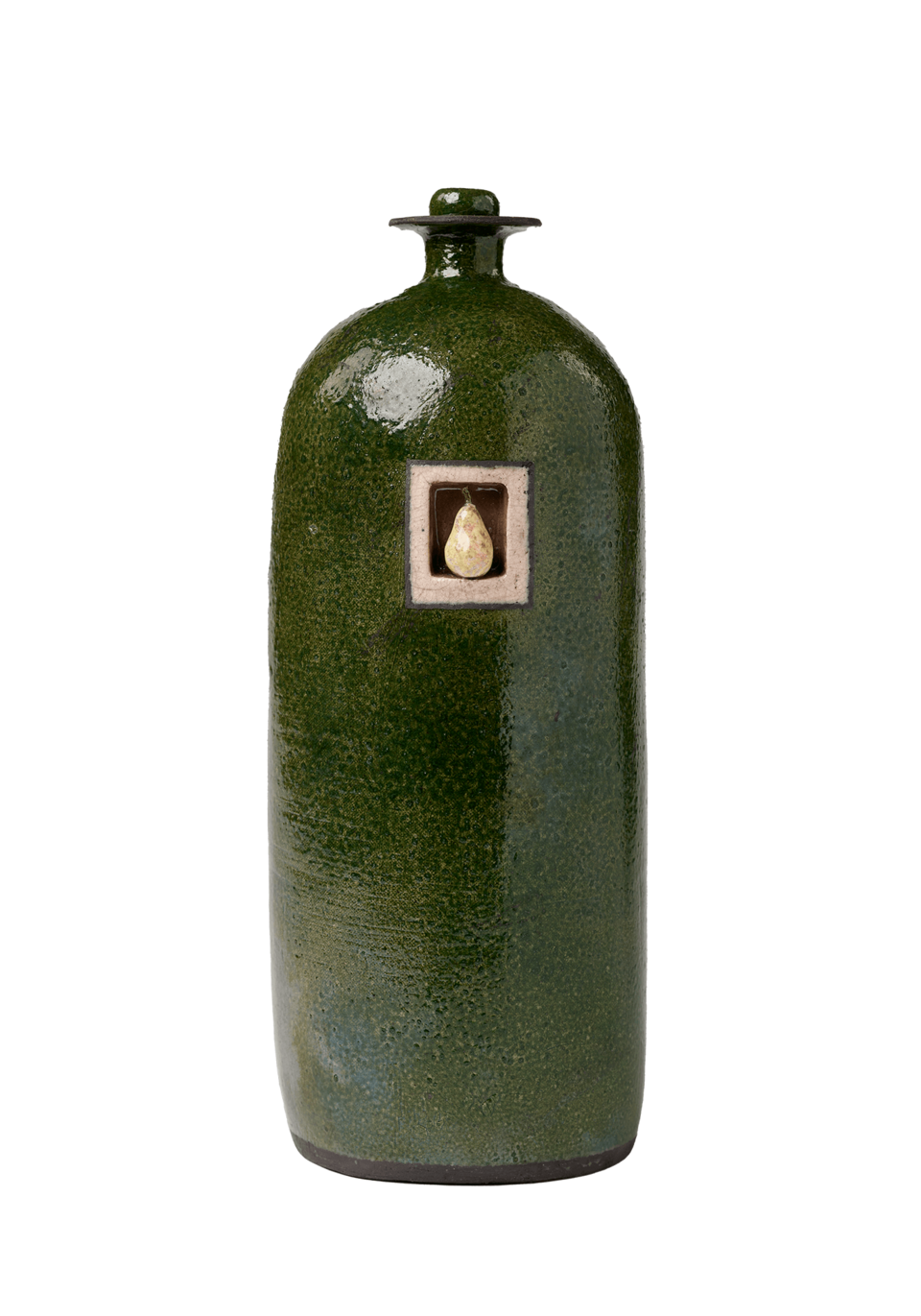
Diane Mayo
American, 1948–2021
Niche Bottle, 1991
Raku-fired earthenware with glaze
Gift of Vered Gallery 1991.172
Case 2
Click an object for more information
Glazes are mixtures of silica—the primary component in glass—and various minerals, oxides, and additives for color and stability, ensuring the formula adheres to the clay during firing. They can be applied in numerous ways, including dipping, spraying, and brushing. Glazes have long served a practical purpose: they make porous clay impermeable to water so that vessels can be utilized to their fullest. Glazes are also a highly developed art. Many contemporary ceramic artists have created signature glazes and specific techniques for applying them. There always remains, however, a level of unpredictability that must be embraced.
Crystalline glazes are some of the most unpredictable, but they are highly prized for their jewel-like appearance. Holding a steady temperature for several hours before slowly cooling the kiln allows crystals to form in the glaze, as seen in the Green Three-Lobe Poison Bottle by Rain Harris (2003.42).
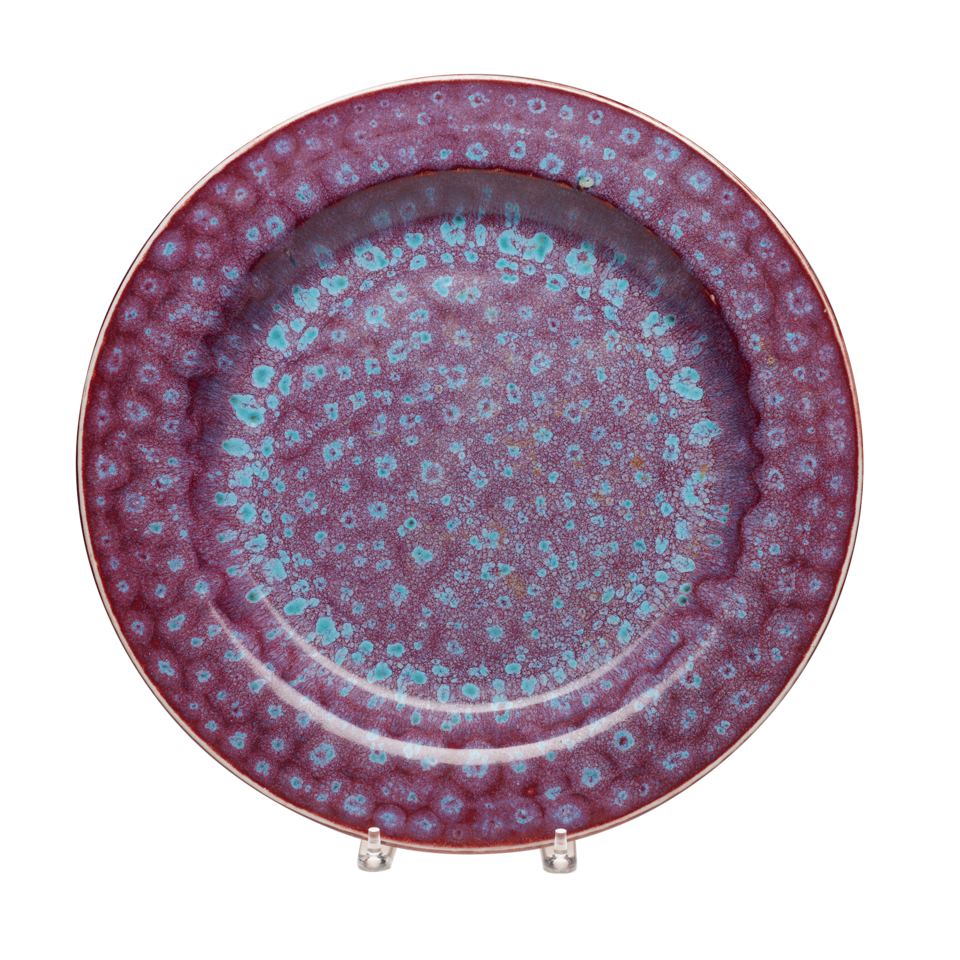
The dramatic colors of Brother Thomas Bezanson’s glazes, which suggest patterns found in nature, were in fact created through his use of natural materials such as wood ashes, copper, and iron (2004.121.6, 2004.121.4). Although Betty Woodman’s approach to pattern and color looks spontaneous in her Mussel Server (81.063), it intentionally recreates the mottled look of Whieldon ware, an English style from the 1700s.
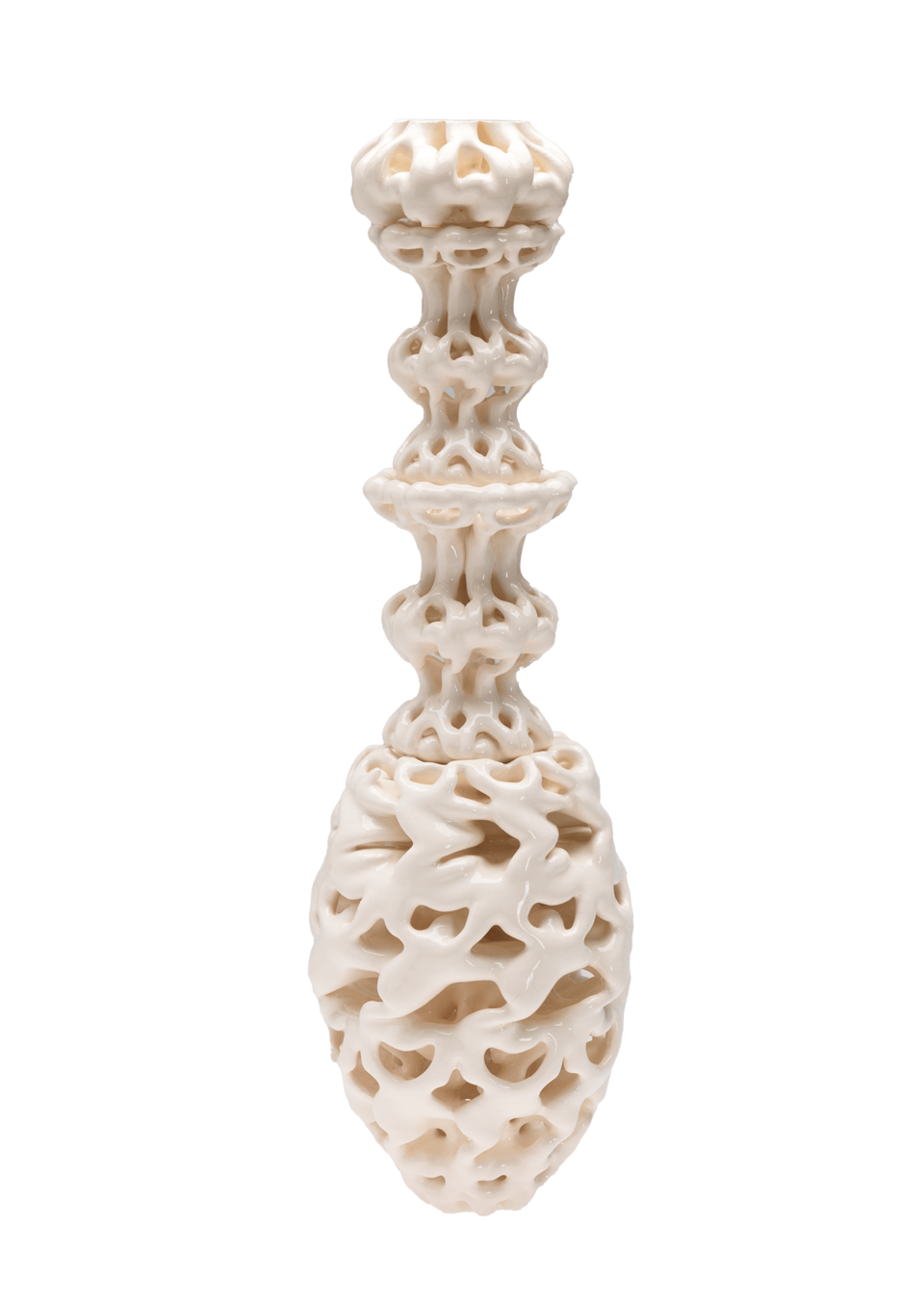
The glaze on Kate Blacklock’s Vessel Form L (2016.15) is both aesthetic and structural. This work is contructed of four parts that were 3D-printed separately and fused together by the glaze.
Image
Images
Brother Thomas Bezanson
American, b. Canada; 1929–2007
Plate, ca. 1980
Porcelain with glaze
Gift of Frederick and Edith W. Bloom 2004.121.6
Kate Blacklock (RISD MFA 1987, Sculpture/Ceramics; RISD faculty)
American, b. 1957
Vessel Form L, 2015
3D-printed ceramic with glaze
Museum purchase: gift of Joseph A. Chazan, MD 2016.15
Adrian Saxe
American, b. 1943
Black Pattypan Teapot, 1990
Porcelain with glaze
Walter H. Kimball Fund 1990.128
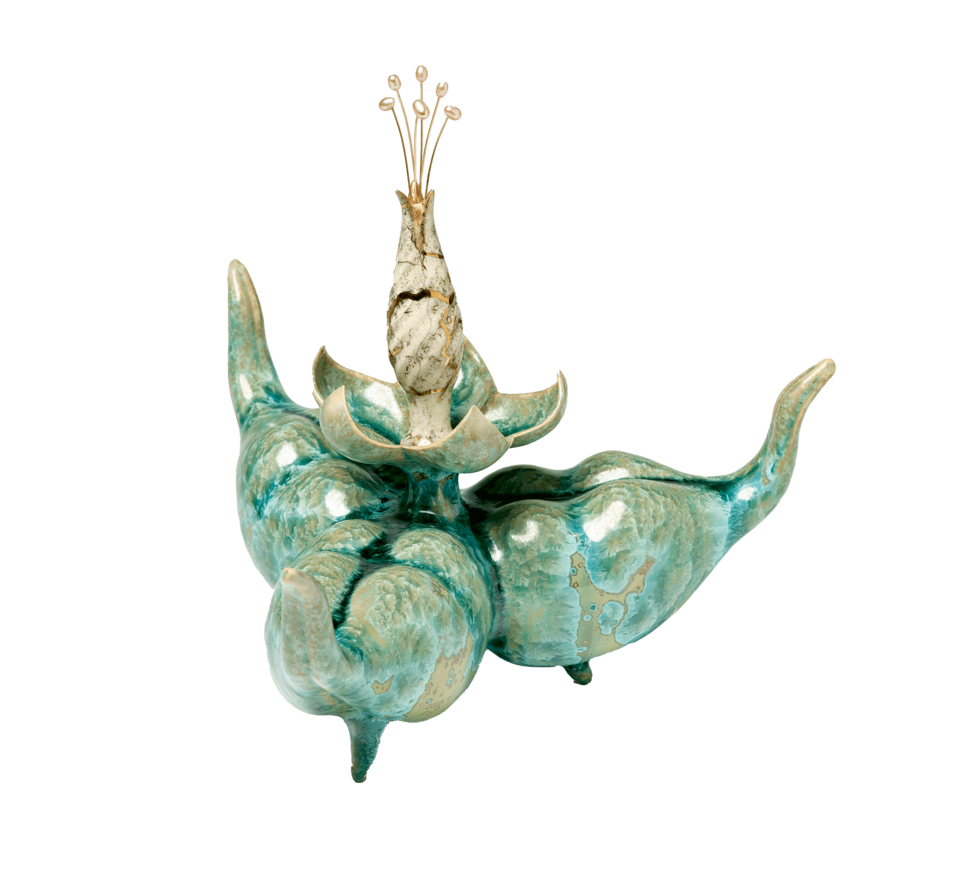
Rain Harris (RISD BFA 1997, Ceramics)
American, b. 1969
Green Three-Lobe Poison Bottle, 2002
Porcelain with glaze, pearl, and wire
Daphne Farago Purchase Fund 2003.42
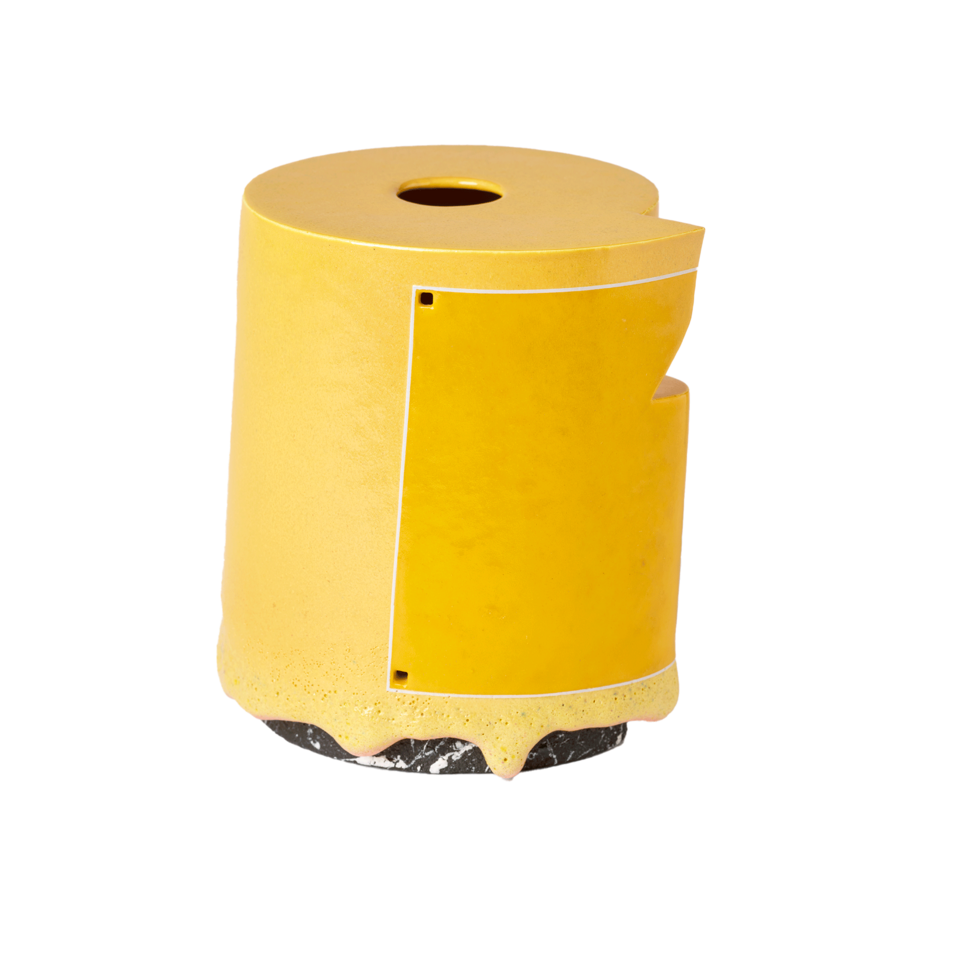
Ron Nagle
American, b. 1939
Untitled (Cup), 1981
Earthenware with paint and glaze
Marken Scholes Shedd Memorial Fund 81.062
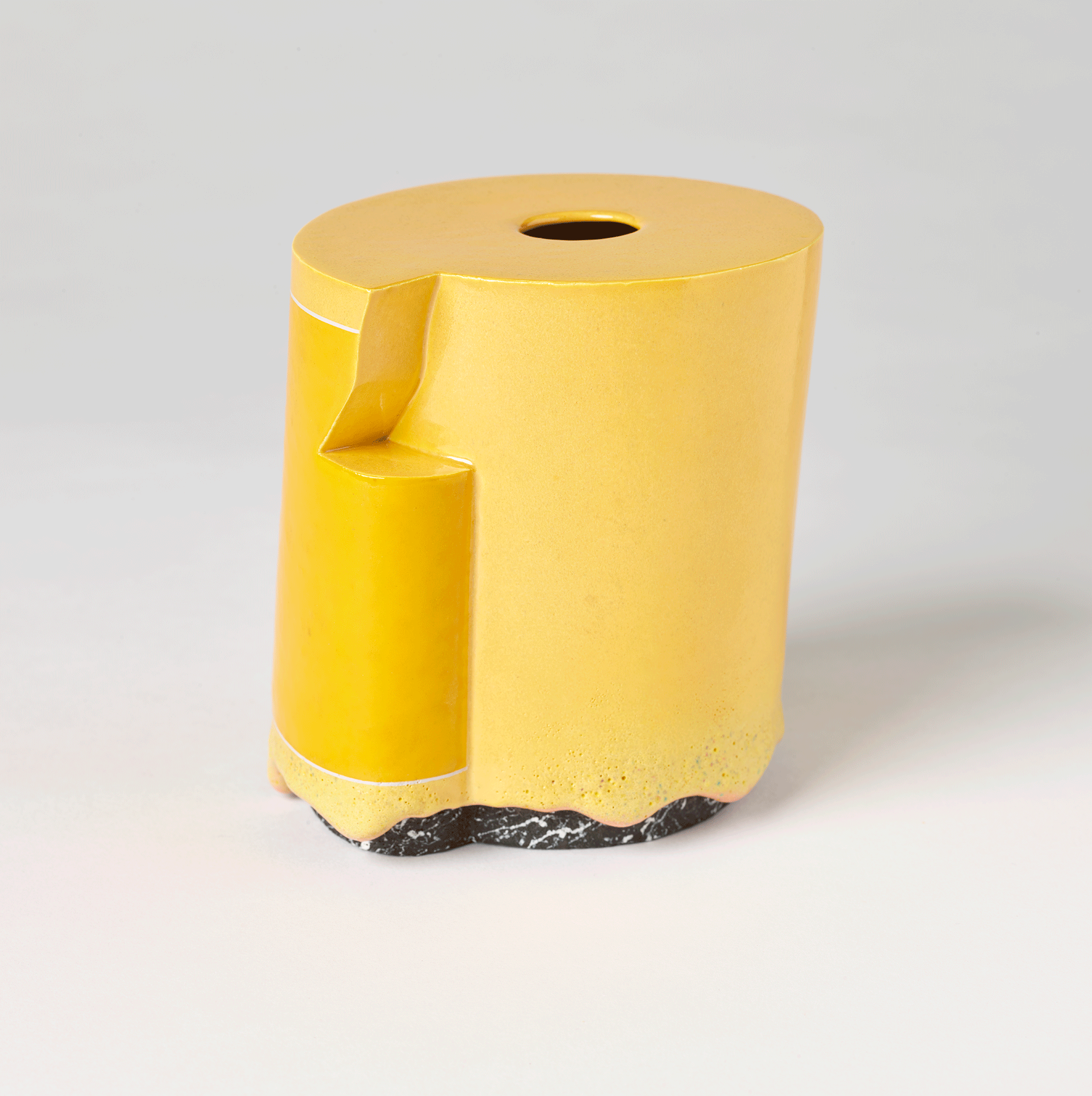
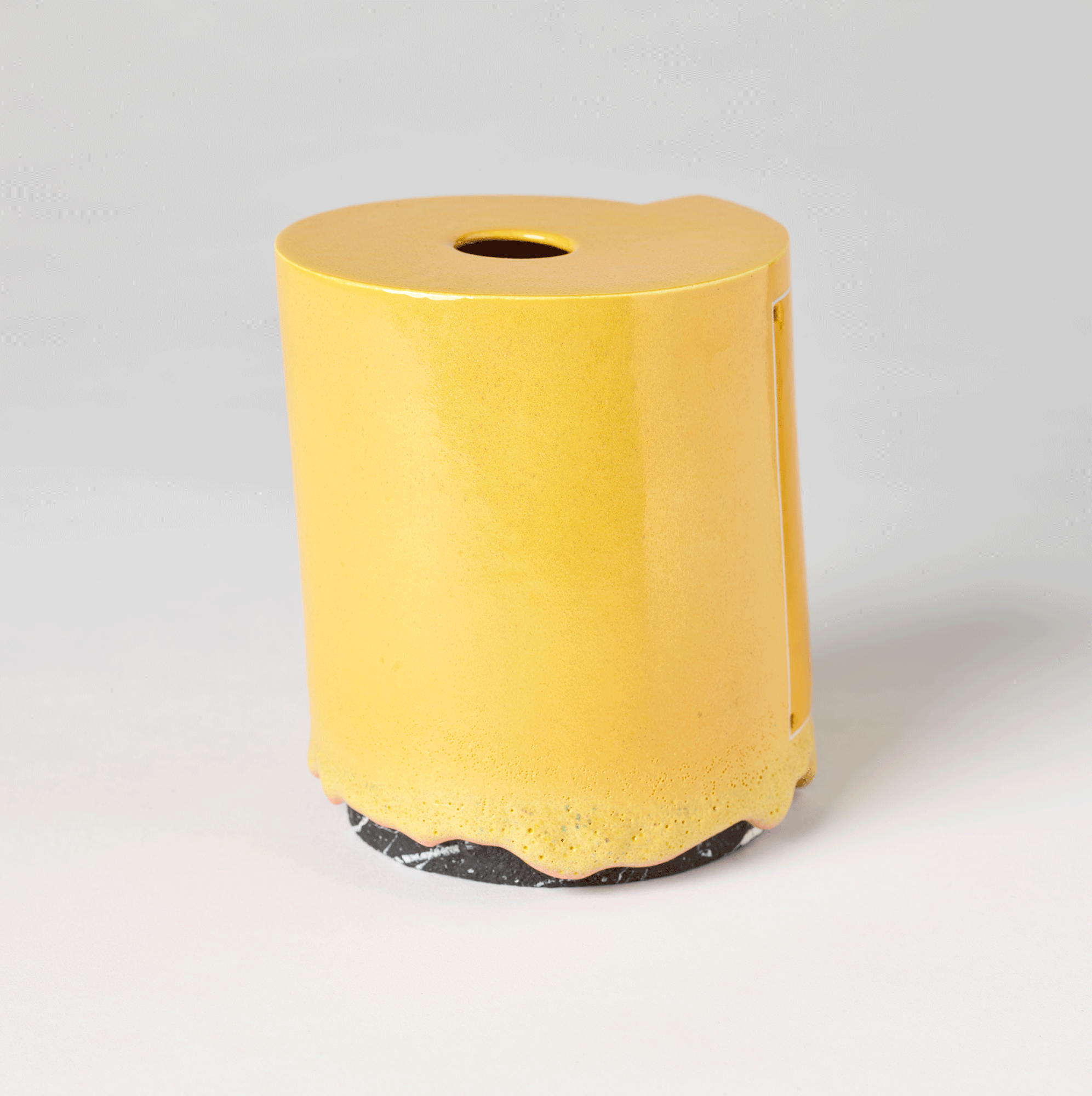
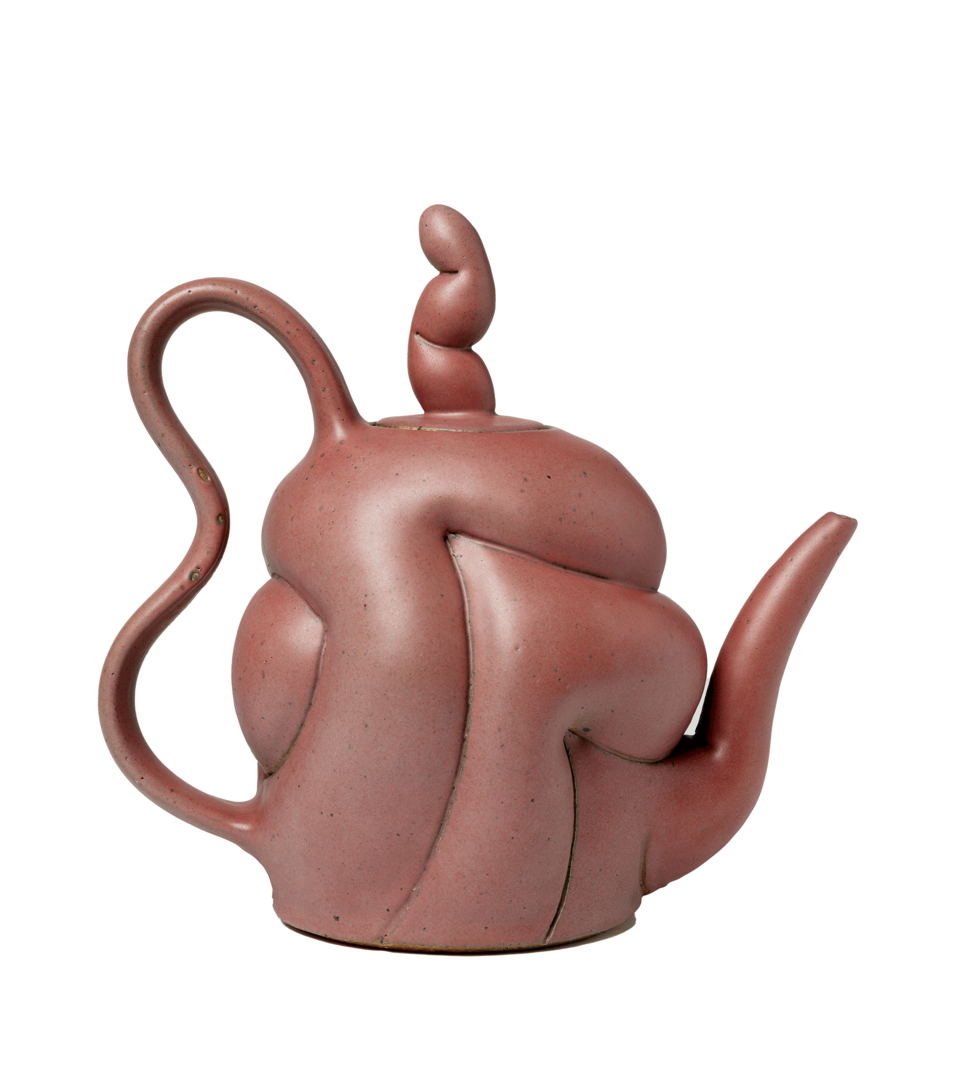
Chris Gustin
American, b. 1952
Teapot, 1988
Stoneware with glaze
Museum purchase with the aid of the National Endowment for the Arts and the Marken Scholes Shedd Memorial Fund 1989.002
![Underside of teapot. Carvings in clay read “1988 [?].” Accession number is visible.](/sites/default/files/2021-04/RISDM-1989-002-v_07.png)
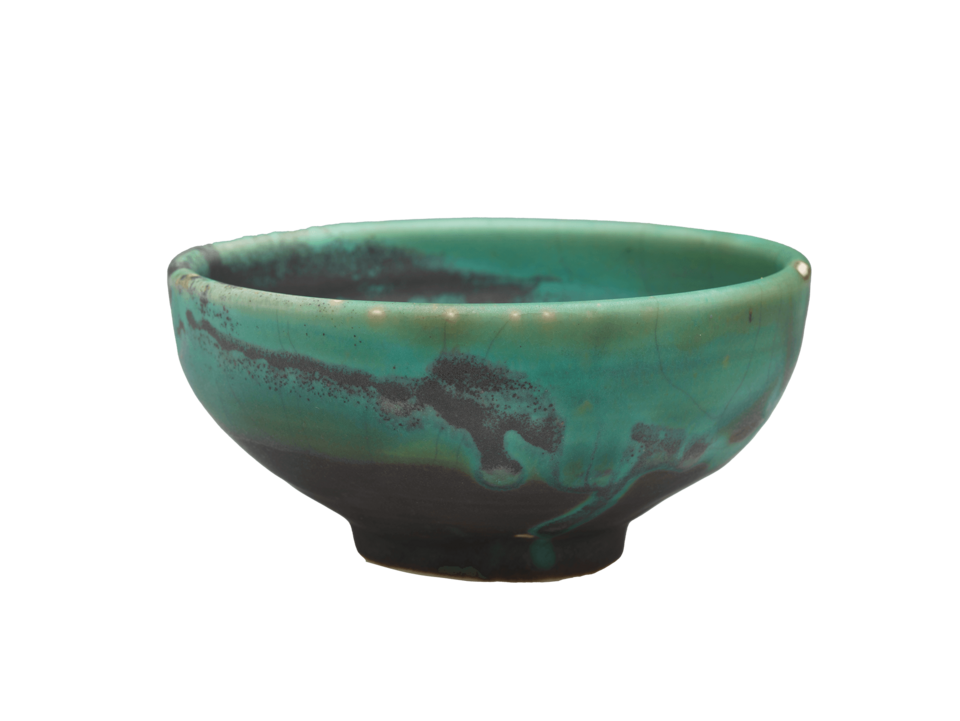
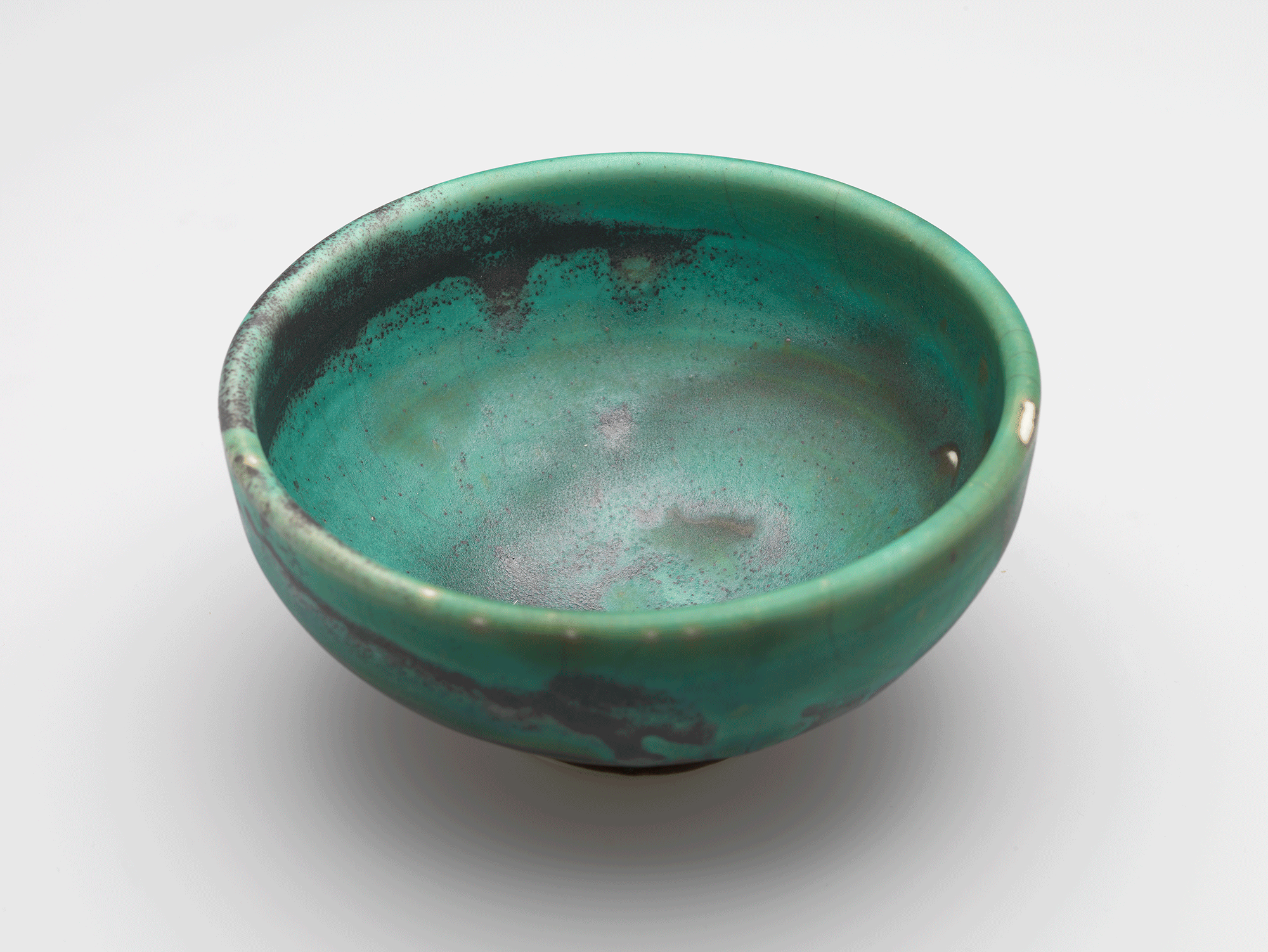
Toshiko Takaezu
American, 1922–2011
Tea Bowl, 1998
Porcelain with glaze
Gift of G. Daniel Massad 2015.81
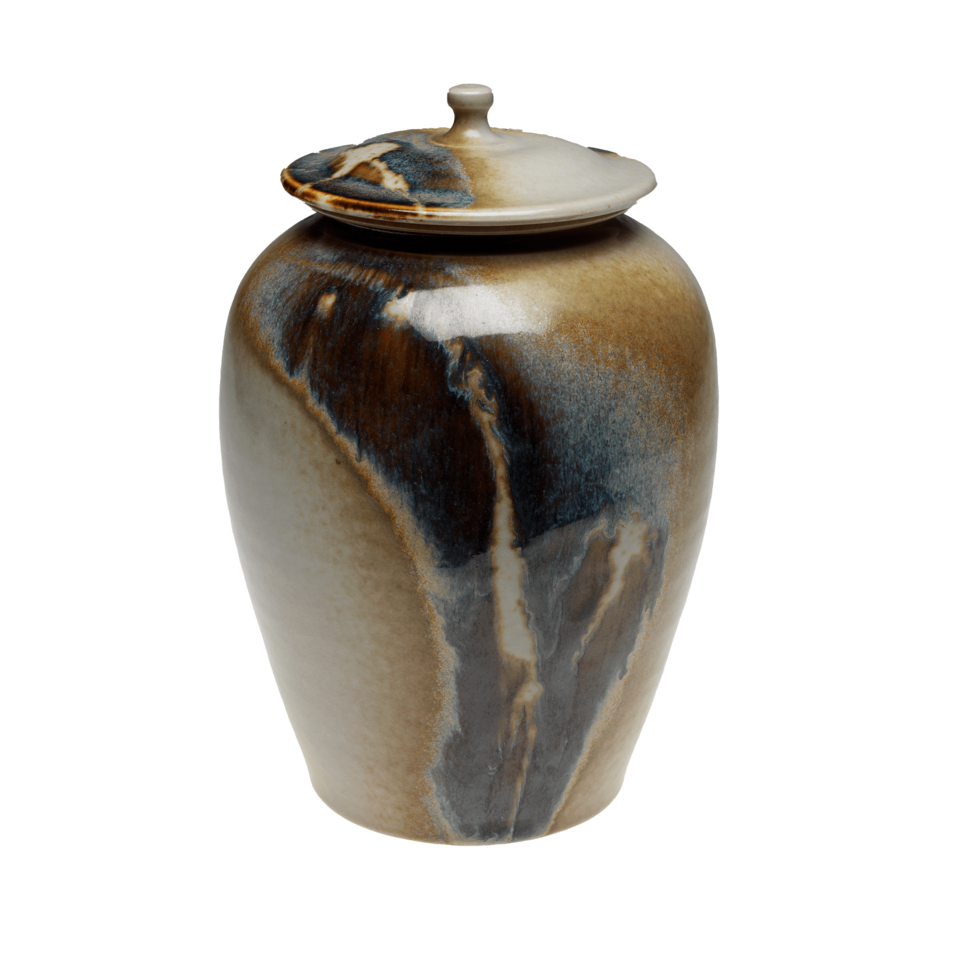
Brother Thomas Bezanson
American, b. Canada; 1929–2007
Jar with Lid, 1981
Porcelain with glaze
Gift of Frederick and Edith W. Bloom 2004.121.4
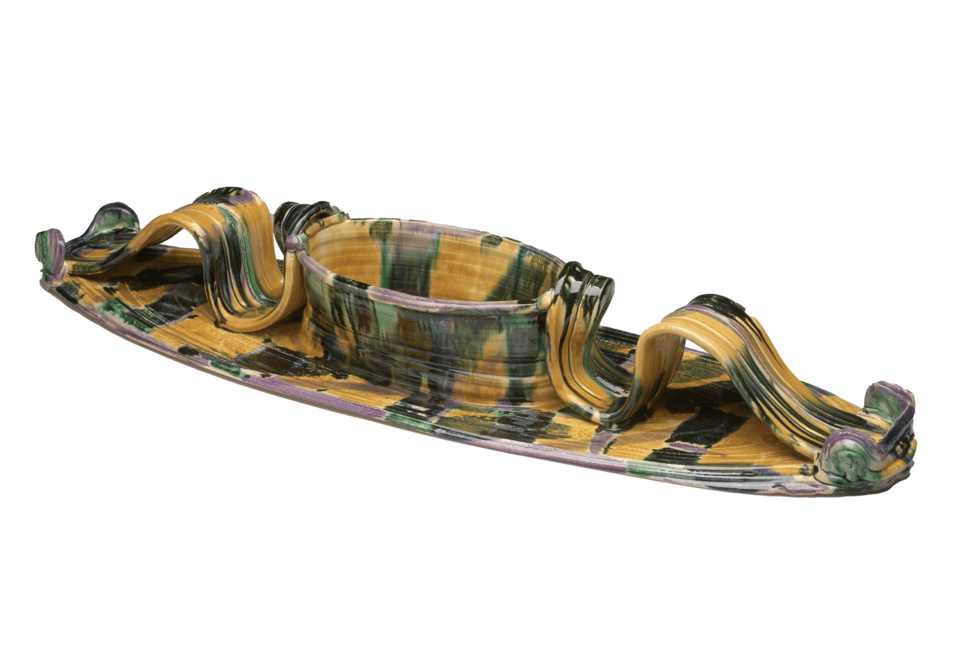
Betty Woodman
American, 1930–2018
Mussel Server, 1981
Glazed stoneware
Marken Scholes Shedd Memorial Fund 81.063
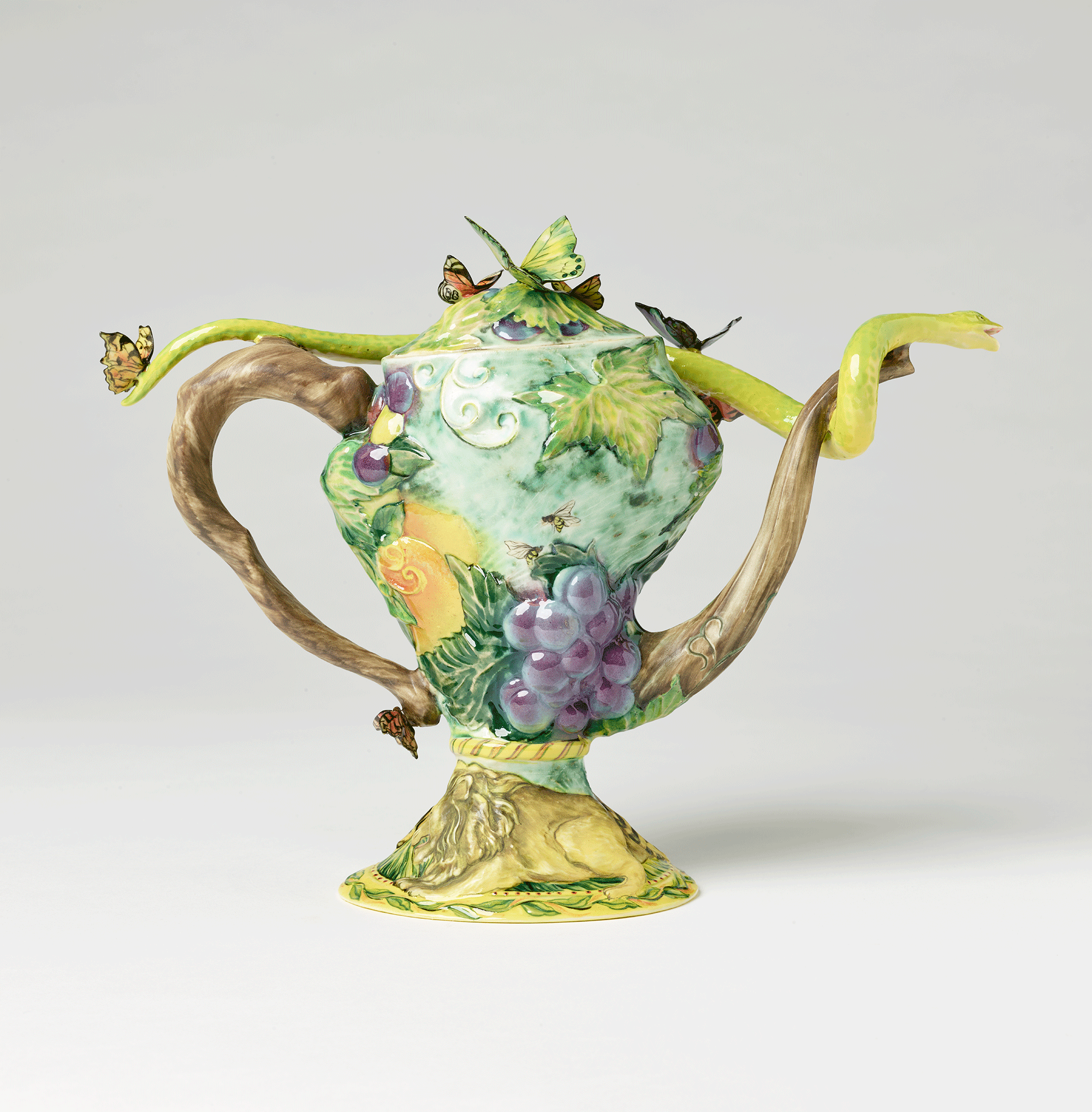
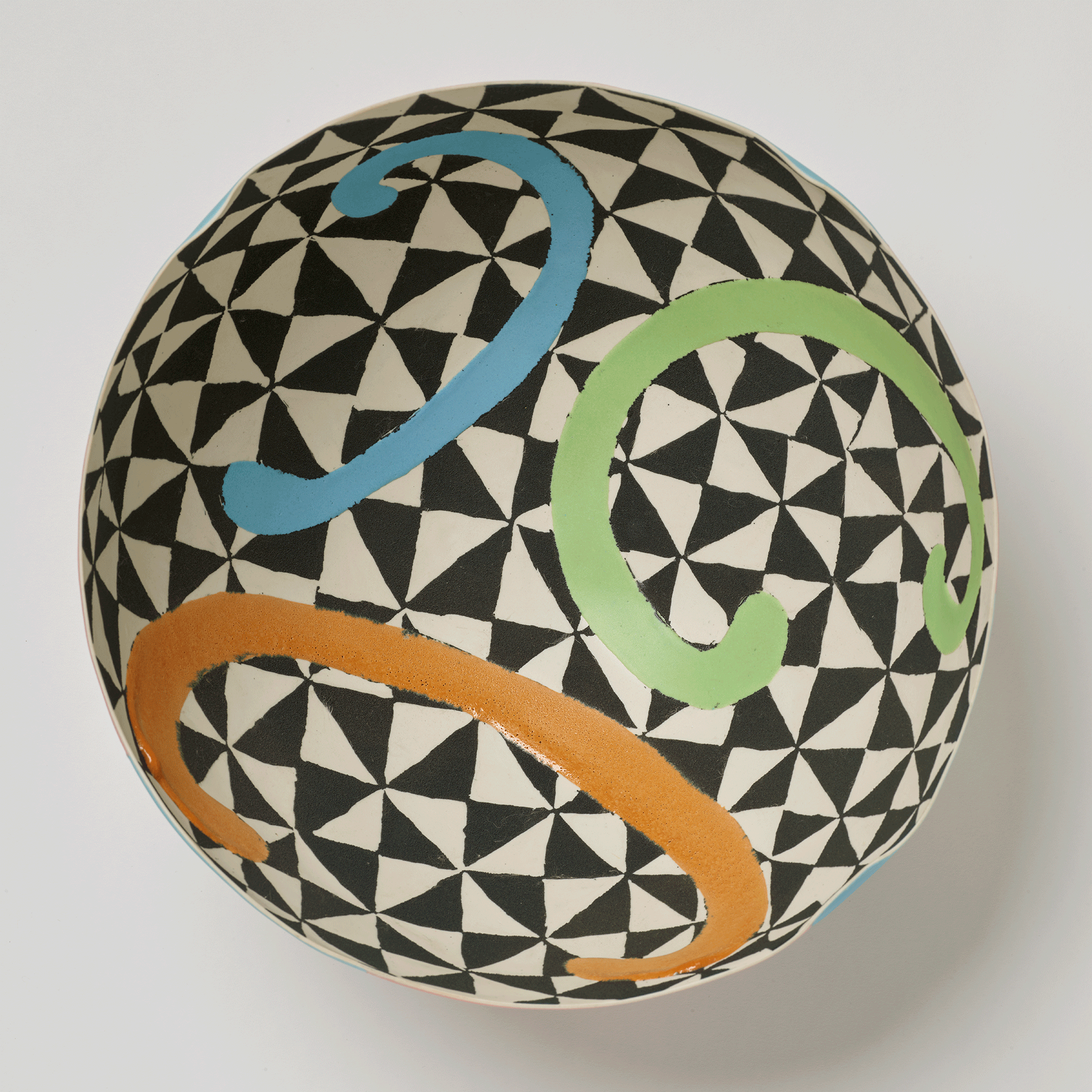
Whether flat or 3-dimensional, ceramic works have long been embellished with painting. Effects vary widely depending on the materials and techniques used, creating either soft or defined imagery that can honor historical precedents or presents new ways of seeing.
The naturalistic design of Eunjung Park’s Flower Teapot (2000.45) suggests European illusionistic tableware from the 1700s made in the forms of flowers, fruits, and vegetables. Each component, from the melon body to the asparagus handle and spout, is painted with subdued colored glazes. A feast for the eyes, Farraday Newsome’s Teapot with Oranges (1997.63) is a contemporary take on 19th-century majolica, tin-glazed earthenware characterized by realistic depictions of fruit and other natural subjects. To enhance the brilliance of her colors, Newsome first covered the brown terra-cotta body with a white glaze and fired the work before painting on the colored glazes.
Tin-glazed earthenware produced in England and the Netherlands, known as delftware, drew inspiration from the blue and white porcelain produced in China and across the Persian Empire (present-day Western Asia). Hylton Nel’s Dish (1999.41.1) alludes to delftware with its blue and white border, but it also features a realistically painted polychrome figure.
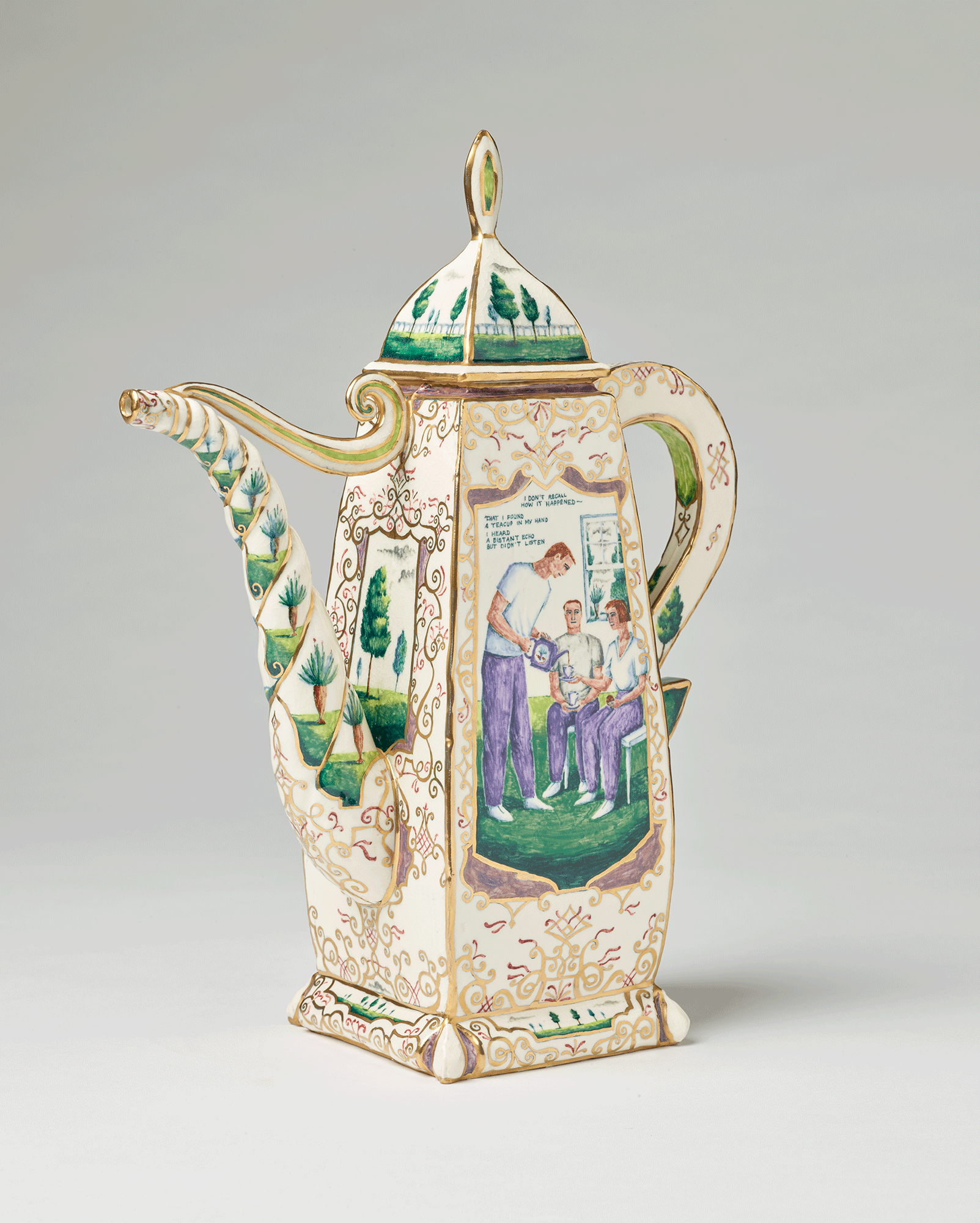
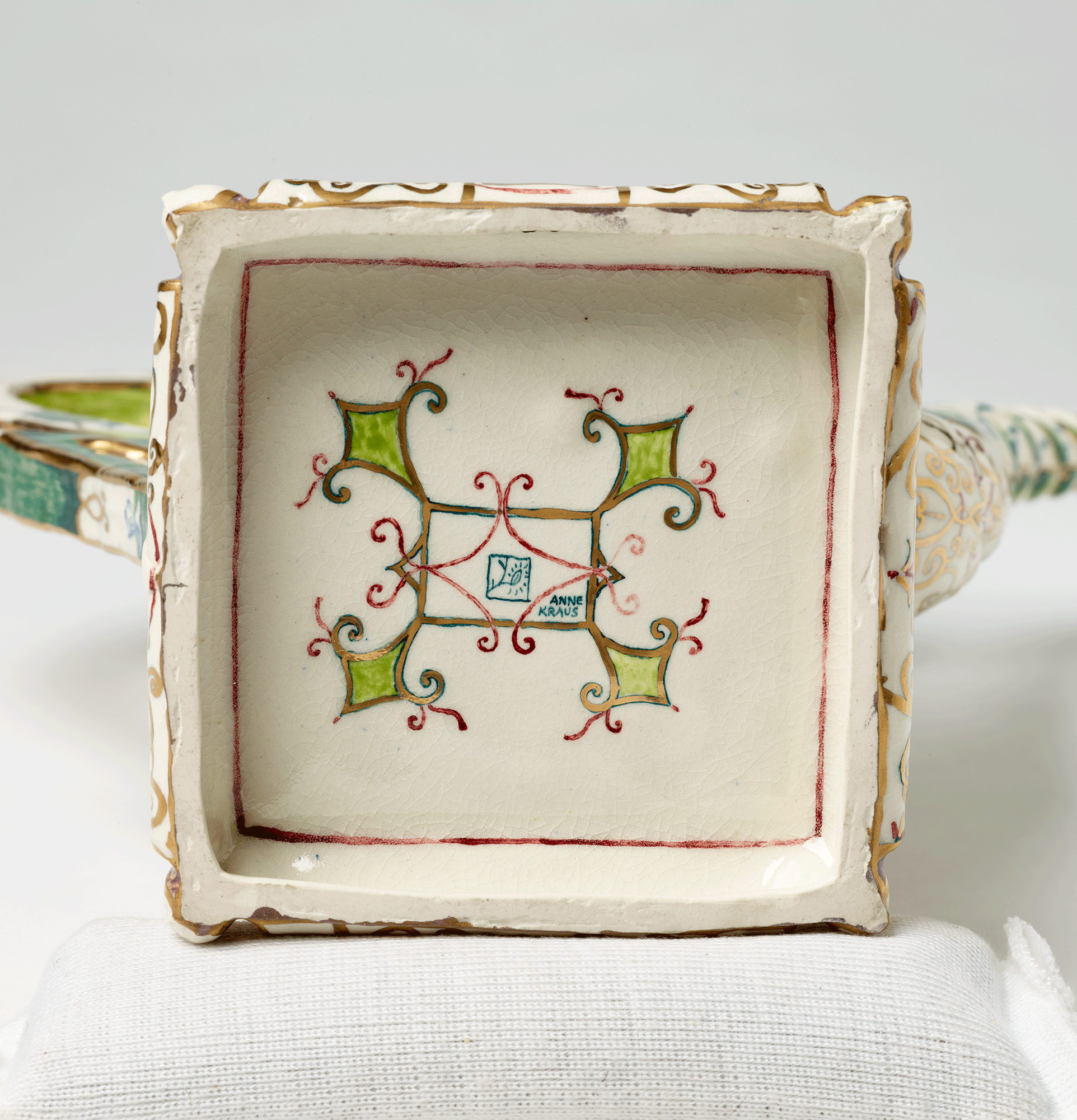
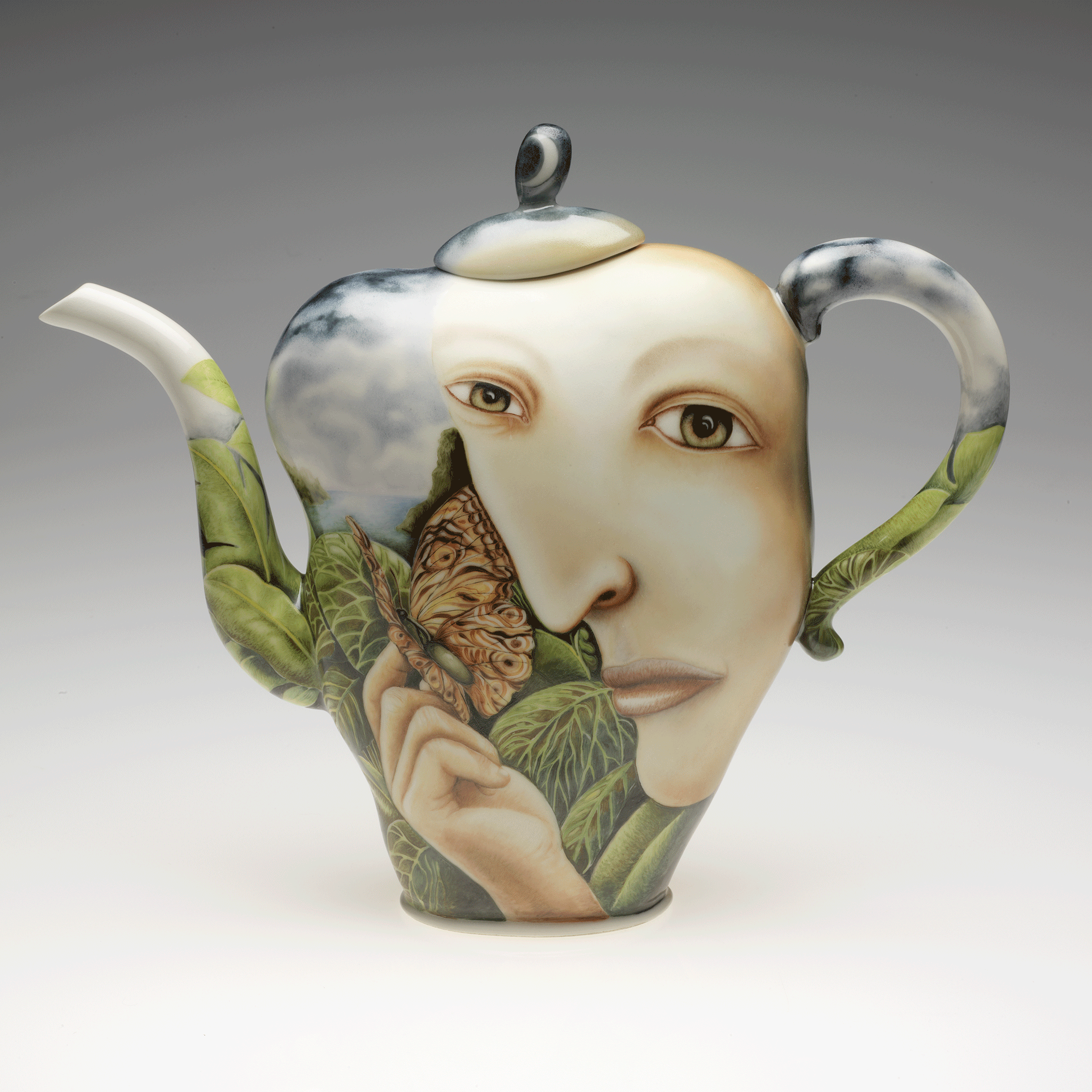
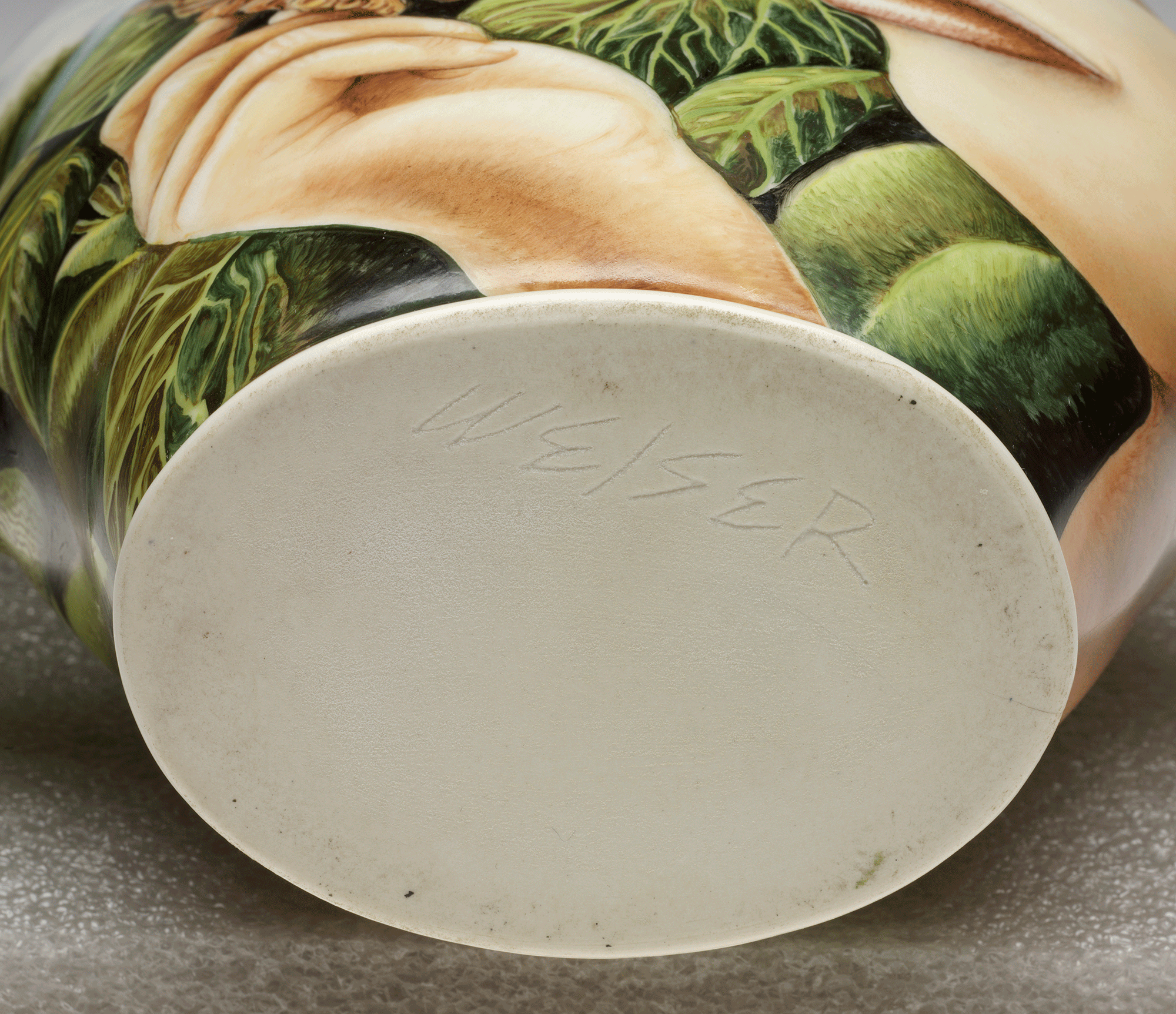
Anne Kraus’s Distant Echo Coffee Pot (1989.015) references the high style of Baroque French and German porcelain with its curving shapes and decoration in gold. Similar to other scenes of faraway places painted on porcelain, Kraus’s rendering conjures an image from one of her dreams. The lush landscape on Kurt Weiser’s Untitled Teapot (1992.046) was inspired by the artist’s trips to Thailand.
Image
Images
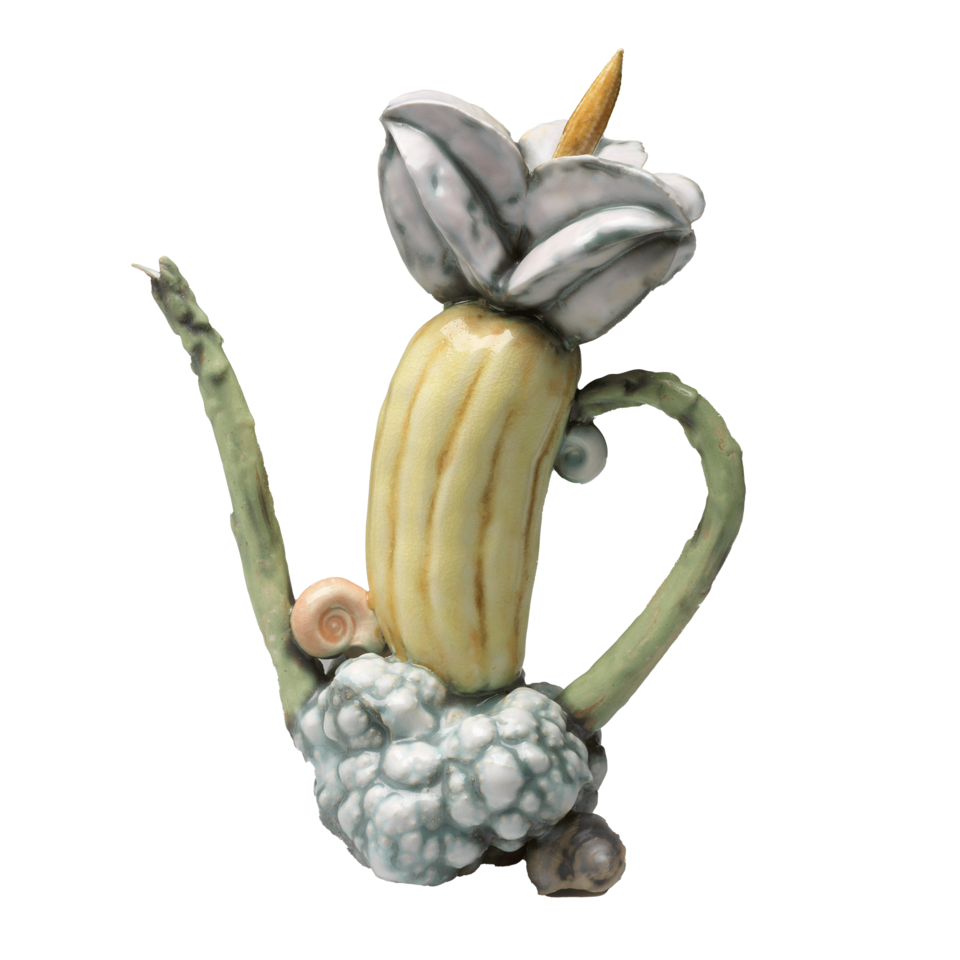
Eunjung Park (RISD MFA 1999, Ceramics)
Korean, b. 1971
Flower Teapot, 1999
Porcelain with glaze
Gift of Thomas S. Michie in honor of Mary Hilliard Jackson 2000.45
![A cream-colored teapot with gold designs. In the center image, a standing figure pours tea to two seated figures. Text above their heads reads: “I don’t recall how it happened[,] that I found a teacup in my hand[,] I heard a distant echo but didn’t listen.”](/sites/default/files/styles/half/public/2021-03/RISDM-1989-015-v_01-SILO.png?itok=RrfGsMmo)
Anne Kraus
American, 1957–2003
Distant Echo Coffee Pot, 1988
Whiteware with hand-painted underglaze decoration
Museum purchase with funds from the National Endowment for the Arts 1989.015
![Opposite side of the same teapot. In the center image, a figure in a landscape, back turned to us, waves at two other figures facing us. Text above their heads reads: “I shouted to everyone that we are in a dream[,] and it echoed loudly in the space.](/sites/default/files/2021-03/RISDM-1989-015-v_05.png)
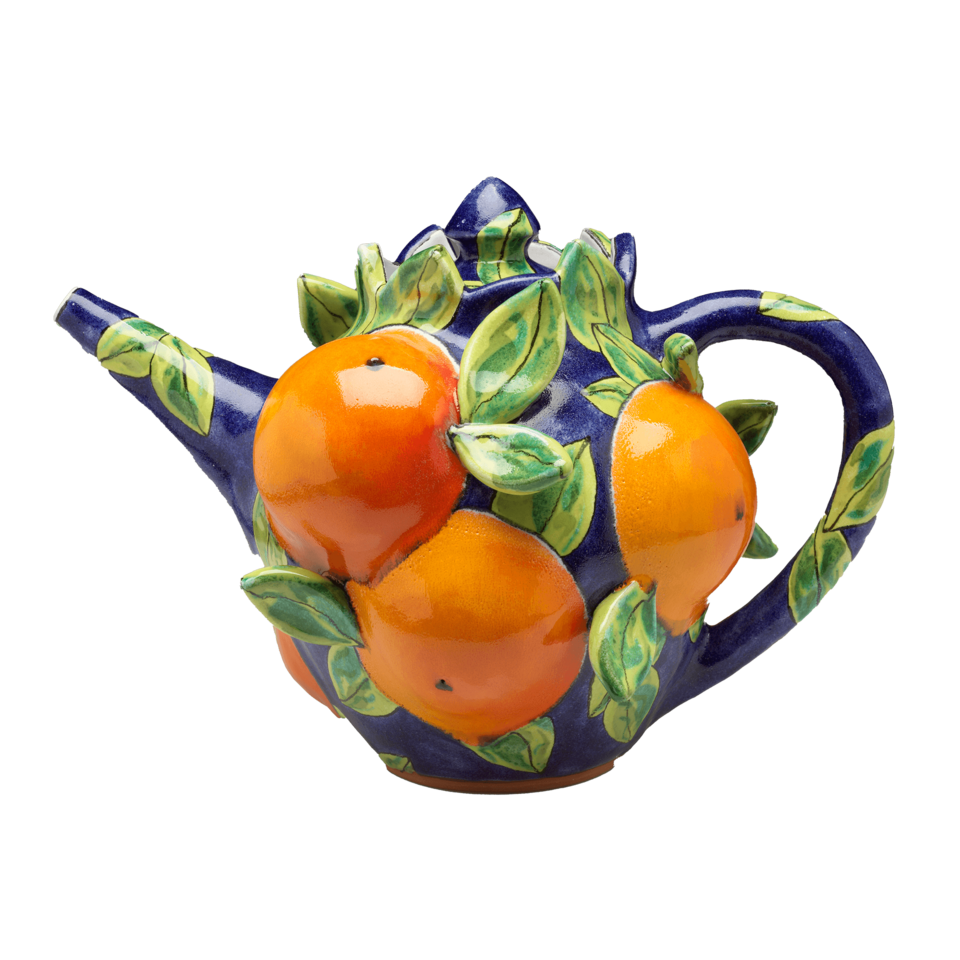
Farraday Newsome
American, b. 1955
Teapot with Oranges, 1997
Terracotta with glaze
Daphne and Peter Farago Fund 1997.63
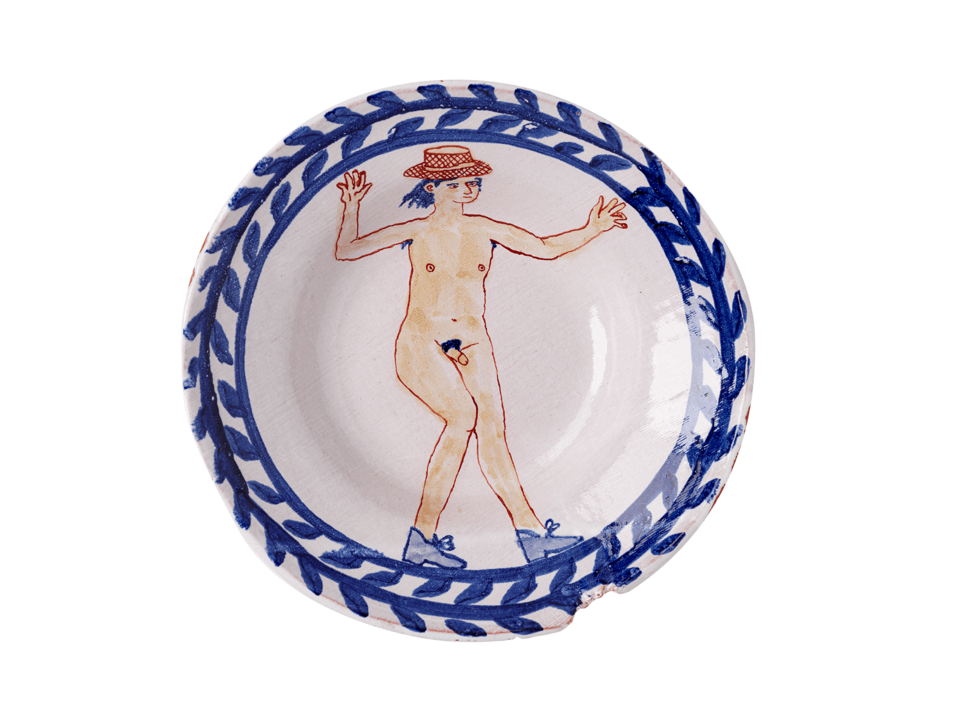
Hylton Nel
Zambian, b. 1941
Dish, 1999
Earthenware with glaze and enamel decoration
Gift of Cindy and Scott Burns 1999.41.1
![Underside of bowl. “HN 13 [,] 1 9 9” painted in blue on white. Accession number is visible.](/sites/default/files/2021-04/RISDM-1999-41-1-v_02.png)
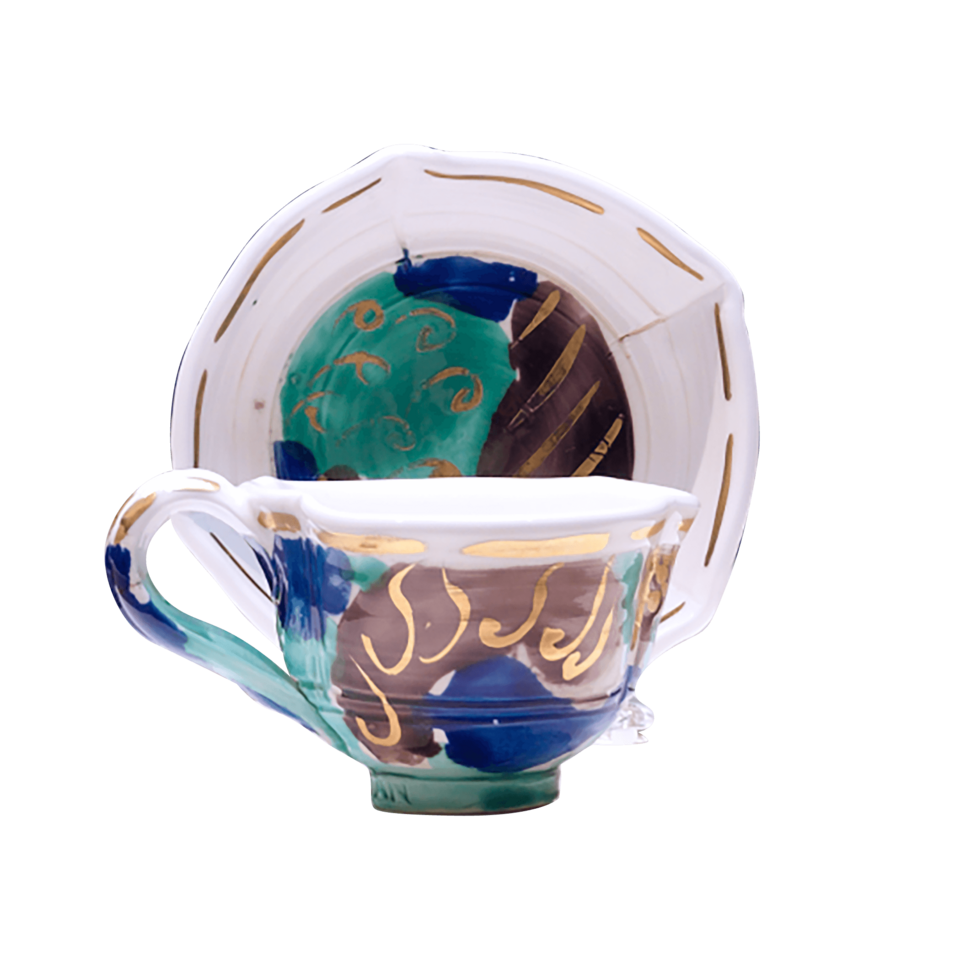
Betty Woodman
American, 1930–2018
Sèvres Porcelain Manufactory, manufacturer
French, 1740–present
Saint-Saëns Cup and Saucer, 1986
Porcelain with glaze and gilding
Helen M. Danforth Acquisition Fund 2009.46
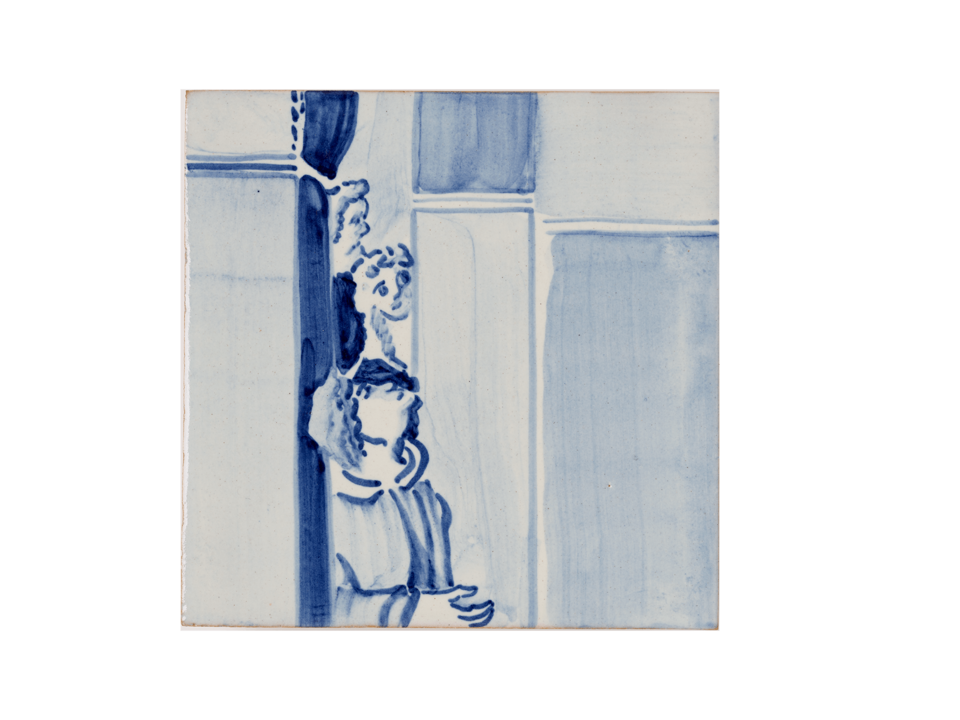
Menêz, designer
Portuguese, 1926–1995
Cerâmica de Bicesse, manufacturer
Portugal, 1988–present
Tile, ca. 1995
Earthenware with enamel decoration and glaze
Gift of Galeria Ratton Ceramicas 1996.7.2
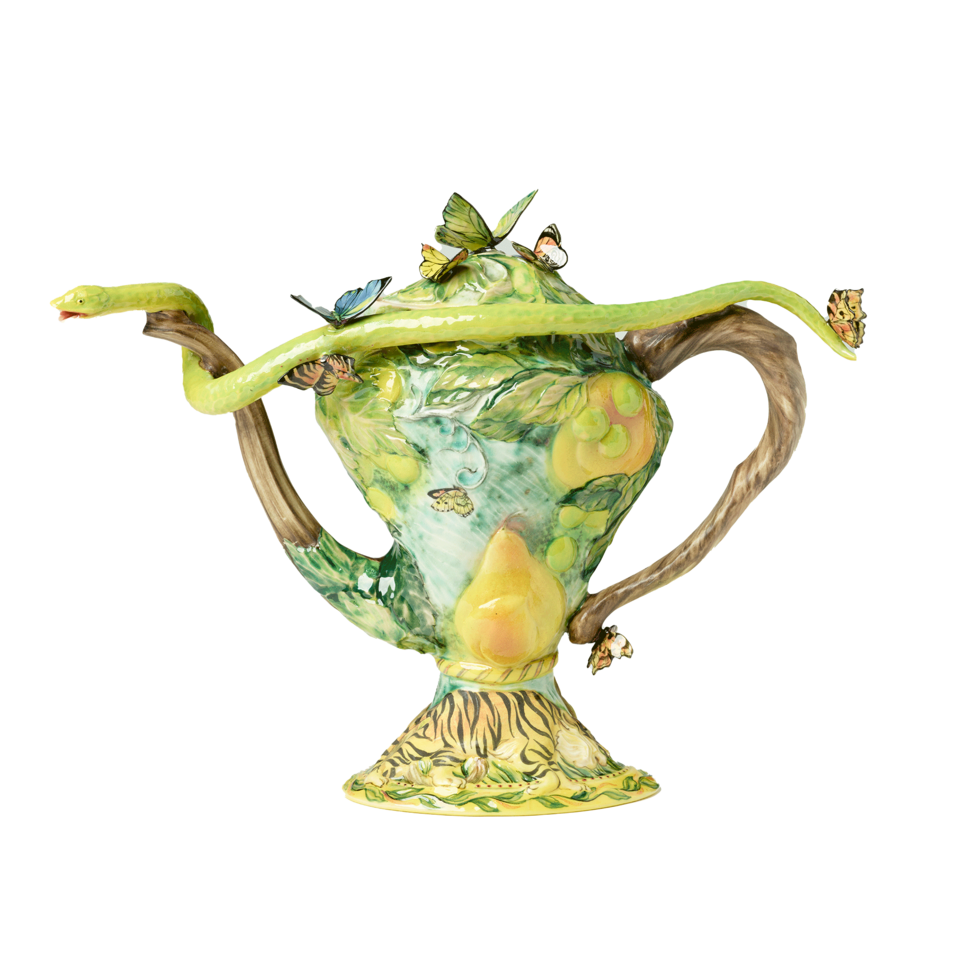
Susan Thayer (RISD BFA 1982, Ceramics)
American, b. 1957
Guarding Eden with Butterflies #2, 1995
Porcelain with enamels and glaze
Gift of Daphne and Peter Farago 1995.057.2
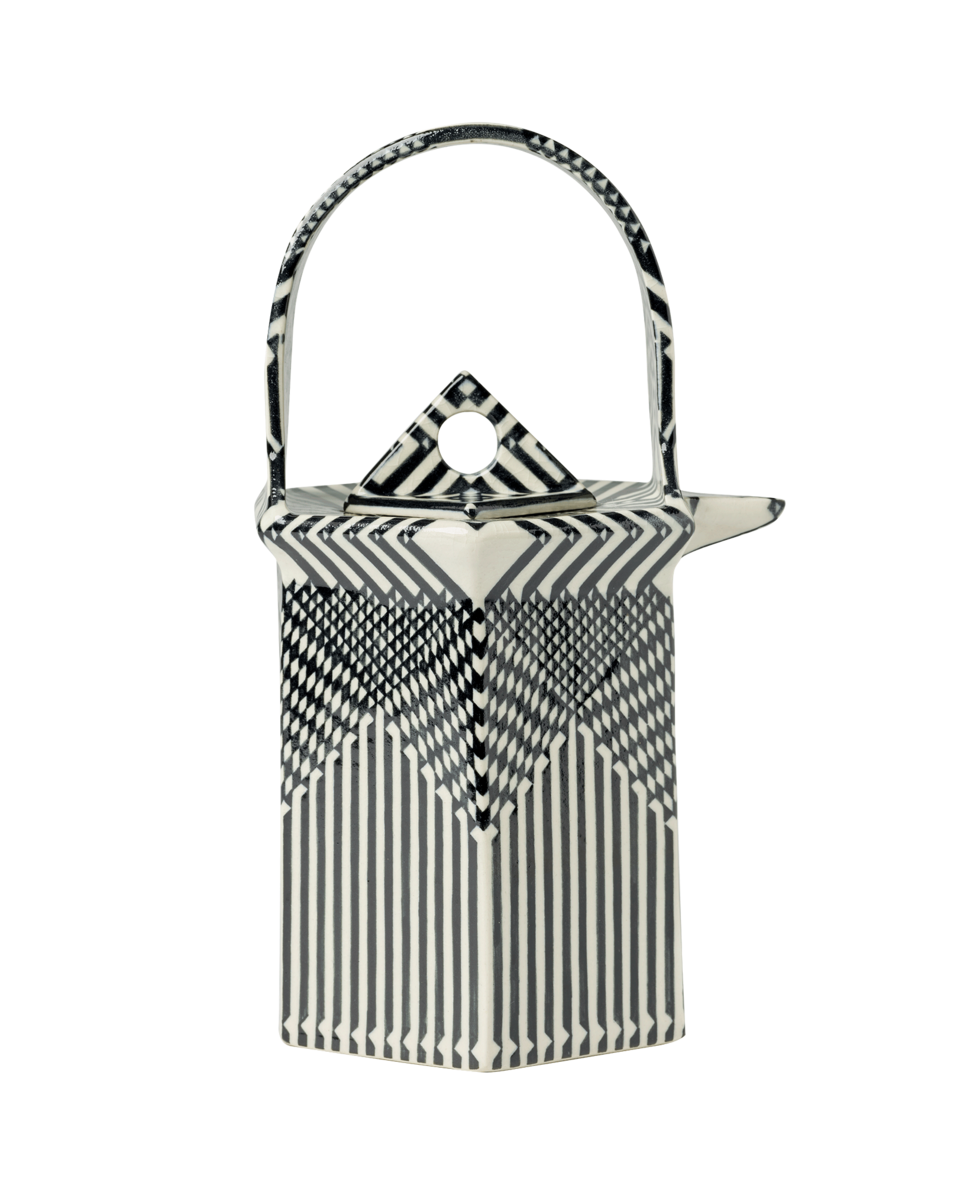
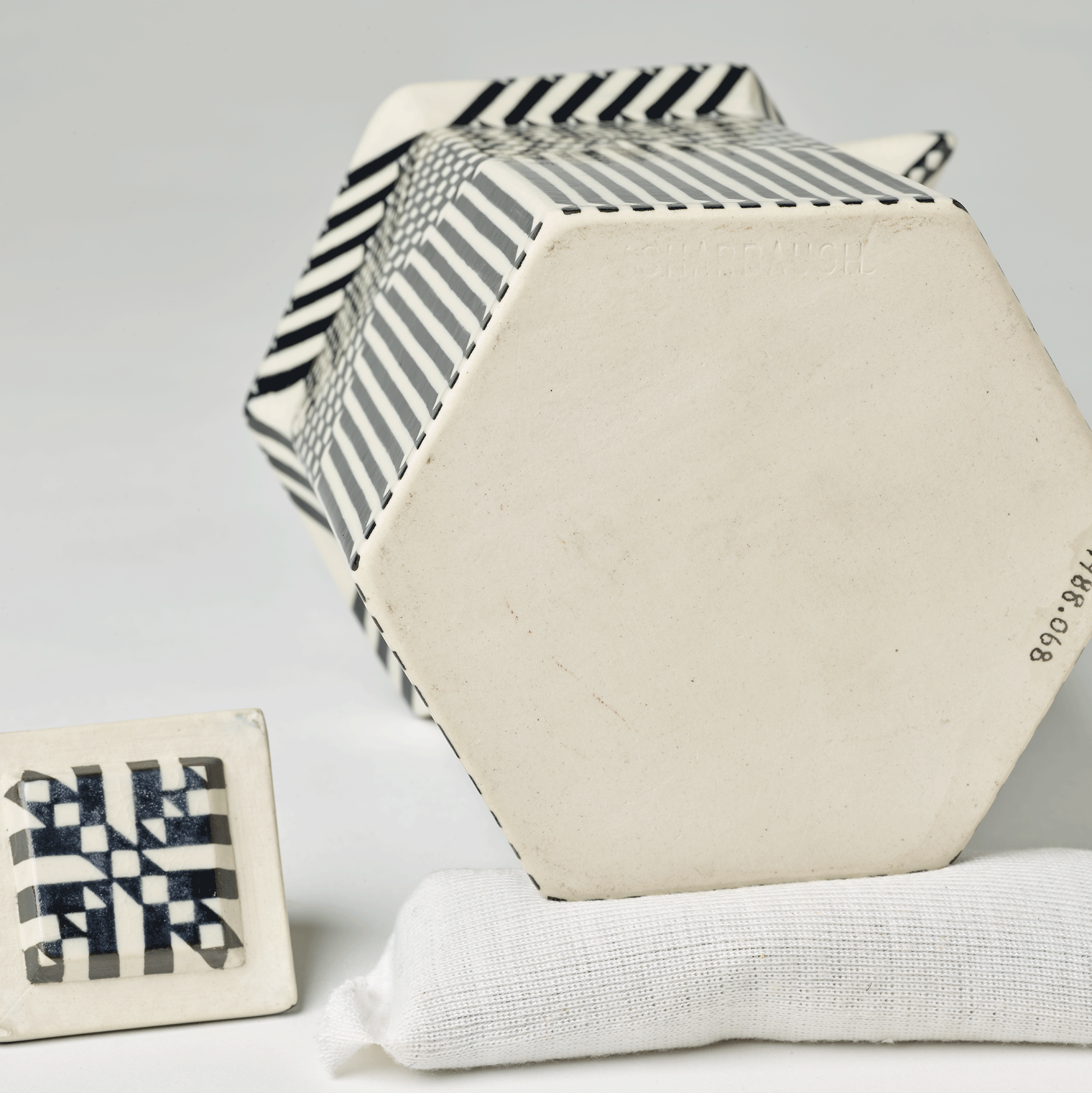
Kathryn Sharbaugh
American, b. 1948
Suspension Climb Teapot, 1988
Porcelain with underglaze decoration
Museum purchase with the aid of the National Endowment for the Arts and the Marken Scholes Shedd Memorial Fund 1988.068
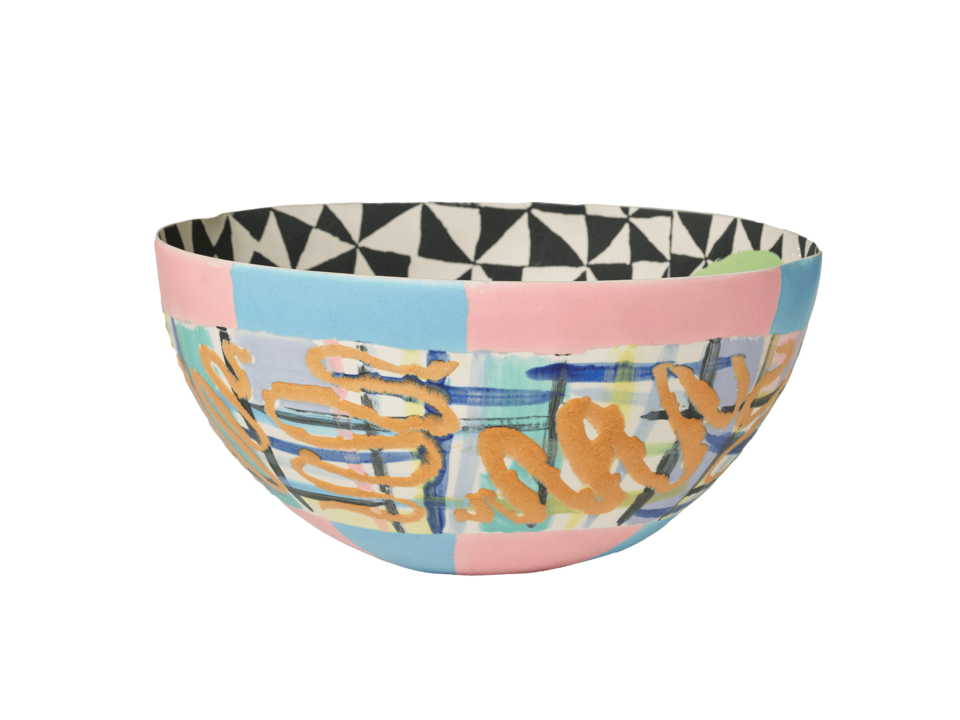
Phillip Maberry
American, b. 1951
Bowl, 1981
Porcelain with glaze
Edgar J. Lownes Fund, Marken Scholes Shedd Fund and the Georgianna Sayles Aldrich Fund 83.025
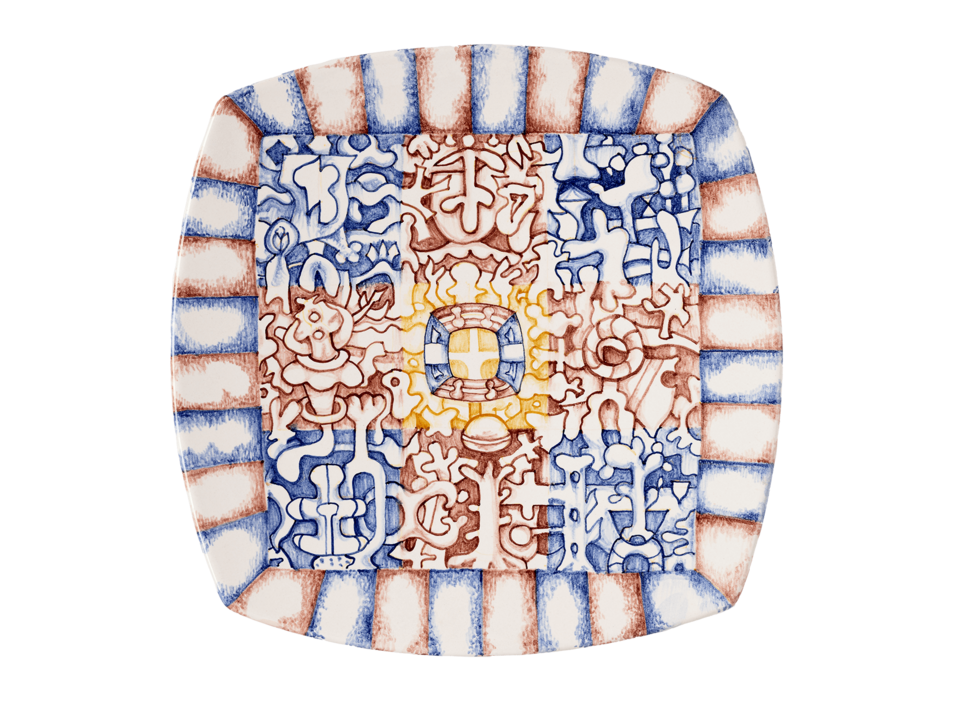
Holly Hughes (RISD faculty)
American, b. 1951
Six Degrees of Separation, 2014
Earthenware with glaze and enamel decoration
Helen M. Danforth Acquisition Fund 2015.45
![Underside of plate with yellow circle in center. Artist’s name “H Hughes [,] made in Deruta” painted towards bottom.](/sites/default/files/2021-04/RISDM-2015-45-v_02.png)
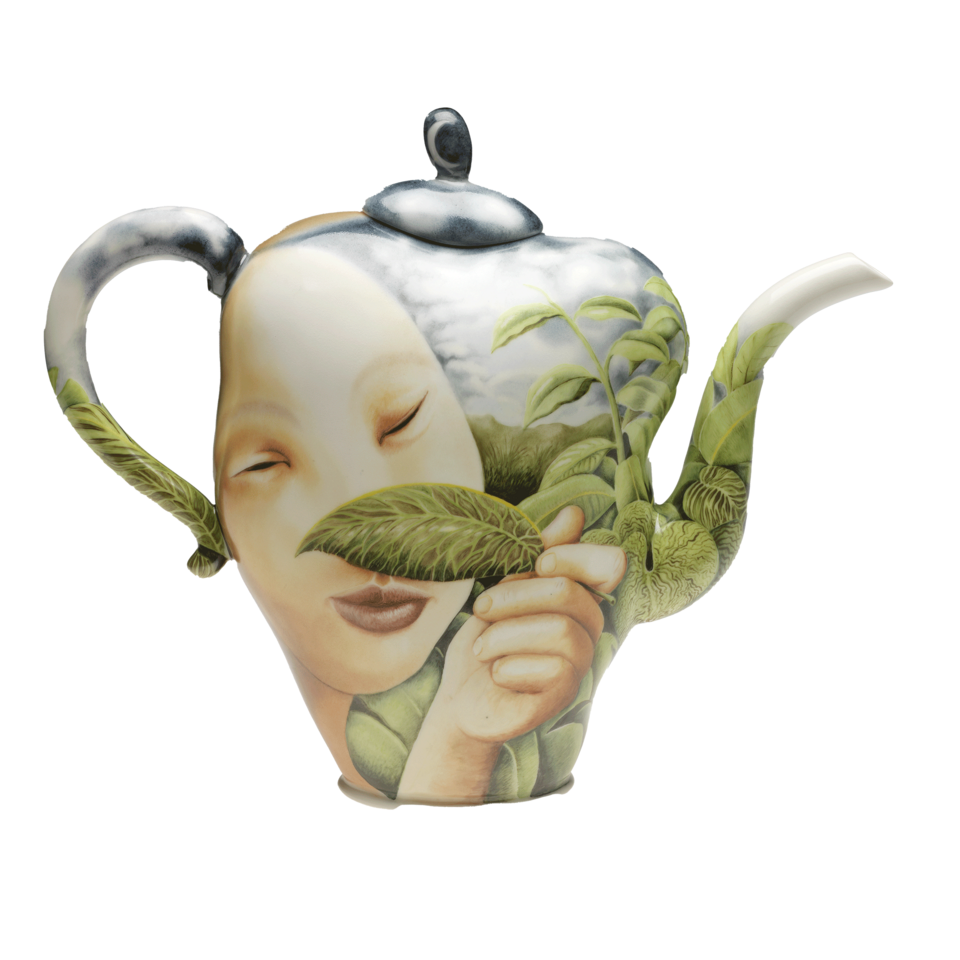
Kurt Weiser
American, b. 1950
Untitled Teapot, 1992
Porcelain with enamels and glaze
Marken Scholes Shedd Memorial Fund 1992.046
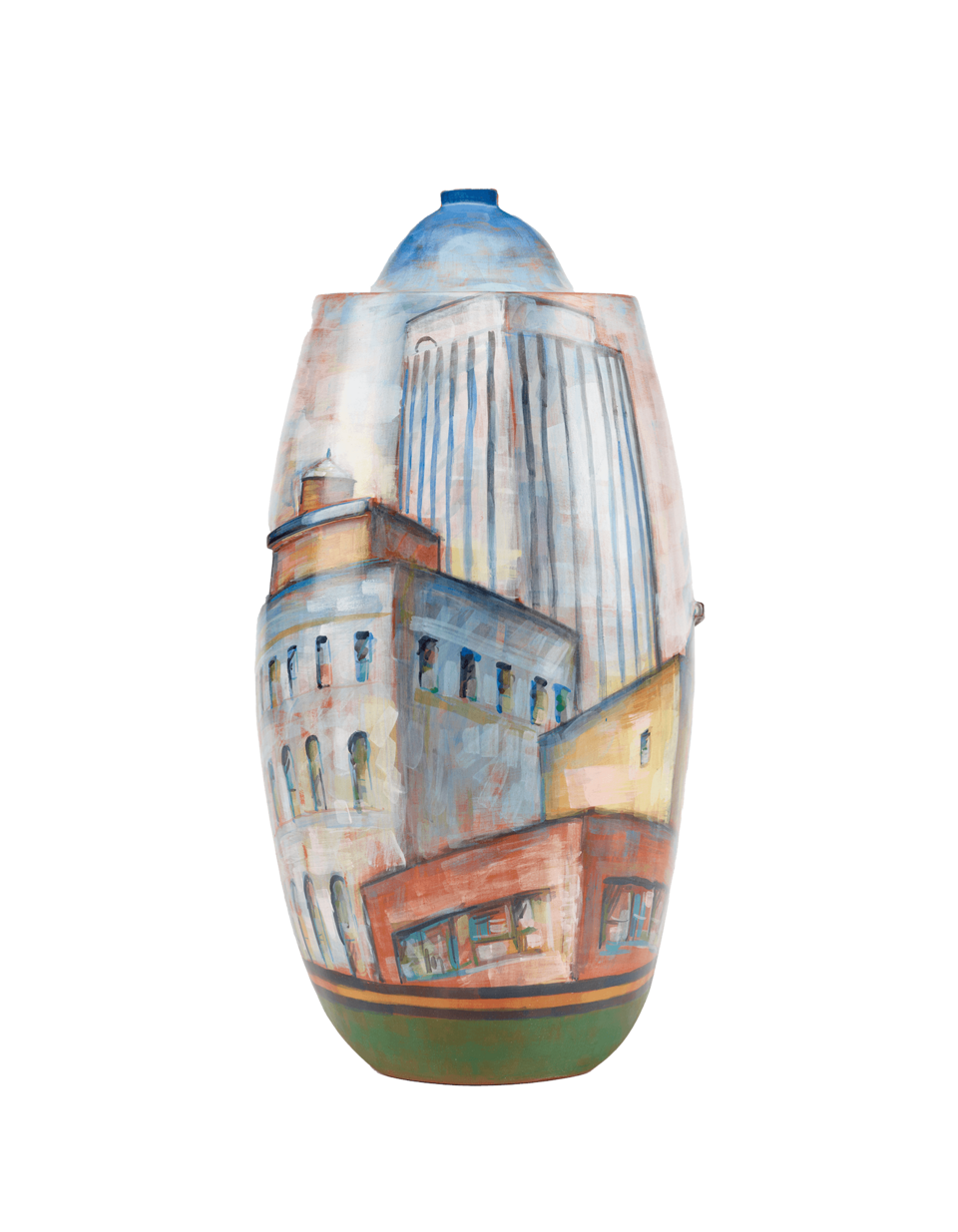
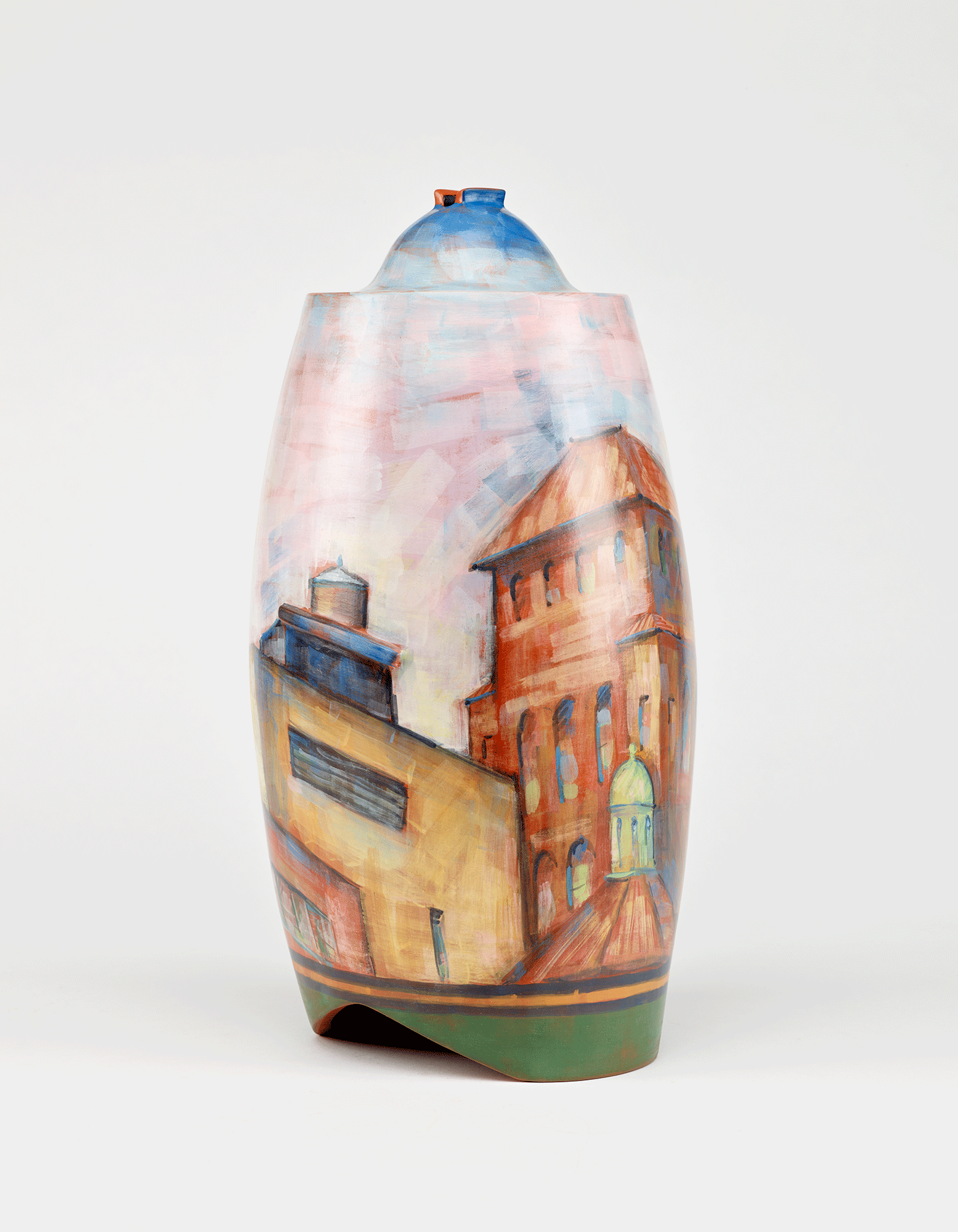
Lidya Buzio
American, b. Uruguay; 1948–2014
Roofscape Vessel, 1991
Earthenware with painting and burnished wax
Nancy Sayles Day Collection of Modern Latin American Art 1991.187
Glossary
The process by which clay is heated in a kiln. Firing at a high temperature can render clay impervious to water, a state known as vitrification.
Image
Powdered silica and other substances, fluxes, and stabilizers that are mixed with water and applied to a clay body. When fired in the heat of a kiln, these fuse into a glass-like coating.
Image
A furnace or oven for drying or baking ceramics.
Image
Ceramics colors designed to be painted on top of a glazed surface, to which they fuse during the firing process.
Image
The process in which ceramic work is removed from the kiln at bright red heat and placed in containers with combustible materials, creating a post-firing reduction (or smoking) that blackens raw clay and causes crazing in glazed surfaces.
Image
Semifluid clay used to decorate a ceramic vessel or to cover its surface with a solid-colored background, onto which further decoration can be applied or incised.
Image
A method of relief printing onto ceramics in which slip or glaze is soaked into a natural or synthetic sponge and pressed onto the surface.
Image
A method of decorating pottery by using an inked engraved copperplate to make a print on paper that, while still wet, is pressed against a glazed pottery surface, leaving behind an impression, or transfer, of the engraving. The ceramic is then fired to adhere the ink to the surface.
Image
Explore More
Art Aperitif: Ceramics
Virtual Program, recorded 5.14.20.
On the Surface: Contemporary Ceramics is the focus of this talk by Emily Banas, Assistant Curator, Decorative Arts and Design. Look closely at a select group of objects that will highlight distinct decorative techniques including slip decoration, sgraffito, glaze/unglazed, and painting.
Viewpoints: Queer Art
Virtual Program, recorded 1.14.21.
Join the conversation on work in the Museum collection centering LGBTQIA perspectives and imagery with Christina Alderman, Assistant Director, Family and Teen Programs; Emily Banas, Assistant Curator, Decorative Arts and Design; and Conor Moynihan, Andrew W. Mellon Fellow, Prints, Drawings, and Photographs. Interpretive and curatorial considerations, along with historical, social, and cultural contexts of queer art, will be discussed.
Credits
Exhibition Curator
Emily Banas
RISD Museum Interim Director & Deputy Director,
Exhibitions, Education, & Programs
Sarah Ganz Blythe
Editor, Museum Publications
Amy Pickworth
Assistant Director,
Digital Initiatives
Jeremy Radtke
Graphic Design
Brendan Campbell & Derek Schusterbauer
Photography
Erik Gould
Created using Ziggurat, an open-source platform