Main navigation

  • Visit
  • Exhibitions & Events
  • Art & Design
  • Give
  • Search

Visit Main Menu Block

  • Hours & Admission
  • Accessibility & Amenities
  • Tours & Group Visits
  • Visitor Guidelines

Exhibitions and Events Main Menu Block

  • Exhibitions
  • Events

Art and Design Main Menu Block

  • Collection
  • Collection Research
  • Past Exhibitions
  • Watch / Listen / Read

Footer Main

  • Become a Member
  • Who We Are
  • Opportunities
  • Rent the Museum

Japanese Prints

Nature in Microcosm
March 10 - June 9, 1998

Introduction

Nature has traditionally played a major role in Japanese art, both as subject in painting and printmaking and as decorative motif on art objects such as ceramics, metalwork, and lacquer ware. Japanese sensitivity to the natural world is rooted in a native shamanistic religion -- Shinto -- through the belief that deified spirits animate the rivers, mountains, and trees. As the Indian religion of Buddhism spread within Japan, it further reinforced this sensitivity by teaching that it is wrong to destroy any living thing.

During the Edo period, this preference for subject matter drawn from nature was cultivated simultaneously with other emerging artistic interests. Early in the eighteenth century, after nearly a hundred years of prohibition, the ban on Westem books was lifted. These works attracted the attention of and inspired many educated Japanese, who were curious about Western illusionistic and perspective techniques. Concurrently, the newly established Maruyama-Shijo school of painting emphasized careful observation and naturalism as an alternative to more traditional modes of composition and imagery derived from Chinese and native Japanese schools. These artistic developments together stimulated the popularity of nature studies in a multitude of printed forms.

This exhibition focuses on insects, birds, fish, and small animals portrayed in their physical environment. The lively and vibrant depictions of nature printed in significant numbers from the end of the eighteenth century onward are represented here by a variety of works: pages from lavishly illustrated books, privately published prints, an artist's sketchbook, sketchbooks published as printed books, and illustrations from botanical volumes. These finely observed and rendered prints reveal the world of East Asian nature, in which man plays only a small part.

Related Objects

Unknown Maker, Japanese

Two pages from an artist's sketchbook, Meiji

Kitagawa Utamaro 喜多川歌麿

Cockerel hen and Japanese meadow buntin (Niwatori to hojiro), Edo Period

Mori Shunkei 森春渓

Insects and pinks (Mushi to nadeshiko), Meiji

Mori Shunkei 森春渓

Red dragonfly and caterpillar on plant, Edo (Japanese period)
Woodblock print featuring a beetle climbing onto a vibrant yellow ear of corn, a smaller one on the muted green leaves, and a spider perched on the brown husk.

Mori Shunkei 森春渓

Corn Spiders, and Beetle, Edo Period

Kōno Bairei

Corn flower (or Rodger's bronze leaf); senrikoma(left) (Yagurumaso; senrikoma), Meiji
No Image Available

Tachibana Morikuni

The Moving Brush in "Rough" Painting vol. 1, Edo (Japanese period)

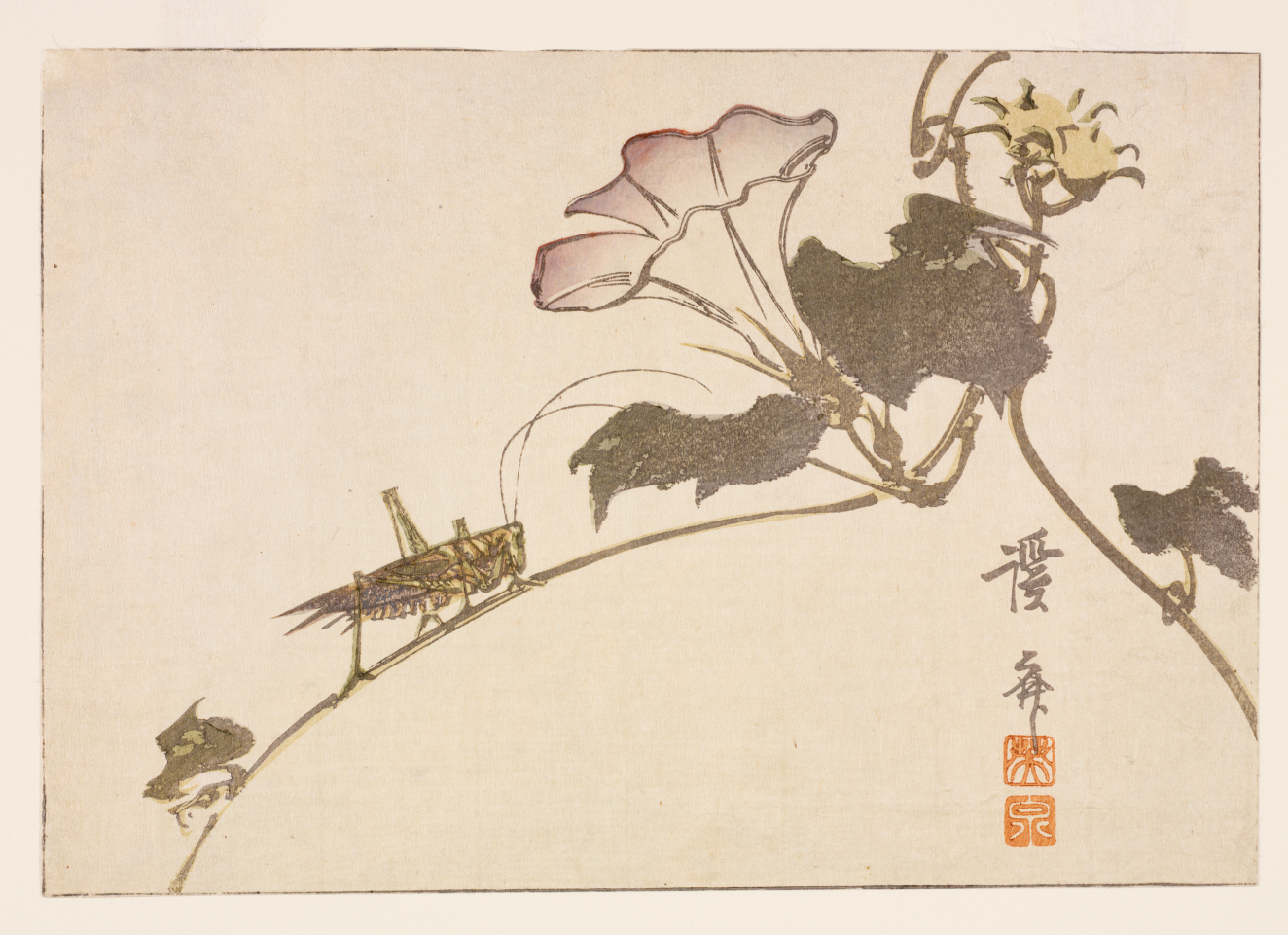
Keisai Eisen 渓斎英泉

Grasshopper and morning glories (Asagao ni kirigisu), Edo (Japanese period)
  • More objects +

/

Download

Footer Main

  • Become a Member
  • Who We Are
  • Opportunities
  • Rent the Museum

Footer Main Navigation

  • Visit

    • Hours & Admission
    • Accessibility & Amenities
    • Tours & Group Visits
    • Visitor Guidelines
  • Art & Design

    • Collection Research
    • Collection
    • Past Exhibitions
  • Join / Give

    • Become a Member
    • Give
  • Exhibitions & Events

    • Exhibitions
    • Events
  • Watch / Listen / Read

    • The Latest
    • Publications
    • Articles
    • Audio & Video

Footer Secondary Navigation

  • Who We Are
  • Opportunities
  • Image Request
  • Press Office
  • Rent the Museum
  • Terms of Use
Tickets
Homepage
Go to the risd.edu homepage. This link will open in a new window.