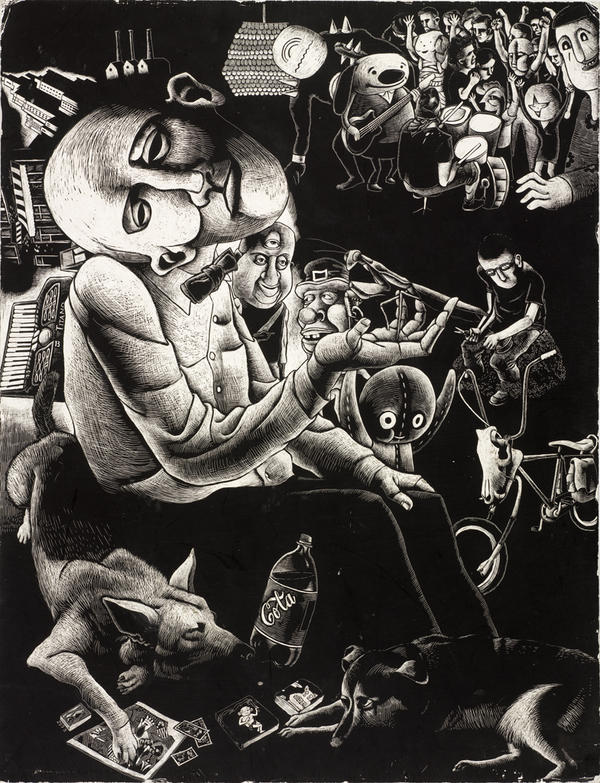
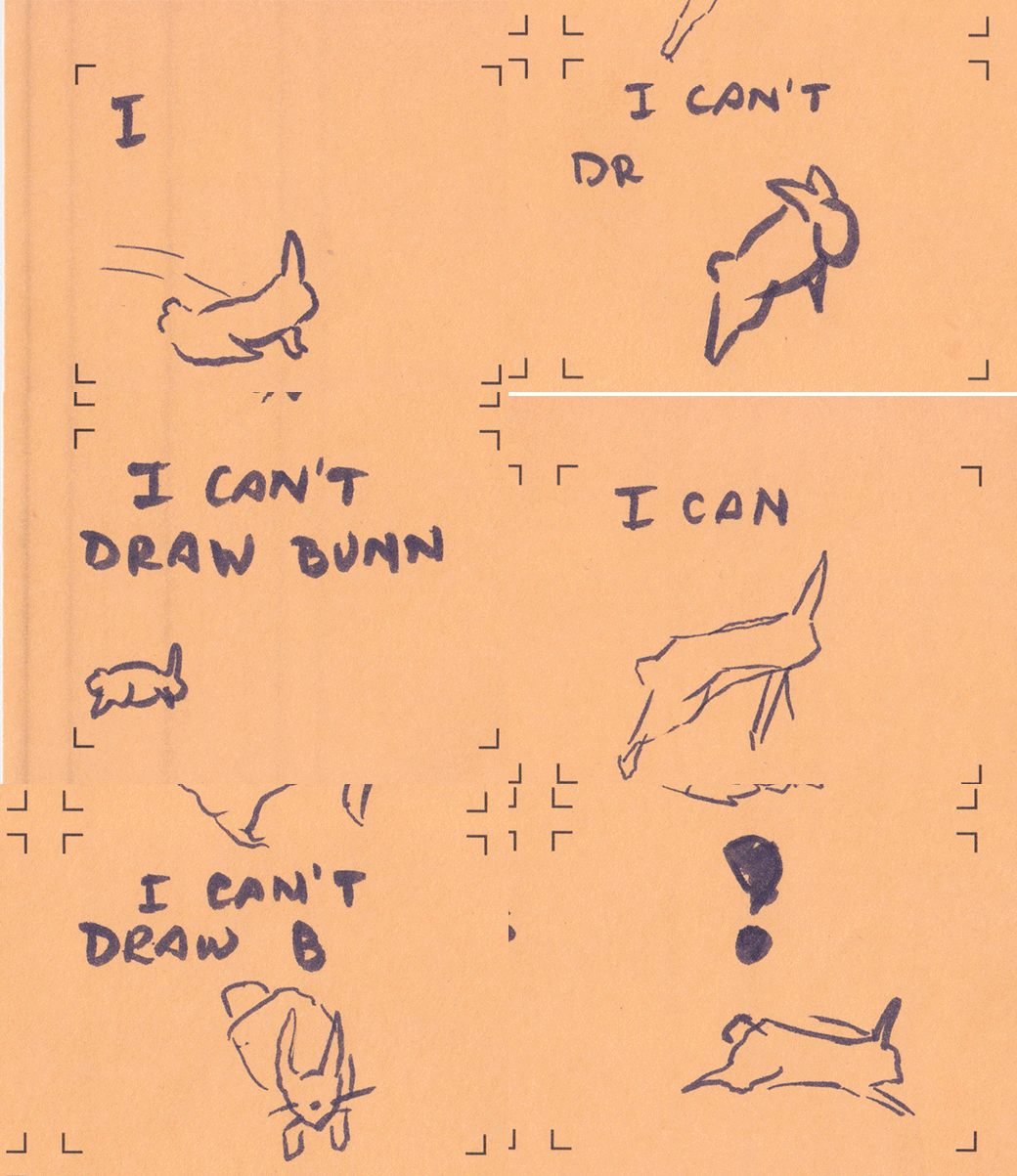
"Raid the Database with Heather Leigh McPherson" is the third installment in an ongoing project in which artists bring new curatorial perspectives to the museum's extensive collections.
Marking the Museum’s entrance into online publishing, Altered States: Etching in Late 19th-Century Paris combines a scholarly collection of essays with a video glossary of printmaking techniques.
A graphic design student at the Royal Danish Academy of Fine Arts in Copenhagen, Marta Jeż describes her virtual exhibition project and new possibilities of translating physical exhibitions into digital forms.
How does Liliana Porter use objects as playful characters in her prints? How can we create scenes using our own special objects and tell stories about them?
Why is an Etruscan situla, or pail, one of the most important objects in RISD's ancient collection? We examine its form, decoration, and context to understand its unique place in European archaeology.
The American and European jewelry collection at the RISD Museum, part of the Decorative Arts and Design Department, is made up of more than 800 works, including necklaces, earrings, bracelets, and rings from the medieval period to present day.
The RISD Museum is proud to participate in this non-partisan initiative of the American Institute of Graphic Arts (AIGA), which uses design to encourage civic engagement.
Inspired by the European galleries, graphic designer Kelly Walters explores 19th-century notions of exoticism and beauty through the creation of a folded broadsheet poster.
Curatorial intern Sam Nehila uses collage to create abstracted forms and explore the trans experience of engaging with the museum’s collection of male nude bodies.
Aaron Douglas was inspired by ancient and contemporary architecture, visual art and poetry. By exploring his painting and finding connections to poetry, what can we learn about how artists use different artistic styles and art forms to represent the many kinds of work it takes to build societies, both in the past and today?
Why is contemporary English artist Paul Scott interested in a ceramic technique and imagery from the 1700-1800s? How does he work with transferware to comment on environmental issues and systemic racism in the United States?