Main navigation

  • Visit
  • Exhibitions & Events
  • Art & Design
  • Give
  • Search

Visit Main Menu Block

  • Hours & Admission
  • Accessibility & Amenities
  • Tours & Group Visits
  • Visitor Guidelines

Exhibitions and Events Main Menu Block

  • Exhibitions
  • Events

Art and Design Main Menu Block

  • Collection
  • Collection Research
  • Past Exhibitions
  • Watch / Listen / Read

Footer Main

  • Become a Member
  • Who We Are
  • Opportunities
  • Rent the Museum

Kabuki Theater in Edo-Period Japan

June 8 - September 2, 2001

Introduction

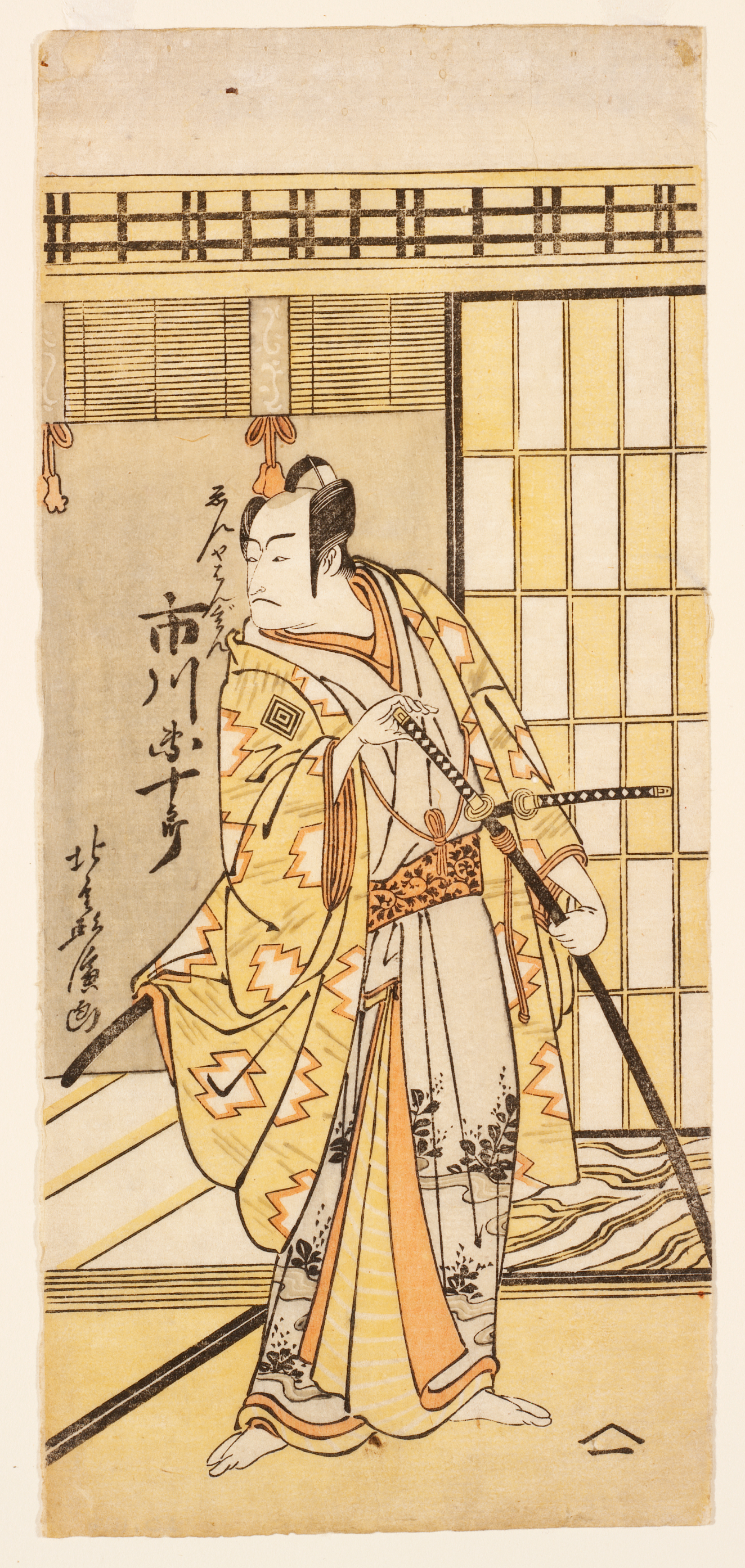
The distinctive combination of music and drama known as kabuki was one of the major sources of entertainment in Edo-period Japan. Often flamboyant and overly exaggerated in its tone, its heroes and villains were drawn from a stock repertory of stories familiar to the audience. Actors were touted and performances advertised through the medium of prints produced by some of the greatest printmakers of the Edo period (1600-1868). These works immortalize the actors, frequently depicting them at a key moment in the action of the play to be performed. Convention called for the actor to hold his pose (mie) at such times; the measure of his acting was displayed through his execution of such tableaux.

Kabuki had its traditional beginnings in the early seventeenth century, when a Shinto dancer and prostitute and her troupe improvised mimes and dances on the bank of the Kamo River in Kyoto. These performances offended the strict Confucian morality of the ruling shogunate; they were banned in 1629 and women were forbidden to perform in public. Consequently some male actors began specializing in female roles (onnagata). As this theatrical art form developed, its repertory of plays was consolidated and became less improvisatory. Families of actors evolved who played particular stage roles; they are identified by the personal emblems or crests on their garments.

The prints on exhibition here are a highly varied selection of depictions of actors extending in date from the eighteenth to the late nineteenth century. Scale, palettes of colors, the inclusion of settings all vary, but the portrayal of the exaggerated conventions of kabuki acting remains. The most outstanding example of such conventions occurs in representations of Danjuro, a name associated with the Ichikawa lineage; Danjuro was known for his dramatic entrance at a climactic moment in the play Wait a Minute (Shibaraku), when he thwarts the villain’s attack. The small portrait of him (accession no. 34.366) conveys the drama of that moment, whereas the lively and crowded street scene of the theater district (accession no. 1997.90.12a-c) expresses the continuing vitality and popularity of kabuki in the late 19th century, at the beginning of the Meiji period (1868-1912).

Deborah Del Gais

Related Objects

Tōshūsai Sharaku

Actor Segawa Kikunojō III as Oshizu wife of Tanabe Bunzō, Edo Period

Katsukawa Shunshō 勝川春章

The actor Ichikawa Danjuro V in a straw raincoat (godai Ichikawa Danjuro), Edo Period

Torii Kiyotomo

Actor as a street vendor selling hand towels and scent pouches in the shapes of kimono sleeves (Sanogawa Ichimatsu?), Edo Period

Utagawa Kunisada 歌川 国貞 (Toyokuni III)

Shiojiri: Ichikawa Danjuro VIII (1823-1854) as Takasaka Danjo at Kikkyo no Hara (Shiojiri: hachidai Ichikawa Danjuro/Takasaka Danjo/Kikkyo no Hara ), Edo (Japanese period)

Sakuragawa Jihinari 桜川慈悲成

Ichikawa Danjurō VII as Kamakura Gongorō Kagemasa in the play Shibaraku, Edo Period

Utagawa Kuniteru II

Flowers of Tokyo: Bustling opening of the three kabuki theaters in Saruwaka-cho (Tokyo hana saruwaka sanro hanei kaikan zu), Edo (Japanese period)

Ishikawa Toyonobu

Ishikawa Danjuro III (Sandaime Ishikawa Danjuro), Edo Period

Kitao Masanobu

The actor Ichikawa Danjuro V as Enya Hangan in Chushingura (Enya Hangan Ichikawa Danjuro godai), Edo Period
  • More objects +

Kabuki Theater in Edo-Period Japan

June 8 - September 2, 2001
Download Checklist pdf

/

Download

Footer Main

  • Become a Member
  • Who We Are
  • Opportunities
  • Rent the Museum

Footer Main Navigation

  • Visit

    • Hours & Admission
    • Accessibility & Amenities
    • Tours & Group Visits
    • Visitor Guidelines
  • Art & Design

    • Collection Research
    • Collection
    • Past Exhibitions
  • Join / Give

    • Become a Member
    • Give
  • Exhibitions & Events

    • Exhibitions
    • Events
  • Watch / Listen / Read

    • The Latest
    • Publications
    • Articles
    • Audio & Video

Footer Secondary Navigation

  • Who We Are
  • Opportunities
  • Image Request
  • Press Office
  • Rent the Museum
  • Terms of Use
Tickets
Homepage
Go to the risd.edu homepage. This link will open in a new window.