The history of the Gorham Manufacturing Company is intertwined with that of Providence and Rhode Island. This uniquely local story has provided the opportunity for the RISD Museum to learn from the experiences of community members who have intersected with Gorham's legacy.
How are museum collections constructed? Producer Emma Vecchione searches for an answer in examining the police raid of a 1978 art exhibition, a collection of pictures at the RISD Museum, and the family photographs on top of her mother’s television set.
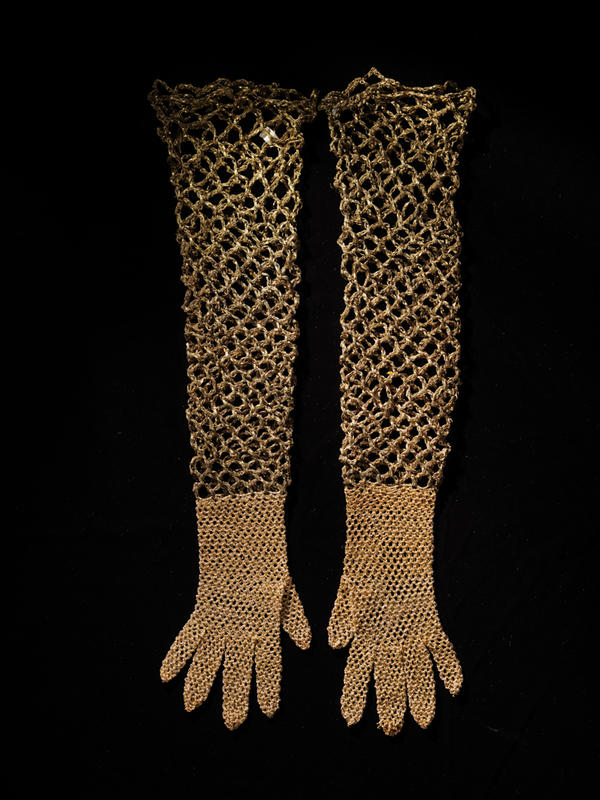
For conservators, fabrics incorporating metallic components raise complex questions about construction, materials, and manufacturing techniques, all of which impact how an object will be stabilized and displayed
How do we describe images and the experience of looking at images? Student Grace Xiao reflects on the process of writing alt text for "Variance: Making, Unmaking, and Remaking Disability."
Architects have been recognized as key figures in furniture design since the late 19th century, although they've certainly been designing furniture for far longer. But what compels them to do so?
An intern explores the history of works from the museum’s ancient collection, tracing the archaeological excavations that brought them to light and into the permanent collection.
This salad spoon and fork set, made by the Gorham Manufacturing Company ca. 1885, is named after the coastal town of Narragansett, Rhode Island. Replete with intricately detailed shells, seaweed, and sea creatures—including small fish and tiny crabs—these two sea-encrusted utensils were my point of inspiration for a set of five brooches. In the following article I will describe some of the basic processes used to create my Narragansett-inspired jewelry