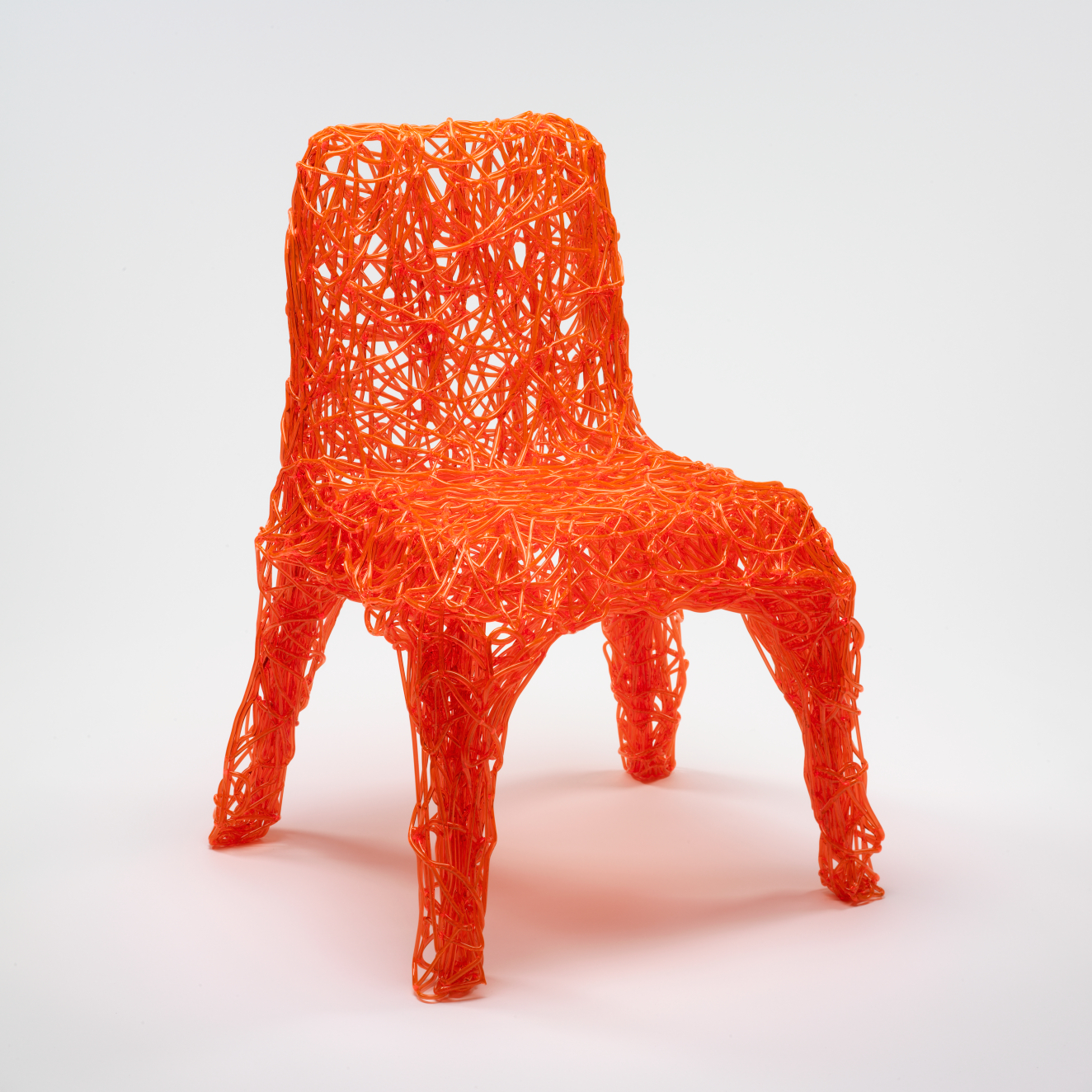
Faculty member Rosa Weinberg reflects on the relevancy of art analysis as a starting point for exploring form in design and as a powerful habit of mind for beginning designers.
William Stanley Haseltine first studied painting in Philadelphia with the German expatriate Paul Weber, who encouraged him to continue his training in Düsseldorf.Haseltine attended the Univer
In 1971, a group of radical students in Providence produced stirring silkscreen posters. Their images contributed to the vibrant visual culture of antiwar protest.
This article explores the concept of purity in criticisms of Inuit prints by briefly introducing the history of printmaking in Cape Dorset and looking at 1970s Western art historians' expectations of Inuit art.
An exploration of the intriguing relationships between works in Martin Boyce's mid-career survey exhibition at the RISD Museum and objects by Alexander Calder, Charles and Ray Eames, and Dan Flavin in the museum's collection.
How do you lay an Egyptian mummy to rest in a museum? Our curator considered a number of factors in orienting Nesmin, RISD's Egyptian mummy, in his new case in the freshly renovated gallery, but found a strange coincidence in her final decision.
Books of hours made during the late Middle Ages and Renaissance were products of collaboration between scribes, illuminators, bookbinders, and, sometimes, the original patron or owner. A recent acquisition of a French book of hours made in Rouen around 1510 tells the story of this collaboration through the structure of its contents, iconography, and assembly.
In the winter of 1886, the neighborhoods of Paris were transformed by an unusually heavy snowfall that lingered on the branches of trees and captured the imagination of the artist Berthe Morisot.
The future is an abstract concept, hard to decode and difficult to predict. A summer intern reflects on fashion and future in this creative writing piece.
Educator MJ Robinson reflects on student reactions to their gender presentation and shares a lesson plan inspired by artist Nick Cave’s Soundsuits to help elementary-aged students identify and challenge gender-based stereotypes.
This fall the RISD Museum Lucy Truman Aldrich Porcelain Gallery reopened with its cabinets filled with engaging figures and a diverse array of tableware. Comprising nearly 180 objects from the museum's collection, this new installation focuses on the role that porcelain played in eighteenth-century life.
An eclectic mix of North African, Moorish, Middle Eastern, and Japanese aesthetics, this desk and table are the original creations of Italian designer Carlo Bugatti.