During the Fall of 2015, Sheila Bonde’s graduate students in the Department of the History of Art and Architecture at Brown University undertook an investigation of the wood sculptures in the RISD Museum collections. This multi-author paper includes some of their findings.
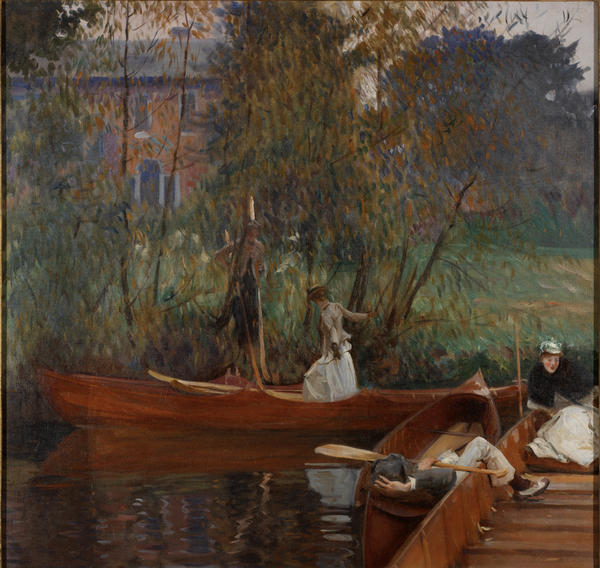
Unfinished paintings by Eastman Johnson, John Singer Sargent and Mary Cassatt reveal new techniques that emerged in France in the second half of the 19th century.
In the Middle Ages, several saints were represented as knights in art, making it difficult to identify RISD’s Crusading Saint. This article will explore his possible identities.
William Stanley Haseltine first studied painting in Philadelphia with the German expatriate Paul Weber, who encouraged him to continue his training in Düsseldorf.Haseltine attended the Univer
RISD Museum Summer researcher discusses Wifredo Lam's 1959 painting Près des Îles Vierges as a reflection of his complicated relationship with revolutionary Cuba and evolving understanding
How does a landscape painting made in 1828 by English-American artist Thomas Cole both reinforce and intervene in settler-colonial ideas about the environment and Native American people?
A wooden “do not touch” partition usually separates the period room in Pendleton House from the public. But one Monday in June, that partition was removed, and museum staff peopled the room.
Arlene Shechet discusses the production of works for and the installation design of Arlene Shechet: Meissen Recast with the exhibition's curator, Judith Tannenbaum.
The discovery of these treasures resembles that of a valuable manuscript. They are a new “Codex Africanus,” not written on fragile papyrus, but in ivory and imperishable brass.
Artist and student Jade Cannata creates a chart describing the racial demographics of three all-inclusive resorts in locations with strong historical connections to colonialism, showing the effects of history on the present
Community MusicWorks commissioned composer and vocalist Ken Ueno to write Four Contemplations for the restoration and rededication of RISD Museum's Dainichi Buddha.
Why is an Etruscan situla, or pail, one of the most important objects in RISD's ancient collection? We examine its form, decoration, and context to understand its unique place in European archaeology.
The American and European jewelry collection at the RISD Museum, part of the Decorative Arts and Design Department, is made up of more than 800 works, including necklaces, earrings, bracelets, and rings from the medieval period to present day.