During the Fall of 2015, Sheila Bonde’s graduate students in the Department of the History of Art and Architecture at Brown University undertook an investigation of the wood sculptures in the RISD Museum collections. This multi-author paper includes some of their findings.
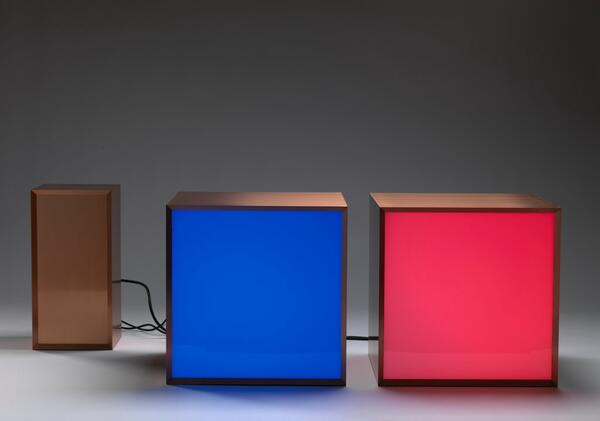
In the flood of digital-ness that comprises our daily experience, it can be easy to forget that most of what all of our complex devices are doing is simply counting. It's no coincidence that the word digital comes from digits, our fingers, that most elementary of counting machines.
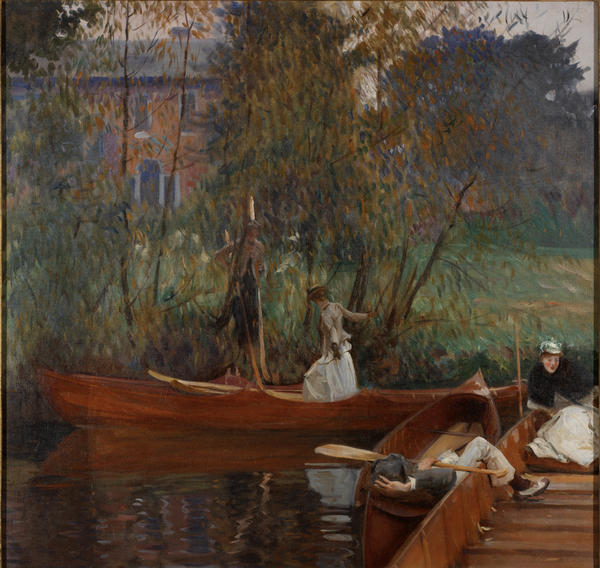
Unfinished paintings by Eastman Johnson, John Singer Sargent and Mary Cassatt reveal new techniques that emerged in France in the second half of the 19th century.
In the Middle Ages, several saints were represented as knights in art, making it difficult to identify RISD’s Crusading Saint. This article will explore his possible identities.
How do we describe images and the experience of looking at images? Student Grace Xiao reflects on the process of writing alt text for "Variance: Making, Unmaking, and Remaking Disability."
RISD Museum Summer researcher discusses Wifredo Lam's 1959 painting Près des Îles Vierges as a reflection of his complicated relationship with revolutionary Cuba and evolving understanding
An intern explores the history of works from the museum’s ancient collection, tracing the archaeological excavations that brought them to light and into the permanent collection.
In 1971, a group of radical students in Providence produced stirring silkscreen posters. Their images contributed to the vibrant visual culture of antiwar protest.
Why is an Etruscan situla, or pail, one of the most important objects in RISD's ancient collection? We examine its form, decoration, and context to understand its unique place in European archaeology.
The RISD Museum is proud to participate in this non-partisan initiative of the American Institute of Graphic Arts (AIGA), which uses design to encourage civic engagement.
Childe Hassam, a successful young book and magazine illustrator, made his first trip abroad in 1883, disembarking in Great Britain then making a wide sweep through France, Holland, Switzerlan
Unfinished paintings by Eastman Johnson, John Singer Sargent and Mary Cassatt reveal new techniques that emerged in France in the second half of the 19th century.
This rare example of Gorham's "Mythologique" flatware service was purposefully left unfinished as they are samples, combining elaborate hand-worked detail with mechanized brute force.
Books of hours made during the late Middle Ages and Renaissance were products of collaboration between scribes, illuminators, bookbinders, and, sometimes, the original patron or owner. A recent acquisition of a French book of hours made in Rouen around 1510 tells the story of this collaboration through the structure of its contents, iconography, and assembly.
This late fifteenth-century Virgin and Child was created with subtlety, flexibility, and portability in mind. These features were central to its medieval use—and its use at the RISD Museum.
Devotional representations of Saint Barbara, a Christian martyr whose legend extended across both Western and Eastern medieval worlds, flourished in fourteenth-century Europe. An examination of the Providence Saint Barbara reveals a sculptural tradition with a complex and colorful practices of medieval devotion to the cult of saints.