During the Fall of 2015, Sheila Bonde’s graduate students in the Department of the History of Art and Architecture at Brown University undertook an investigation of the wood sculptures in the RISD Museum collections. This multi-author paper includes some of their findings.
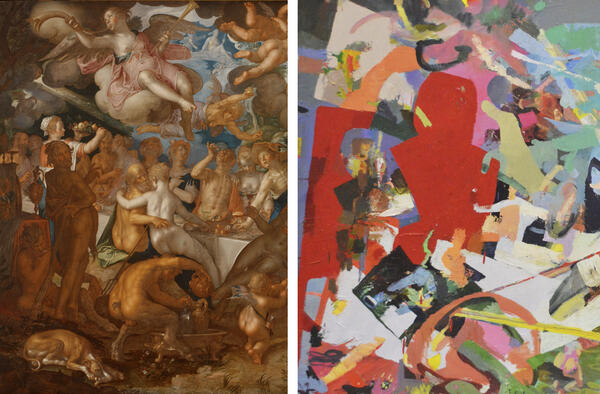
Inspired by Joachim Antonisz Wtewael's "The Marriage of Peleus and Thetis," Josephine Devanbu (RISD/Brown 2015) uses the painting's shapes and density in her newest work.
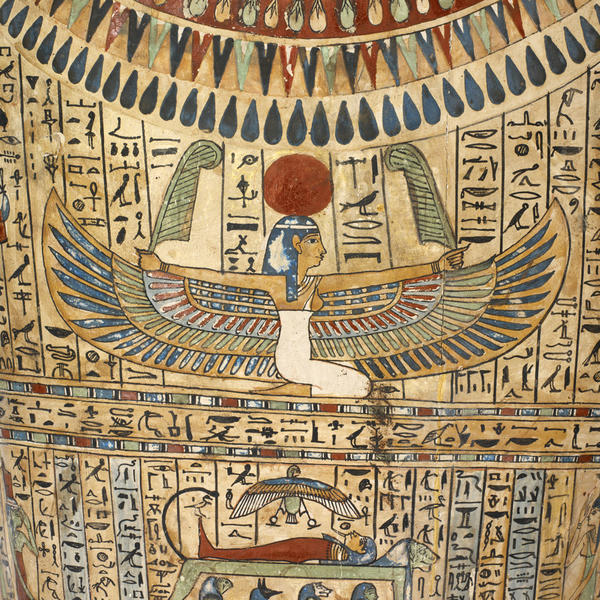
Over the last 2,000 years, Nesmin has been a priest, a mummy, and a museum exhibit. RISD Museum intern Jonathan Migliori discusses Nesmin's influence in his life.
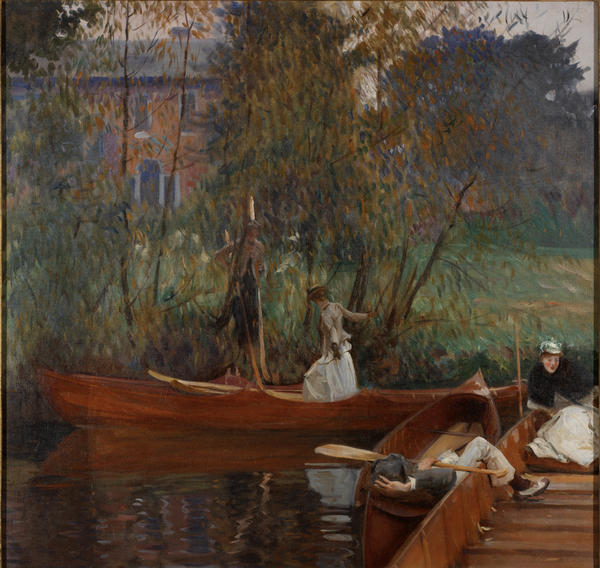
Unfinished paintings by Eastman Johnson, John Singer Sargent and Mary Cassatt reveal new techniques that emerged in France in the second half of the 19th century.
How do we describe images and the experience of looking at images? Student Grace Xiao reflects on the process of writing alt text for "Variance: Making, Unmaking, and Remaking Disability."
A summer intern meditates on the medium of murals and how they appear on RISD’s walls, using Photoshop to understand what is lost when seeing incomplete works out of context.
The Museum recently acquired *Huevos de Los Angeles*, a collaborative work by two RISD alumni, Adam Silverman and David Wiseman. Here the artists describe how they created "eggs" to rival the most coveted variety.
Architect James Stanton-Abbott explains his process for creating a computer-rendered reconstruction of a room in an ancient Roman villa near Pompeii, using images of wall-painting fragments in the RISD Museum and the MFA, Boston.
In 1971, a group of radical students in Providence produced stirring silkscreen posters. Their images contributed to the vibrant visual culture of antiwar protest.
The handmade object has a tendency to prompt memories from the craftsperson who made it. In this reflection on an embroidered purse from the 1970s, Ariel Wills and Kate Irvin are joined by maker Christina Bevilacqua for a dynamic conversation that demonstrates the narrative qualities embodied in material culture.
Why is an Etruscan situla, or pail, one of the most important objects in RISD's ancient collection? We examine its form, decoration, and context to understand its unique place in European archaeology.