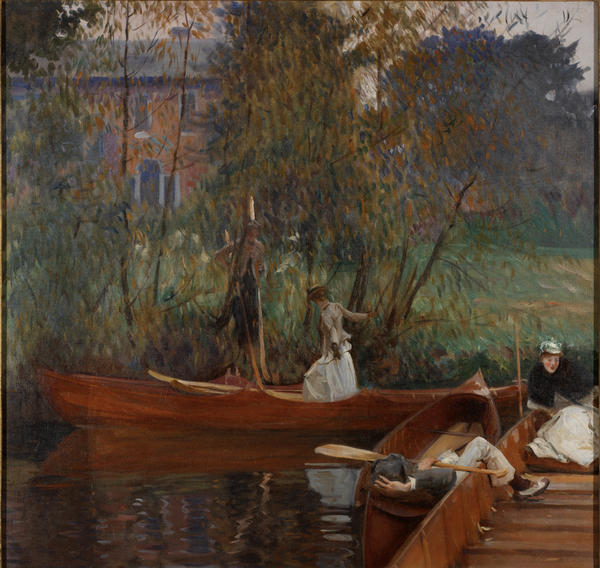
Unfinished paintings by Eastman Johnson, John Singer Sargent and Mary Cassatt reveal new techniques that emerged in France in the second half of the 19th century.
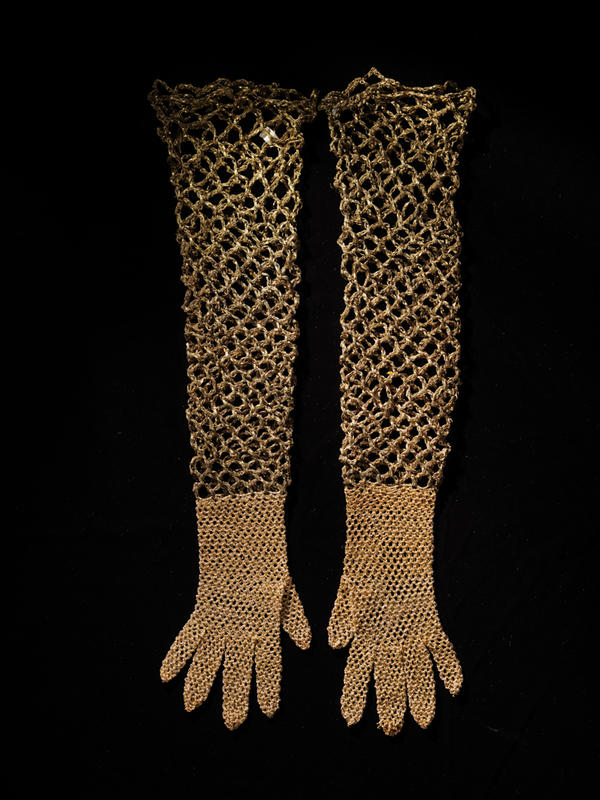
For conservators, fabrics incorporating metallic components raise complex questions about construction, materials, and manufacturing techniques, all of which impact how an object will be stabilized and displayed
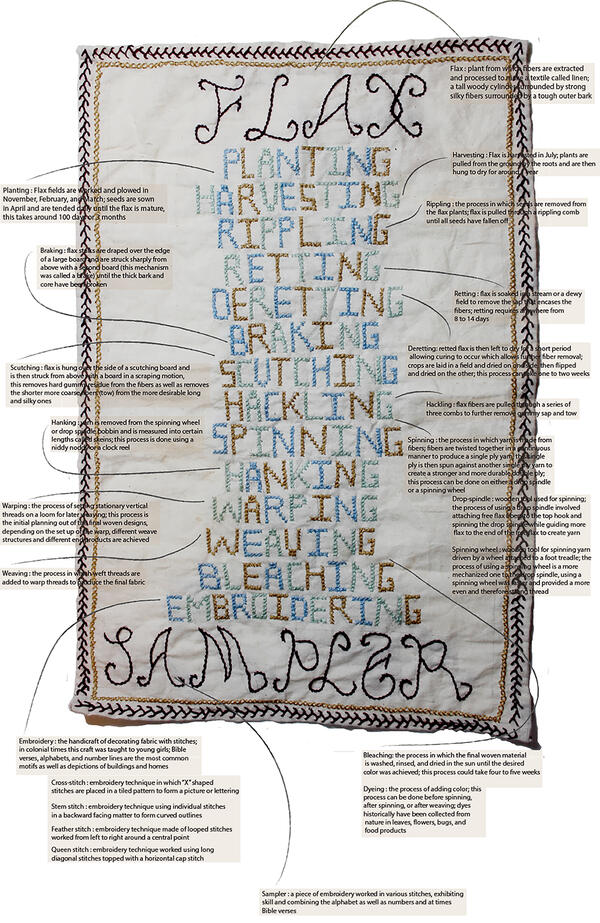
Embroidery samplers are inextricably linked to an image of colonial America: farmhouses waved sheets of linen like flags of surrender, with fields of flax extending beyond, as far as the eye could
In the Middle Ages, several saints were represented as knights in art, making it difficult to identify RISD’s Crusading Saint. This article will explore his possible identities.
Curatorial assistant of contemporary art A. Will Brown interviews artist Steffani Jemison about her film *Maniac Chase* (2009), *Escaped Lunatic* (2010–2011) and Personal (2014)
Agrippina the Younger watches as men of the emperor move nearer and nearer to her. They carry weapons. Having survived one attempt on her life, she knows that she will not survive another.
For many of us, a line is the first mark we make. It is a huge developmental milestone when a young child's first scribbles are set to the page (or wall!).
Many museums today struggle with confronting their problematic legacies and transforming their current practices to become the diverse, inclusive institutions they aspire to be.
A student dismantles the outdated terminology and practice of “master copies” by constructing a series of copies that works to bolster underrepresented artists and subvert the pervasive presence of white males in the Western art canon.
RISD Museum Summer researcher discusses Wifredo Lam's 1959 painting Près des Îles Vierges as a reflection of his complicated relationship with revolutionary Cuba and evolving understanding
An intern explores the history of works from the museum’s ancient collection, tracing the archaeological excavations that brought them to light and into the permanent collection.
How does a landscape painting made in 1828 by English-American artist Thomas Cole both reinforce and intervene in settler-colonial ideas about the environment and Native American people?
Arlene Shechet discusses the production of works for and the installation design of Arlene Shechet: Meissen Recast with the exhibition's curator, Judith Tannenbaum.
RISD Museum object photography generally follows typical museum practice: a straightforward approach to framing and lighting with great concern for color fidelity. For *Artist/Rebel/Dandy*, the curators suggested that we go in a different direction.